
 EN
EN
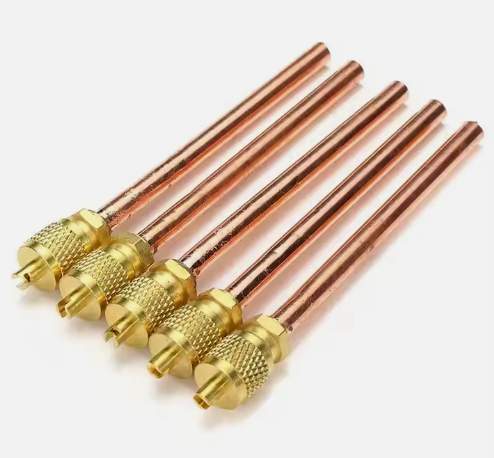
The Critical Role of Service Ports in Thermal Networks
When maintaining complex heating, ventilation, and air conditioning systems, technicians interact constantly with closed-loop refrigerant circuits. The primary interfaces for diagnostics, pressure testing, and chemical recovery are small yet vital service connections scattered throughout the tubing. Every single access valve functions as a high-pressure gateway that allows service personnel to monitor system performance accurately. However, because these components handle volatile refrigerants under intense thermal and mechanical stress, safety and precision during handling are non-negotiable. Whether managing a sprawling commercial refrigeration setup or an industrial cooling network, overlooking proper handling procedures for an access valve can lead to severe accidents, equipment damage, and environmental hazards. Understanding the mechanical behavior and safety requirements of these components is essential for every professional facility manager and service engineer.
The Physics and Structural Integrity of Service Ports
Inside every standard cooling loop, the internal mechanism of the access valve operates under severe pressure thresholds, often exceeding three hundred pounds per square inch depending on the refrigerant type. The core consists of a spring-loaded brass pin housed tightly within a machined valve body, sealed by specialized elastomeric O-rings designed to resist aggressive synthetic oils and chemical degradation. When a technician connects a gauge manifold hose, the pin is depressed smoothly, opening a precise pathway for pressure checks or fluid recovery without venting the entire system charge. Engineers and material specialists emphasize that the structural integrity of the access valve body and its internal spring determines whether a system remains hermetically sealed over years of operation. Even a microscopic defect or minor misalignment in the access valve core can trigger a persistent, slow refrigerant leak that compromises thermodynamic efficiency and increases operational wear.
Safety Hazards and Economic Risks of Improper Handling
The financial and physical fallout of mishandling an access valve can be remarkably severe for maintenance teams and building owners. Refrigerant under pressure poses immediate physical hazards, including severe frostbite or sudden high-velocity discharge if a valve core sticks open during gauge disconnection. Furthermore, improper torque application during cap installation or careless use of manifold hoses can strip the threads of the access valve, resulting in chronic gas leaks that drain hundreds of dollars from operating accounts annually. From a regulatory perspective, escaping refrigerants violate strict environmental standards enforced by governing bodies, exposing corporations to heavy fines. Investing in proper safety training and utilizing certified, heavy-duty access valve assemblies ensures that facilities avoid these hidden financial and safety traps, protecting both operational personnel and corporate compliance records from preventable failures.
Field Experience and Diagnostic Best Practices
In professional HVAC service environments, seasoned field technicians know that troubleshooting a mysterious pressure drop or system undercharge often starts directly at the service ports. During peak summer operational loads, extreme ambient heat pushes every mechanical joint and access valve to its absolute structural limit. Real-world case studies consistently reveal that ignoring minor oil residue around an access valve—a classic telltale sign of a slow leak—frequently precipitates sudden system shutdowns during the hottest weeks of the year. Proactive service routines, such as using specialized valve core removal tools, always installing tight brass cap seals equipped with integrated rubber gaskets, and conducting electronic leak detection around every access valve, eliminate these operational risks instantly. Every experienced field engineer understands that meticulous attention to handling practices separates a dangerous hazard from a professional, highly reliable industrial repair.
Manufacturing Excellence and Eletek Supply Standards
Achieving the highest standard of operational safety and reliability requires more than just skilled field maintenance; it demands access to robust hardware supported by a trustworthy supply chain. Eletek understands the rigorous technical demands of the global HVAC and industrial cooling sectors. By focusing on advanced manufacturing standards, stringent pressure-testing protocols, and superior material selection, Eletek provides the essential access valve options and precision thermal management accessories that professional contractors and facility managers rely on daily. The engineering expertise behind every access valve component supplied by Eletek ensures seamless integration, maximum structural durability, and superior performance under extreme operating pressures. Choosing Eletek as an industry partner means gaining access to precision-engineered access valve solutions designed to withstand heavy industrial use, thereby securing long-term operational stability and safety for any commercial cooling infrastructure.
Sustaining Long Term Infrastructure Reliability and Safety
The cumulative benefit of prioritizing safe handling protocols and utilizing high-grade access valve hardware is an extended, trouble-free life cycle for the entire climate control infrastructure. In modern facility management, safety, energy conservation, and system dependability are paramount objectives that directly influence operational budgets and corporate environmental targets. By ensuring that every access valve is properly selected, handled, and protected with secure caps, organizations effectively minimize maintenance overhead while maximizing thermal exchange efficiency across all operational zones. Eletek remains firmly dedicated to empowering the industrial and commercial sectors with durable, high-performance access valve solutions that exceed global expectations. Through an unwavering commitment to engineering precision and reliable supply chain support, Eletek ensures that cooling systems continue to perform at their absolute best, providing a solid foundation for sustainable growth and operational success for years to come.
Table of Contents
- The Critical Role of Service Ports in Thermal Networks
- The Physics and Structural Integrity of Service Ports
- Safety Hazards and Economic Risks of Improper Handling
- Field Experience and Diagnostic Best Practices
- Manufacturing Excellence and Eletek Supply Standards
- Sustaining Long Term Infrastructure Reliability and Safety

