
 EN
How Extreme Ambient Heat Attacks Refrigerant Line Efficiency
Routing air conditioning line sets across sun-baked commercial rooftops in Phoenix, inside unventilated attic spaces in Texas, or along sun-drenched masonry walls in the Middle East pushes thermal materials to their absolute breaking point. While standard outdoor ambient air might read one hundred and ten degrees Fahrenheit in the shade, surface temperatures inside an enclosed metal rooftop chase or directly against dark asphalt shingles routinely soar past one hundred and sixty degrees. Under this relentless radiant assault, insulation hose performance in high heat zones determines whether chilled refrigerant actually reaches the indoor evaporator coil at its designed subcooling and superheat targets, or arrives already boiled off into useless warm vapor.
When thermal shielding degrades in extreme heat, the compressor has to run significantly longer duty cycles just to satisfy the indoor thermostat. Industry thermodynamic modeling shows that losing just thirty percent of suction line insulation integrity across a fifty-foot rooftop run reduces net cooling capacity by nearly twelve percent while spiking compressor amp draw. Even worse, degraded hvac thermal insulation sleeves allow warm, humid air to contact the cold copper pipe directly. Within days, condensation floods out of the compromised sleeve, rotting ceiling tiles, staining building facades, and triggering costly mold remediation claims against the mechanical contractor.
Closed-Cell Elastomeric Chemistry Versus Cheap Foam Alternatives
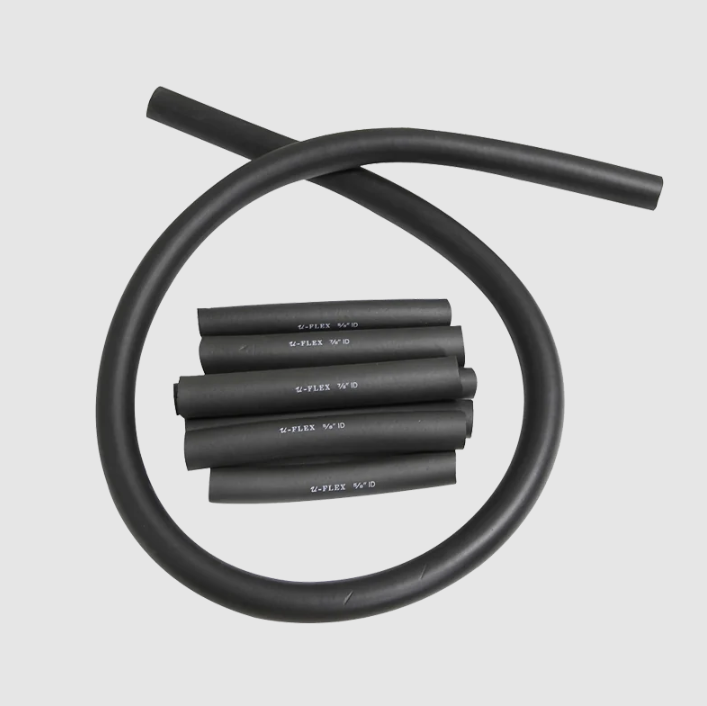
Not all black or white pipe sleeves sitting on a supply house shelf are built with the same polymer chemistry. Budget installation kits frequently cut corners by supplying non-crosslinked polyethylene foam with large, uneven internal air bubbles and thin outer skins. When exposed to high rooftop heat and intense ultraviolet radiation, cheap polyethylene foam shrinks lengthwise, splits open along the glue seam, and turns into a crumbly, chalky crust within a single cooling season. True high-temperature insulation hose relies on synthetic closed-cell elastomeric rubber—specifically formulated from EPDM or NBR/PVC blends—coupled with UV-resistant polymeric jacketing.
The secret behind superior insulation hose performance in high heat zones lies in microscopic closed-cell geometry and a low thermal conductivity K-factor. High-density closed-cell elastomeric rubber traps millions of tiny, independent nitrogen gas pockets that block heat transfer via conduction and convection. According to ASTM C534 standards for preformed flexible elastomeric cellular thermal insulation, premium rubber formulations maintain a stable thermal conductivity below 0.036 W/mK even when external surface temperatures hover near two hundred degrees Fahrenheit. Because the cells are completely closed and chemically cross-linked, water vapor cannot wick through the wall, providing a built-in vapor barrier that keeps condensation locked out permanently without needing extra vapor tape wraps.
Preventing UV Degradation and Thermal Bridging on Rooftops
Even the highest-grade elastomeric foam faces two tough enemies on exposed commercial installs: solar ultraviolet radiation and mechanical compression at pipe supports. Unprotected rubber absorbs UV photons that break down carbon-polymer bonds, causing surface crazing and deep fissures that let rainwater and hot air penetrate straight to the copper tube. Specifying an insulated copper pipe cover featuring a co-extruded, UV-stabilized white or embossed polyethylene outer jacket reflects solar radiation while shielding the underlying elastomeric foam from ozone and bird pecking damage.
Thermal bridging at mounting points is another silent killer of insulation hose performance in high heat zones. When technicians strap a heavy liquid and suction line directly onto a scorching steel strut channel using bare metal clamps, heat conducts straight through the compressed foam into the refrigerant loop. Worse yet, overtightened metal straps crush the closed-cell structure flat, creating a permanent cold bridge that drips condensation water non-stop. Best-practice rooftop installations pair UV-shielded hvac thermal insulation sleeves with high-density load-bearing pipe saddles and rubber anti-vibration mounts, preserving full wall thickness across every single structural hanger on the roof.
Field Performance Data from a Desert Commercial Installation
A side-by-side field evaluation conducted across two identical retail shopping plazas in Las Vegas, Nevada, illustrates the financial payback of upgrading line-set insulation specs. Both plazas ran twenty rooftop VRF heat recovery units with exposed piping runs averaging eighty-five feet across white membrane roofs where summer surface temperatures hit one hundred and fifty-eight degrees Fahrenheit. Plaza A was fitted with standard 3/8-inch polyethylene foam tubing, whereas Plaza B utilized heavy-duty 3/4-inch EPDM high-temperature insulation hose wrapped in a tear-resistant UV protective jacket.
By the end of the second summer, infrared thermography scans on Plaza A revealed severe seam splitting and UV chalking across seventy percent of the roof piping, with suction gas temperatures rising nine degrees higher than design parameters before entering the compressors. Those overheated compressors suffered three mechanical failures and consumed eighteen percent more kilowatt-hours during peak afternoon billing windows. Meanwhile, Plaza B maintained flawless refrigerant line heat loss prevention, zero jacket cracking, and stable compressor discharge temperatures. Upgrading to a superior insulated copper pipe cover saved Plaza B over fourteen thousand dollars in electricity and avoided compressor replacements in just twenty-four months.
Sourcing Weatherproof Insulation Assemblies for Global Markets
Distributors and HVAC project engineers operating in tropical, desert, and sun-belt regions cannot afford to gamble on unverified foam materials that shrink or crack in the field. Ensuring consistent refrigerant line heat loss prevention requires working with an upstream manufacturer that tests raw elastomeric compounds for thermal aging, flame spread compliance, water vapor permeability, and UV weatherability before extrusion ever begins.
Eletek stands out as a trusted global manufacturing partner for engineered thermal protection and refrigeration hardware. From its modern production facilities in Suzhou and Jinan, Eletek manufactures high-density insulation tubes, air conditioning hoses, pre-insulated copper connecting tubes, wrapping tapes, and UV-resistant decorative trunking tailored for demanding climates. By combining precision closed-cell extrusion with durable outer jacketing and a complete lineup of mounting brackets and ac fittings, Eletek guarantees superior insulation hose performance in high heat zones. Global wholesalers and contractors partnering with Eletek receive ready-to-install thermal assemblies that slash energy waste, prevent condensation callbacks, and outlast the toughest weather conditions on earth.
Table of Contents
- How Extreme Ambient Heat Attacks Refrigerant Line Efficiency
- Closed-Cell Elastomeric Chemistry Versus Cheap Foam Alternatives
- Preventing UV Degradation and Thermal Bridging on Rooftops
- Field Performance Data from a Desert Commercial Installation
- Sourcing Weatherproof Insulation Assemblies for Global Markets

