
 EN
Why Sub-Zero Environments Destroy Standard Components
Commercial walk-in freezers, blast chillers, and supermarket display cases represent the most punishing operating environments in the entire cooling industry. Unlike residential refrigerators that open a few times a day in a climate-controlled kitchen, commercial units endure constant door slamming, heavy frost accumulation, and twenty-four-seven compressor cycling at temperatures plunging down to minus thirty degrees Fahrenheit. Under these brutal conditions, standard consumer-grade hardware snaps, warps, or burns out in a matter of months. Selecting durable freezer parts for commercial use is the only way facility managers and equipment builders can prevent sudden mid-weekend breakdowns that ruin tens of thousands of dollars in frozen meat, seafood, and pharmaceuticals.
At deep sub-zero temperatures, ordinary plastics turn as brittle as glass, standard lubricants congeal into thick grease, and moisture condenses inside unsealed electrical housings before freezing solid and cracking circuit boards. Every time a restaurant line cook kicks a freezer door shut or a supermarket restocking cart bumps an evaporator guard, the internal mechanical assemblies absorb severe shock loads. Building reliability into commercial low-temperature cabinets requires specifying heavy-duty commercial freezer components engineered specifically to resist thermal shock, ice expansion, and relentless mechanical fatigue across years of nonstop operation.
Engineering Heat Exchangers for High-Stress Thermal Cycling
The heart of any commercial freezing system lies in its heat exchange coils, which must pull massive heat loads out of warm food products while surviving aggressive periodic defrost cycles. During a single twenty-four-hour period, a commercial evaporator coil might sit at minus twenty-five degrees Fahrenheit for five hours, rapidly heat up to fifty degrees during an electric or hot-gas defrost cycle to shed ice, and then plunge right back down into deep freeze. This violent thermal expansion and contraction quickly tears apart poorly brazed joints where copper tubes pass through aluminum support end plates. High-grade refrigeration evaporators and condensers combat this stress by utilizing thicker tube sheets, sleeved pass-through holes that prevent metal-on-metal chafing, and silver-phosphorus brazing alloys that retain ductility at extreme low temperatures.
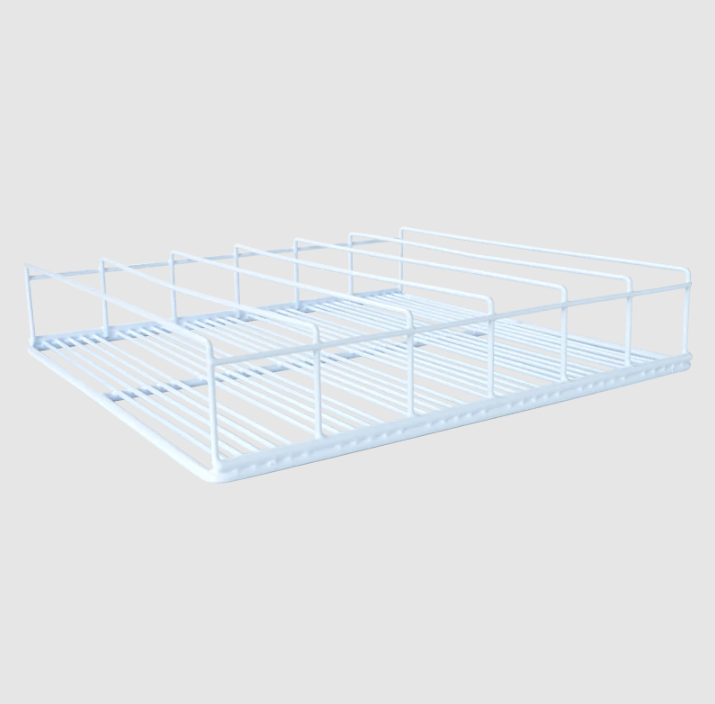
On the condensing side, commercial kitchens and crowded supermarket mechanical rooms load coils with airborne cooking grease, dust, and corrosive cleaning fumes. Choosing durable freezer parts for commercial use means selecting wire tube condensers and finned copper coils coated with electro-deposited epoxy or hydrophilic anti-corrosion layers. Furthermore, integrating heavy-duty copper filter driers with high moisture-adsorption molecular sieves protects expansion valves from freeze-ups. When heat exchangers are built with reinforced metallurgical joints and protective surface treatments, compressors run at lower head pressures, cutting facility electricity bills by up to fifteen percent annually.
Matching Defrost Heaters and Thermostats to Heavy Duty Cycles
Nothing kills a commercial freezer faster than a failed defrost cycle that turns the evaporator coil into a solid block of ice. Because commercial doors open dozens of times an hour in humid kitchens, moisture floods the cabinet constantly, demanding powerful and reliable defrost hardware. Standard glass-tube heaters or cheap resistance wires fail rapidly when subjected to thermal shock from melting ice water dripping onto red-hot surfaces. Specifying industrial-grade freezer defrost heaters constructed from seamless Incoloy 800 or 304 stainless steel sheaths packed with high-density magnesium oxide powder ensures rapid heat transfer without sheath splitting or electrical shorting to ground.
Controlling those heating and cooling cycles with pinpoint accuracy is just as critical for food safety compliance. In high-vibration commercial cabinets, cheap capillary or digital sensors drift out of calibration, leading to either frozen-solid evaporator coils or dangerous temperature spikes above food safety thresholds. Pairing heavy-duty commercial freezer components with precision low-temperature thermostats and hermetically sealed defrost timers guarantees that termination temperatures are hit accurately every single cycle. Reinforced silver-alloy electrical contacts inside these controls resist arc welding during high-amp compressor startups, delivering hundreds of thousands of trouble-free switching cycles without sticking closed.
Case Study on Supermarket Chain Retrofit and Downtime Reduction
The financial impact of component quality became crystal clear during a regional equipment audit for a forty-two-store grocery chain operating across the humid Gulf Coast of the United States. The chain was spending over three hundred and eighty thousand dollars annually on emergency refrigeration service calls, with nearly sixty percent of those failures traced back to burnt-out freezer defrost heaters, corroded condenser coils, and sticking temperature controls in their reach-in frozen food aisles. Every time a multi-door freezer case went down overnight, store staff had to scramble with dry ice or write off thousands of dollars in spoiled inventory.
The corporate maintenance director standardized their replacement spec sheet around durable freezer parts for commercial use, mandating double-sealed stainless steel tubular heaters, heavy-gauge copper evaporators, and moisture-proof low-temperature thermostats across all store retrofits. Over the following twelve months, emergency defrost and coil-related breakdowns dropped by seventy-four percent across the forty-two supermarkets. The chain recouped the entire cost of the upgraded commercial freezer components in less than five months purely through avoided food spoilage and eliminated overtime technician dispatch fees. Investing in commercial-grade durability transformed their frozen food departments from a maintenance money-pit into a predictable, high-margin retail asset.
Streamlining Procurement with an Integrated Component Manufacturer
For commercial refrigeration OEMs, regional wholesalers, and multi-site service contractors, sourcing heavy-duty parts often turns into a logistical headache. Buying refrigeration evaporators and condensers from one vendor, sourcing tubular heating elements from a second factory, and hunting down brass valves, accumulator tanks, and thermostats from three other trading companies creates fragmented quality control and unpredictable shipping delays. When a single weak component slips through inspection, the entire freezer cabinet suffers the consequences on the customer's floor.
Partnering directly with an established, multi-category manufacturer like Eletek solves this supply chain fragmentation from the ground up. With specialized production bases in Suzhou and Jinan, Eletek manufactures a complete ecosystem of durable freezer parts for commercial use—spanning custom copper and aluminum evaporators, wire tube condensers, stainless steel freezer defrost heaters, filter driers, and precision low-temperature thermostats. Every production batch undergoes strict helium leak detection, high-voltage dielectric testing, and salt-spray corrosion trials before leaving the factory floor. By consolidating commercial freezer components under Eletek's unified quality management system, global buyers gain rock-solid field reliability, simplified container consolidation, and the manufacturing agility needed to dominate the commercial cold-chain market.
Table of Contents
- Why Sub-Zero Environments Destroy Standard Components
- Engineering Heat Exchangers for High-Stress Thermal Cycling
- Matching Defrost Heaters and Thermostats to Heavy Duty Cycles
- Case Study on Supermarket Chain Retrofit and Downtime Reduction
- Streamlining Procurement with an Integrated Component Manufacturer

