Product brief description
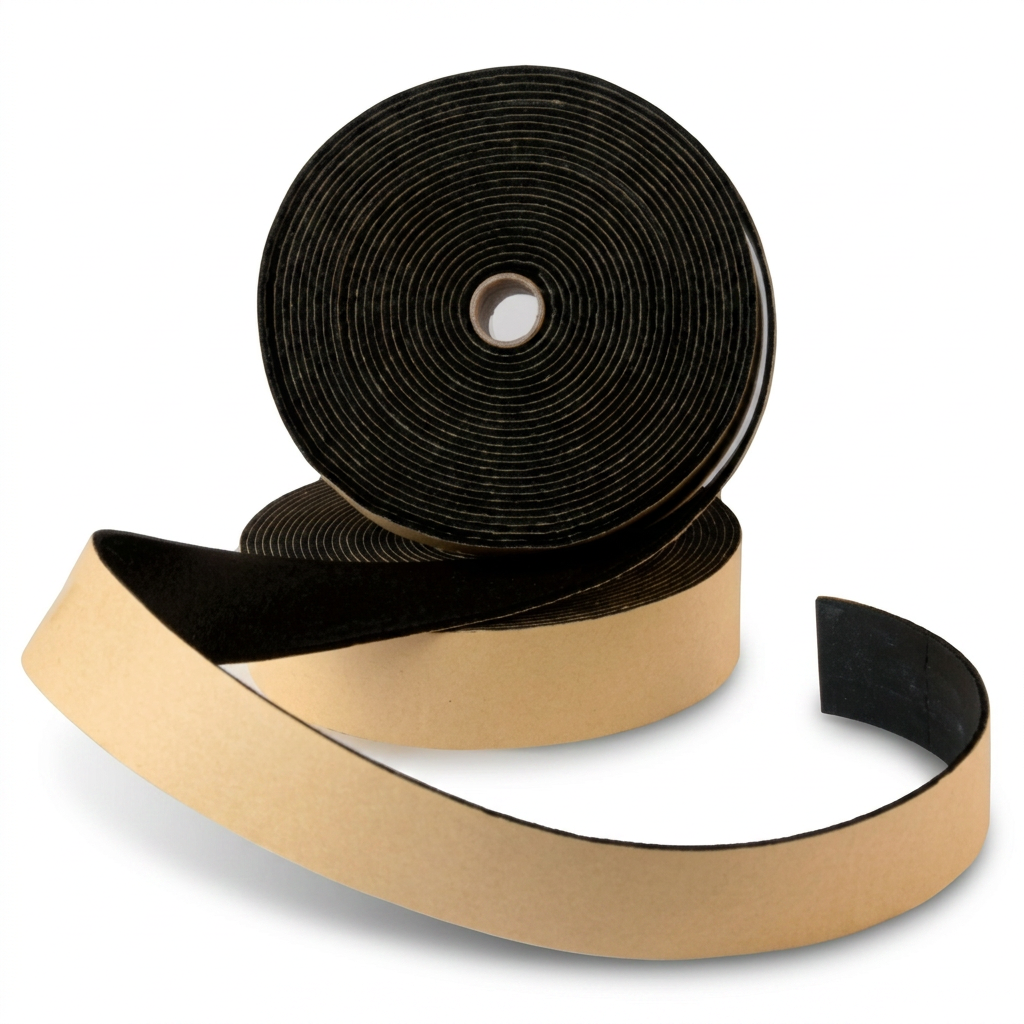
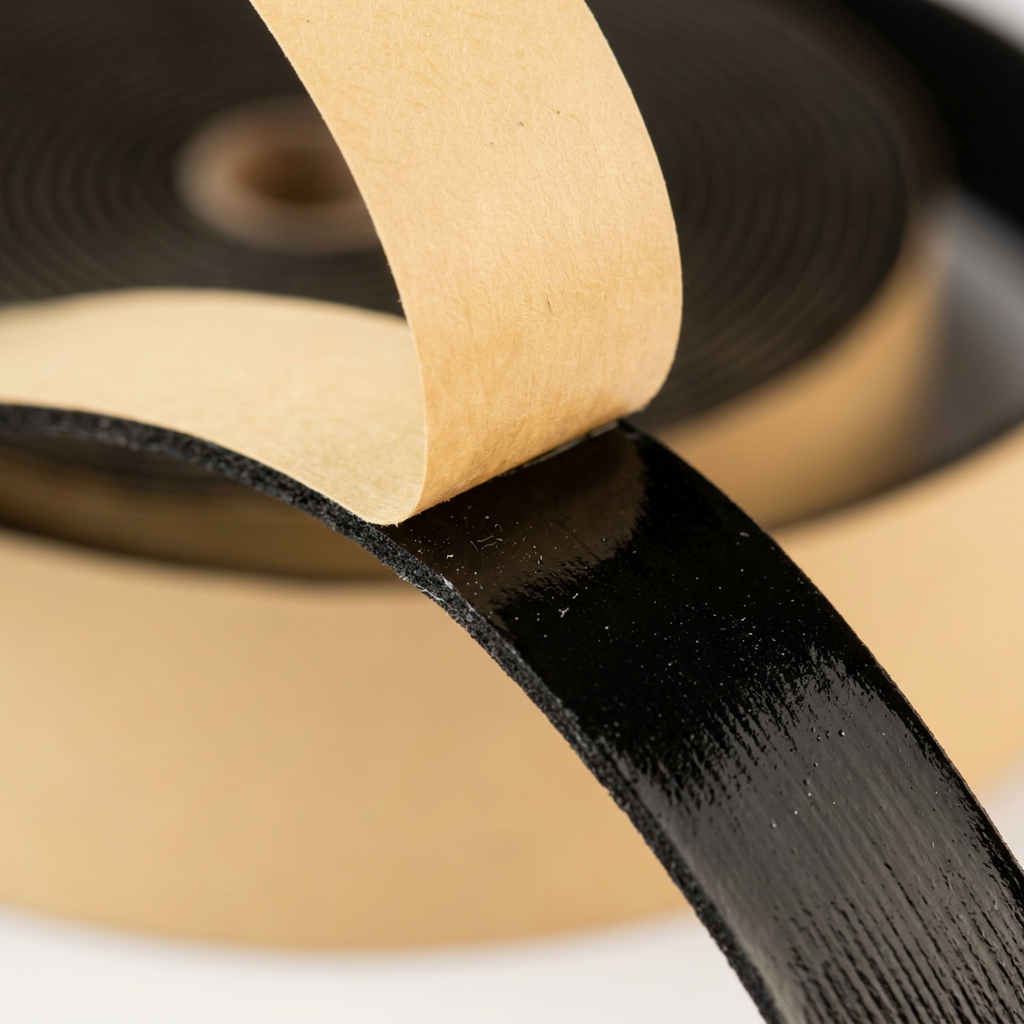
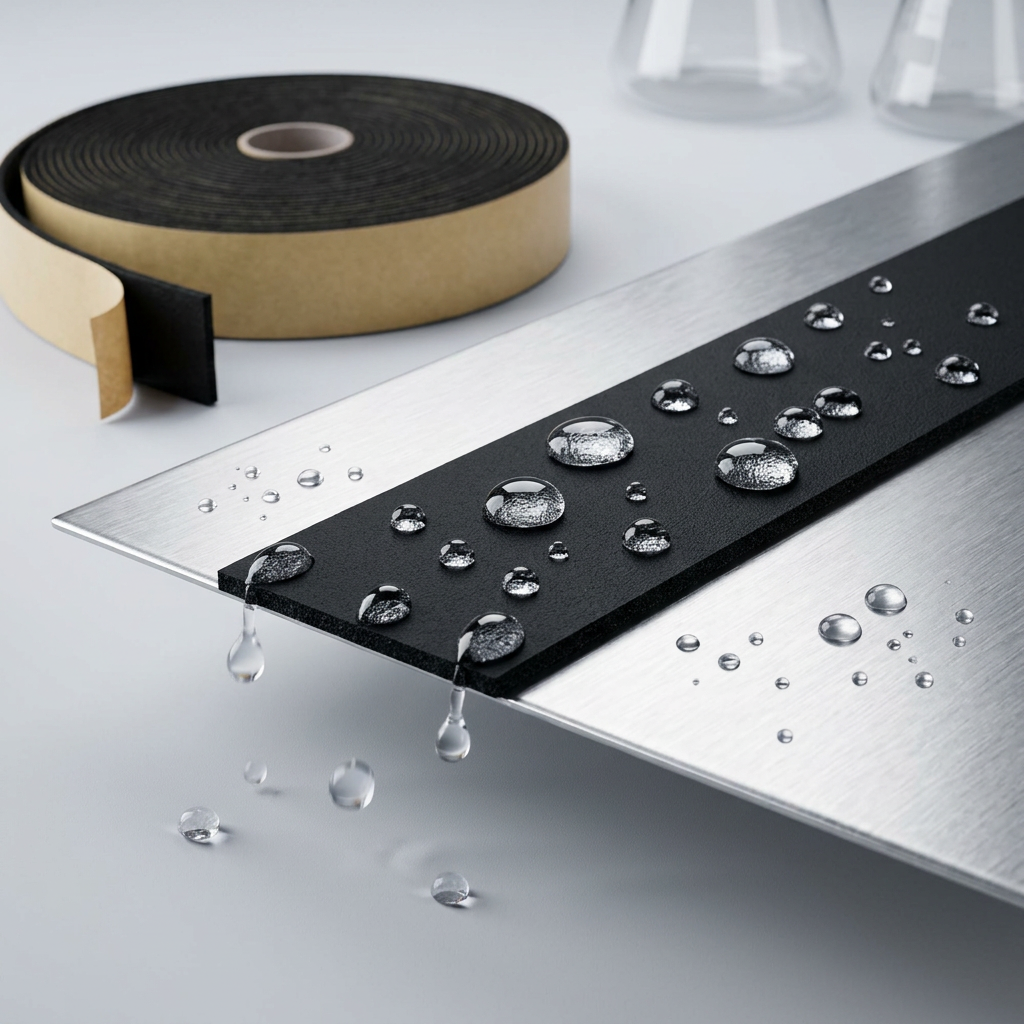
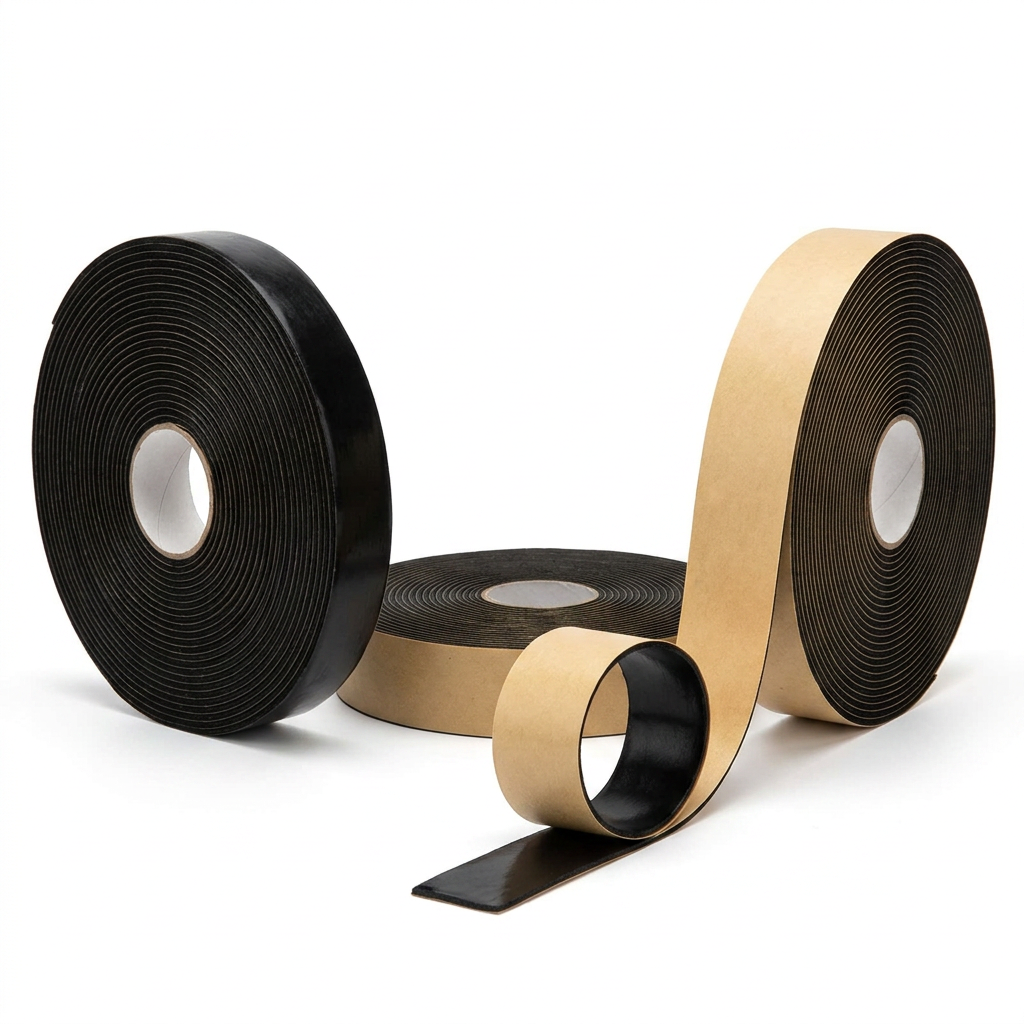
Most tapes fail at the hardest part of an AC installation — the wall penetration. Cold pipe on one side, hot sun on the other, vibration from the compressor, and rain driving against the exterior wall. This self-adhesive sealing tape is formulated to handle all of it. The black butyl-modified adhesive compound remains permanently flexible — it doesn't harden, crack, or lose adhesion with age. The peel-away tan liner protects the adhesive until the moment of application. Press it into place around pipes, ducts, and joints, and it conforms to the surface like a second skin, blocking water, air, dust, and noise. Each roll is 50mm wide and 10 meters long — enough for multiple installations. Simple to apply, impossible to ignore once you've seen what happens when the wrong tape fails.
Product detailed description
The Gap That Kills an Installation
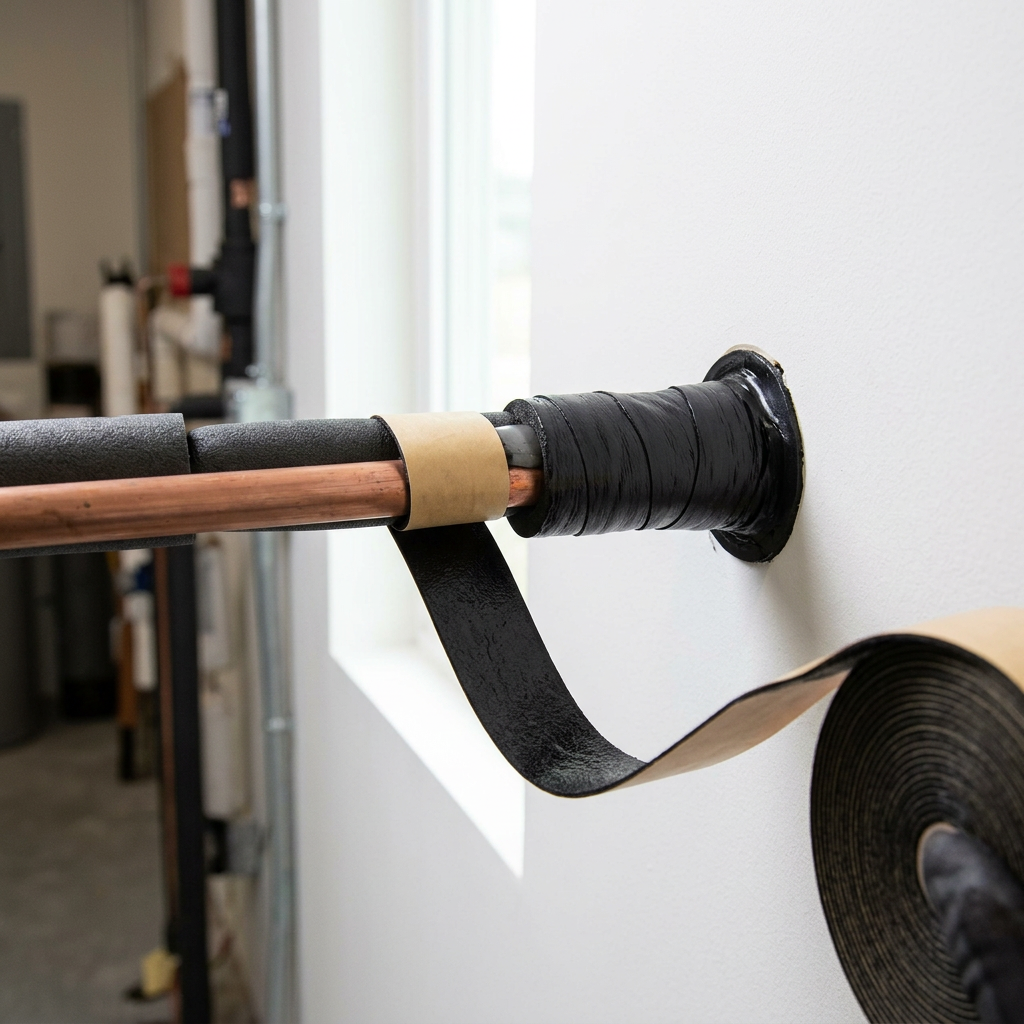
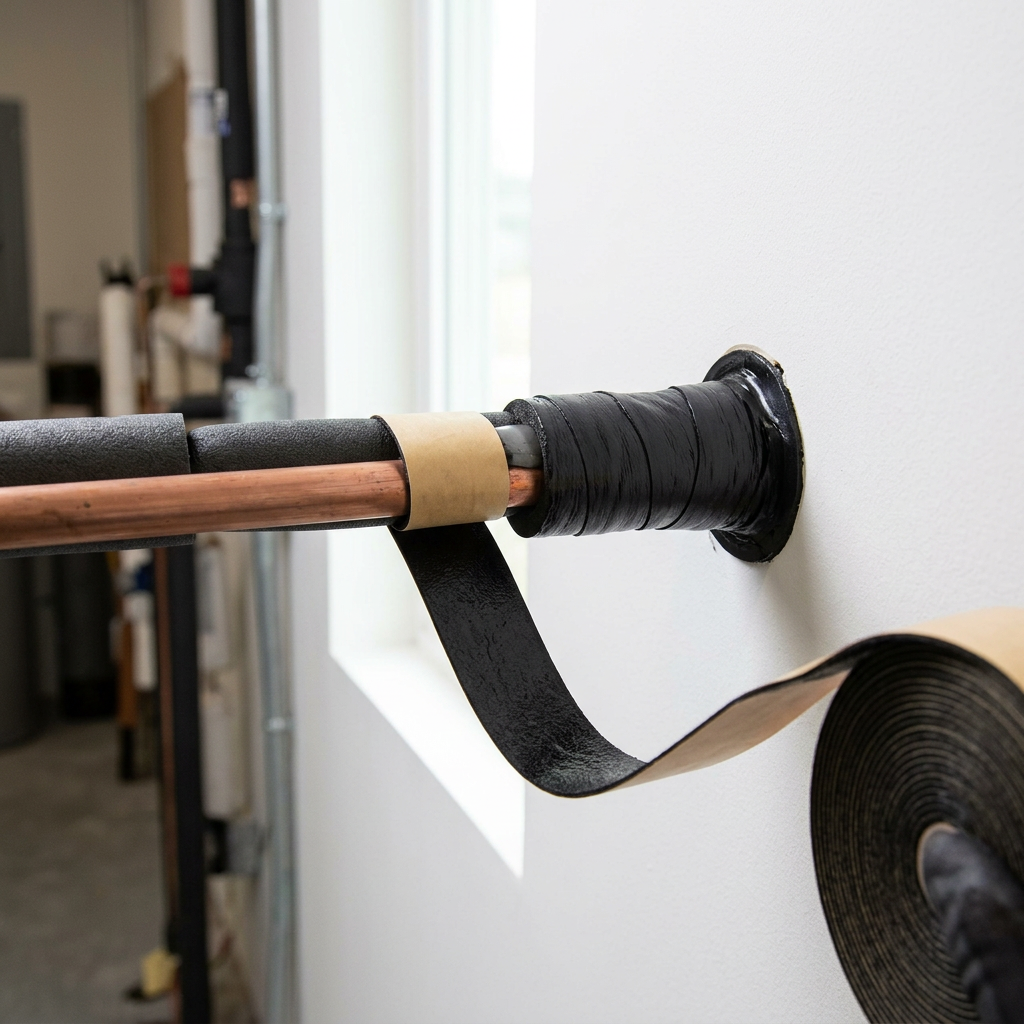
Every split AC installation has at least one wall penetration — the hole where the pipe bundle passes from indoors to outdoors. The installer drills a 65mm hole through brick or concrete, pushes the pipes through, and then faces a decision: seal it properly, or stuff some leftover insulation in the gap and move on. The second choice is the most common. It's also the reason water tracks down the pipe run into the indoor unit, ants and cockroaches build nests inside the wall cavity, and the cold pipe sweats condensation into the brickwork. This tape is the answer to that gap. Press it into the annular space around the pipes, smooth it against the wall on both sides, and the penetration is sealed — waterproof, airtight, pest-proof — in under a minute.
The Chemistry of a Permanent Seal
The adhesive layer in this tape is a butyl-modified pressure-sensitive compound — fundamentally different from the acrylic adhesive on general-purpose tapes. Butyl adhesives remain viscoelastic forever. They flow slightly under sustained pressure to fill microscopic surface irregularities, then stay in place. An acrylic adhesive forms a rigid bond that can fail catastrophically when the substrates expand and contract at different rates (copper pipe vs. brick wall, for example — thermal expansion coefficients differ by a factor of 3). Butyl absorbs that differential movement. It stretches, compresses, and recovers without debonding. This is why butyl tapes are the standard in automotive weatherstripping, marine sealing, and building envelope waterproofing — applications where a failed seal means real damage. HVAC installations deserve the same standard.
More Than Wall Penetrations — Five Use Cases
(1) Wall penetration sealing: The primary use. Pack the tape into the annular gap around the pipe bundle where it passes through the wall, smooth it flat against the wall surface on both interior and exterior sides. Water, air, insects, and noise are blocked.
(2) Duct flange sealing: Apply along the mating surfaces of duct flanges before bolting. The butyl compound compresses to fill surface irregularities that gaskets skip over.
(3) Outdoor unit vibration pads: Cut squares of tape and apply between the outdoor unit feet and the mounting bracket to dampen metal-on-metal vibration transfer.
(4) Drain pipe joint sealing: Wrap around the connection between the drain hose and the indoor unit drain pan outlet to prevent condensate leakage inside the wall.
(5) Cable entry sealing: Seal around electrical cables entering junction boxes or outdoor units to prevent moisture ingress that corrodes terminals.
Apply It in 10 Seconds
Clean the surface — wipe with a dry cloth, or with isopropyl alcohol if the surface is greasy. Peel back a short section of the tan release liner. Press the exposed adhesive firmly onto the surface at the start point. Peel the liner progressively as you work the tape around the pipe or along the joint, pressing firmly as you go. At the end, press and hold for 10 seconds. The bond is immediate and strengthens over 24 hours as the butyl compound fully wets out the surface. No heat gun. No primer. No curing time before the system can be turned on.
Product Specifications
RAMETER |
SPECIFICATION |
Material |
Butyl-modified rubber compound + PE/PP film backing |
Color |
Black |
Adhesive Type |
Butyl-modified pressure-sensitive adhesive |
Liner |
Tan silicone-coated release paper |
Thickness |
1.0 mm (±0.1 mm) — 1.5mm, 2.0mm available |
Width |
50 mm (standard) — 25mm, 75mm, 100mm available |
Length |
10 m per roll (standard) — 5m, 20m, 25m available |
Temperature Range |
-30°C to +90°C (continuous) |
Application Temperature |
-10°C to +40°C (surface temperature) |
Adhesion to Steel |
≥8 N/25mm |
Tensile Strength |
≥25 N/cm |
Elongation at Break |
≥300% |
Water Absorption |
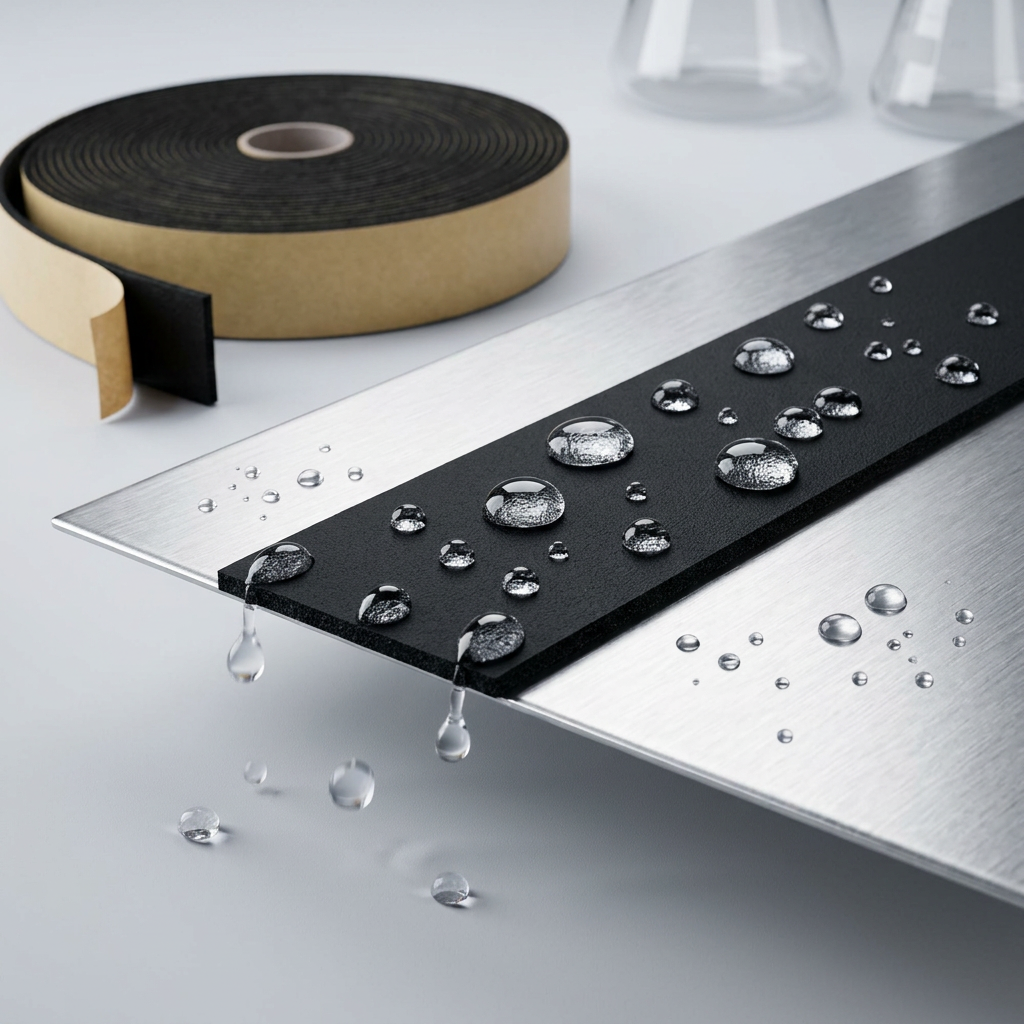
<0.5% (24h immersion) |
UV Resistance |
Film backing is UV-stabilized; for permanent outdoor exposure, cover with PVC wrapping tape |
Service Life |
10+ years (when protected from direct UV) |
Core Diameter |
76 mm (3") |
Packaging |
Individually polybagged, 10 rolls / inner box, 200 rolls / master carton |
Shelf Life |
24 months (store at 10°C–30°C, away from direct sunlight) |
Certifications |
ISO 9001, RoHS, REACH |
MOQ |
500 rolls (sample orders accepted) |
OEM/ODM |
Custom width, thickness, length, color backing, branded core label (MOQ 5,000 rolls) |
Lead Time |
7–15 days (sample), 20–30 days (bulk) |
Payment Terms |
T/T, L/C at sight, Western Union |
FAQ
Q1: What is the difference between this sealing tape and the foam insulation tape?
A: They solve different problems. Foam insulation tape provides thermal insulation — it wraps around cold pipes to prevent condensation. This sealing tape provides waterproofing and air sealing — it blocks water, dust, air, and pests from passing through gaps around pipe penetrations, duct joints, and cable entries. The foam tape is thick (3mm+) and insulating; this tape is thinner (1–2mm) and sealing. Many installations need both: foam tape on the pipe joints, sealing tape around the wall penetration.
Q2: How is this tape different from regular PVC electrical tape?
A: PVC electrical tape uses acrylic adhesive that hardens with age and fails when substrates move at different rates. This tape uses butyl-modified adhesive that remains permanently flexible — it absorbs differential expansion between copper and brick, or aluminum and concrete, without debonding. PVC tape is also not designed for waterproofing gaps — it's a surface wrap, not a gap filler. This tape molds into irregular spaces and creates a true waterproof seal.
Q3: Can the tape be used outdoors without any protective covering?
A: The adhesive and film backing are waterproof and handle outdoor temperatures. However, the film backing is not rated for permanent direct UV exposure — over 2–3 years of constant sun, the film surface may degrade. For outdoor applications (the exterior side of a wall penetration, rooftop duct joints), wrap the sealing tape with a layer of PVC wrapping tape — this is UV-stabilized and protects the seal underneath. The adhesive seal itself remains intact; only the surface film needs protection.
Q4: Will the tape bond to wet or dirty surfaces?
A: No adhesive bonds well to wet surfaces. For best results, the surface must be clean, dry, and free of loose material. Light dust can be wiped away with a dry cloth. Oil, grease, or silicone residue must be removed with isopropyl alcohol. If the surface is damp from rain or condensation, dry it with a cloth and allow it to air-dry completely before applying. The butyl adhesive tolerates slightly damp conditions better than acrylic adhesives, but a dry surface is always the standard for a reliable seal.
Q5: How do I remove the tape if I need to service the area later?
A: The butyl adhesive is designed for permanent installation. To remove, cut along the tape with a utility knife and peel away. The butyl compound will leave a sticky residue on the surface. Remove residue with isopropyl alcohol, mineral spirits, or a dedicated adhesive remover. Be aware that butyl residue requires more effort to clean than acrylic adhesive residue — this is the trade-off for its superior sealing performance. Plan to apply fresh tape when re-sealing after service work.
Q6: Is the tape safe for use around electrical wiring?
A: The tape is not electrically rated as an insulator. It is safe for sealing cable entry points, bundling cables alongside pipes, and wrapping around the exterior of junction boxes — but it must not replace electrical insulation tape on bare conductors or exposed terminals. The tape backing is non-conductive, but it is not tested or certified for dielectric strength. Use purpose-made electrical tape for any application involving exposed electrical connections.


 ONLINE

 EN
EN