

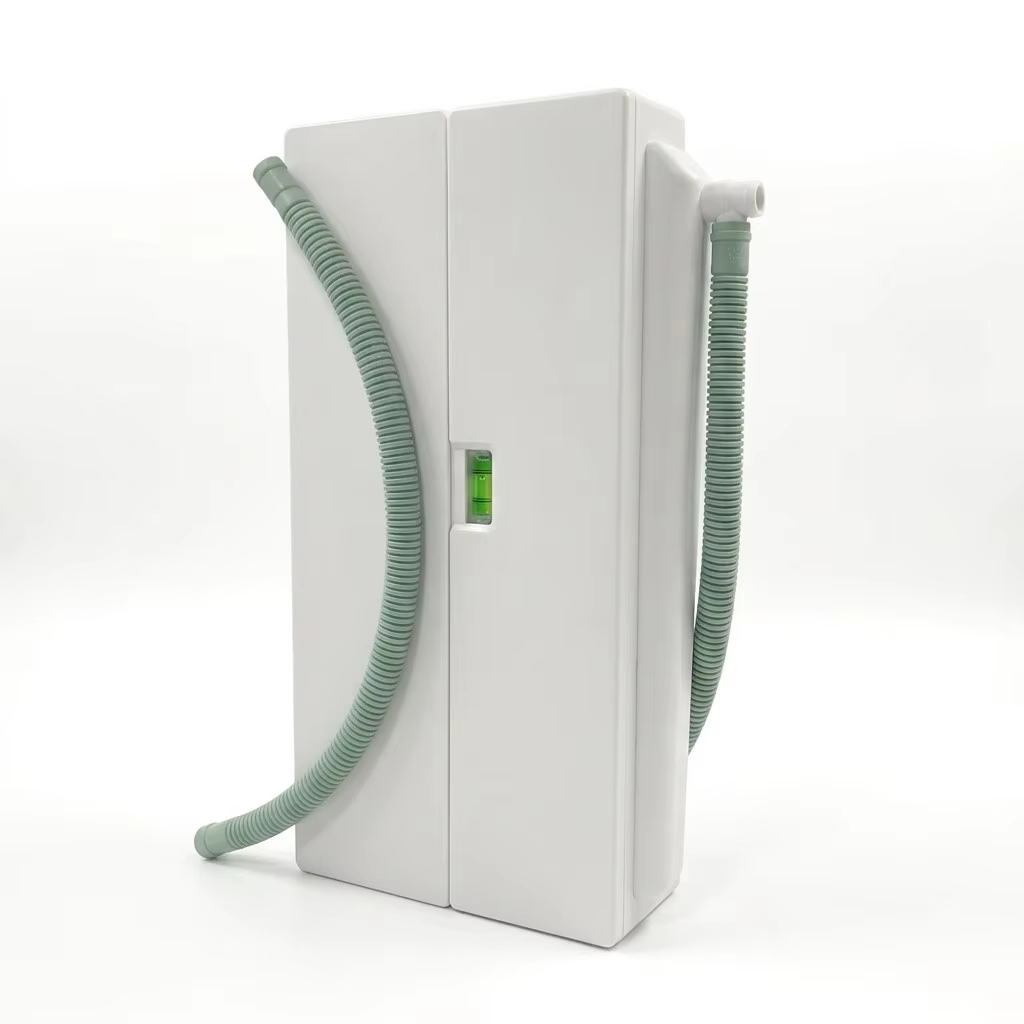
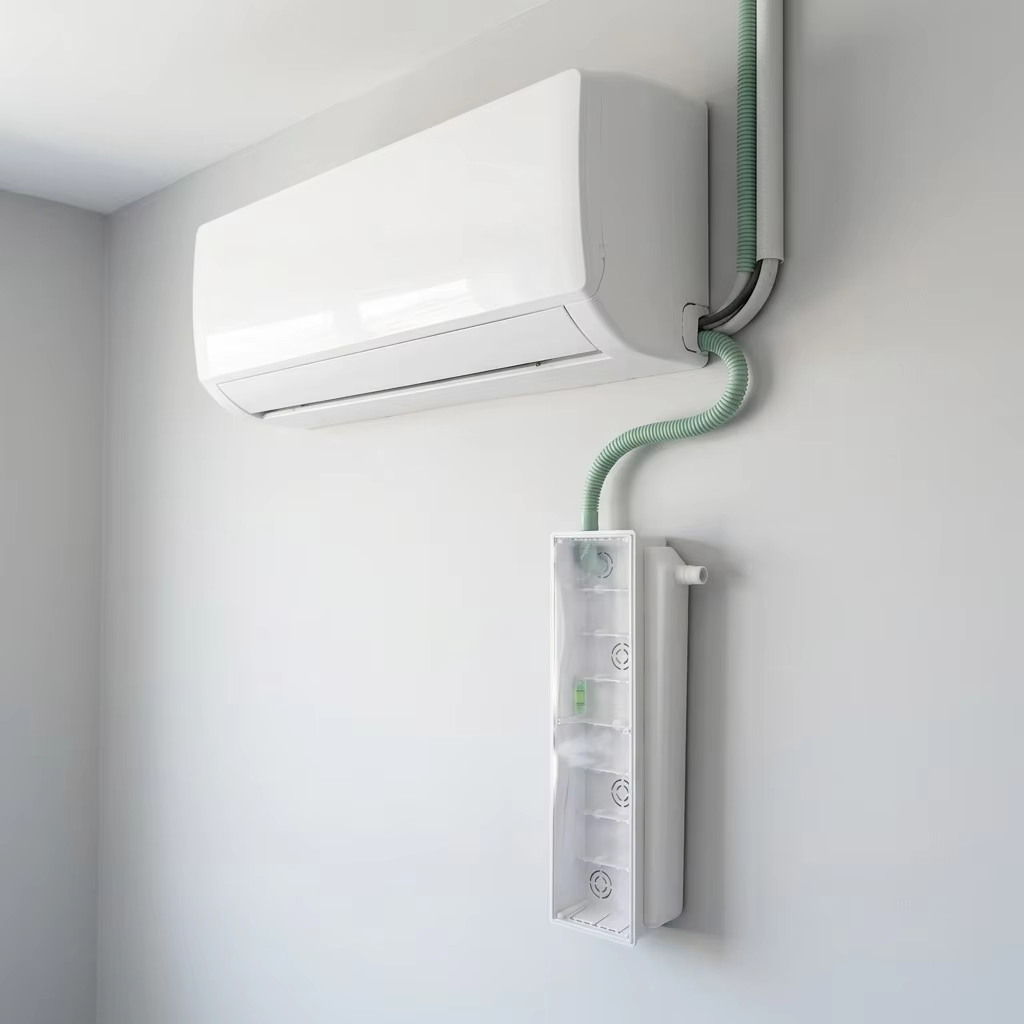
Compact in-line condensate pump designed for split, cassette, and ducted air conditioner indoor units where gravity drainage is not possible — includes integrated reservoir, built-in spirit level, flexible discharge hose, and full mounting hardware kit.
Product brief description
When an indoor AC unit is installed on an interior wall below the drain level, gravity cannot do the job — this is where our condensate pump kit takes over. Designed for mini-split, wall-mounted, cassette, and ducted indoor units, the pump automatically collects condensate water in its built-in reservoir and lifts it up to 4 meters vertically to the nearest drainage point. The ultra-quiet operation at just 20 dB(A) means it runs unnoticed in bedrooms, offices, and hotel rooms. A built-in float switch triggers the pump only when water is present, a thermal overload protector prevents burnout, and the included spirit level ensures perfect horizontal alignment during installation. Everything you need ships in one box — pump unit, flexible discharge hose, mounting screws, and installation guide.
Product detailed description
When Gravity Isn't an Option
Not every AC installation has the luxury of an exterior wall where condensate can drain naturally. Interior walls, basement-level units, ceiling cassettes above finished spaces, and ducted units in false ceilings all face the same problem: the condensate has nowhere to go. A drain pump kit solves this elegantly — it collects the water, lifts it to a higher discharge point, and routes it to the nearest drain, sink trap, or exterior outlet. No cutting channels in concrete. No reversing the indoor unit position. No compromising on the optimal cooling layout just because the drain is in the wrong place.
20 dB(A) — The Sound of Silence
The single biggest complaint about budget drain pumps is noise. A loud pump in a bedroom or meeting room ruins the space. Our pump operates at just 20 dB(A) — roughly equivalent to a whisper or rustling leaves. The vibration-dampened mounting design isolates the pump body from the wall, and the high-efficiency impeller design minimizes turbulence noise inside the reservoir. Install it behind the indoor unit, mount the cover, and your customer won't know it's there until the next service visit.
How the Float Switch Works
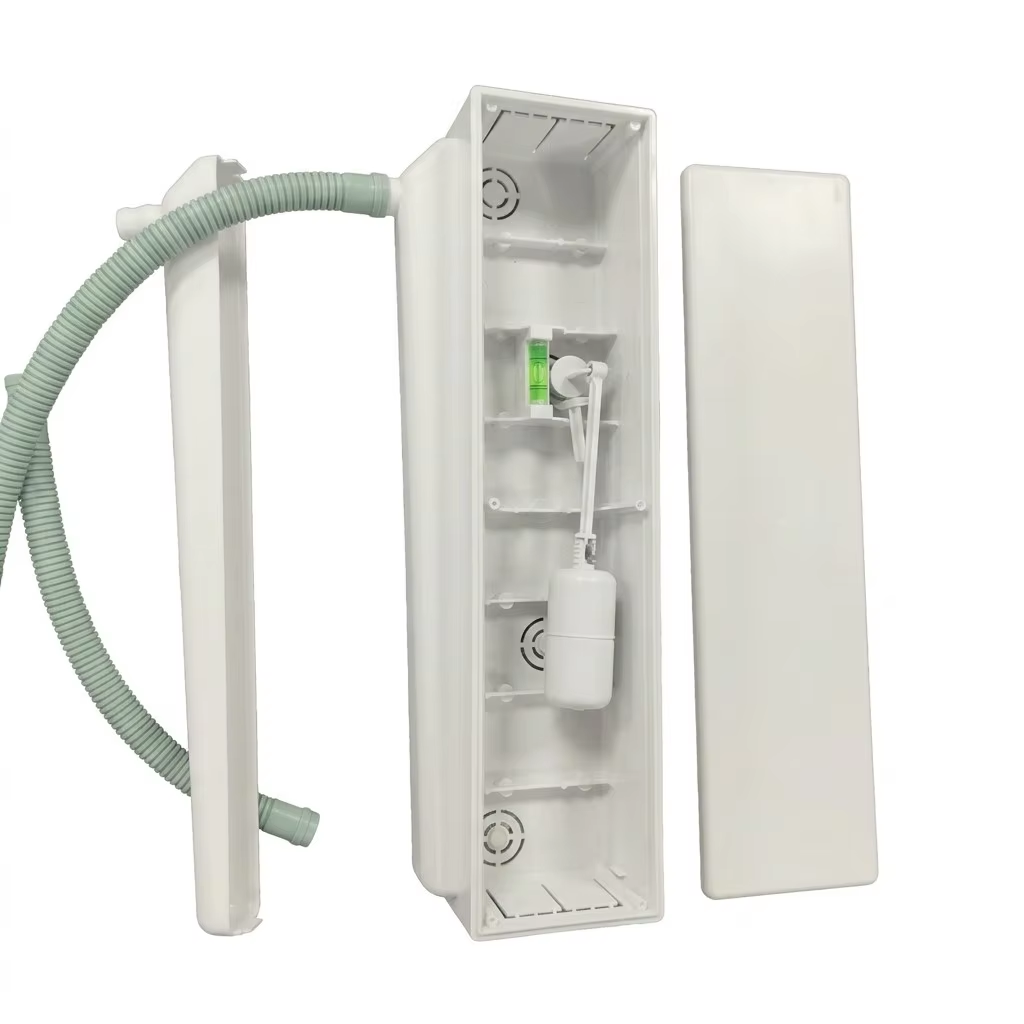
Inside the reservoir, a magnetic float rises as condensate water accumulates. When it reaches the activation level, the float triggers a micro-switch that powers the pump motor — the impeller spins up, pushes water through the discharge hose, and the reservoir empties. When the water level drops, the float falls and the switch cuts power to the motor. This cycle repeats automatically, on-demand, with no timer and no wasted electricity. A secondary safety float at a higher level acts as a fail-safe: if the primary switch fails, the safety float cuts power to prevent overflow. A thermal overload protector adds a third layer — if the motor overheats from a blocked hose or dry running, it shuts down and auto-resets after cooling.
One Kit, Everything Included
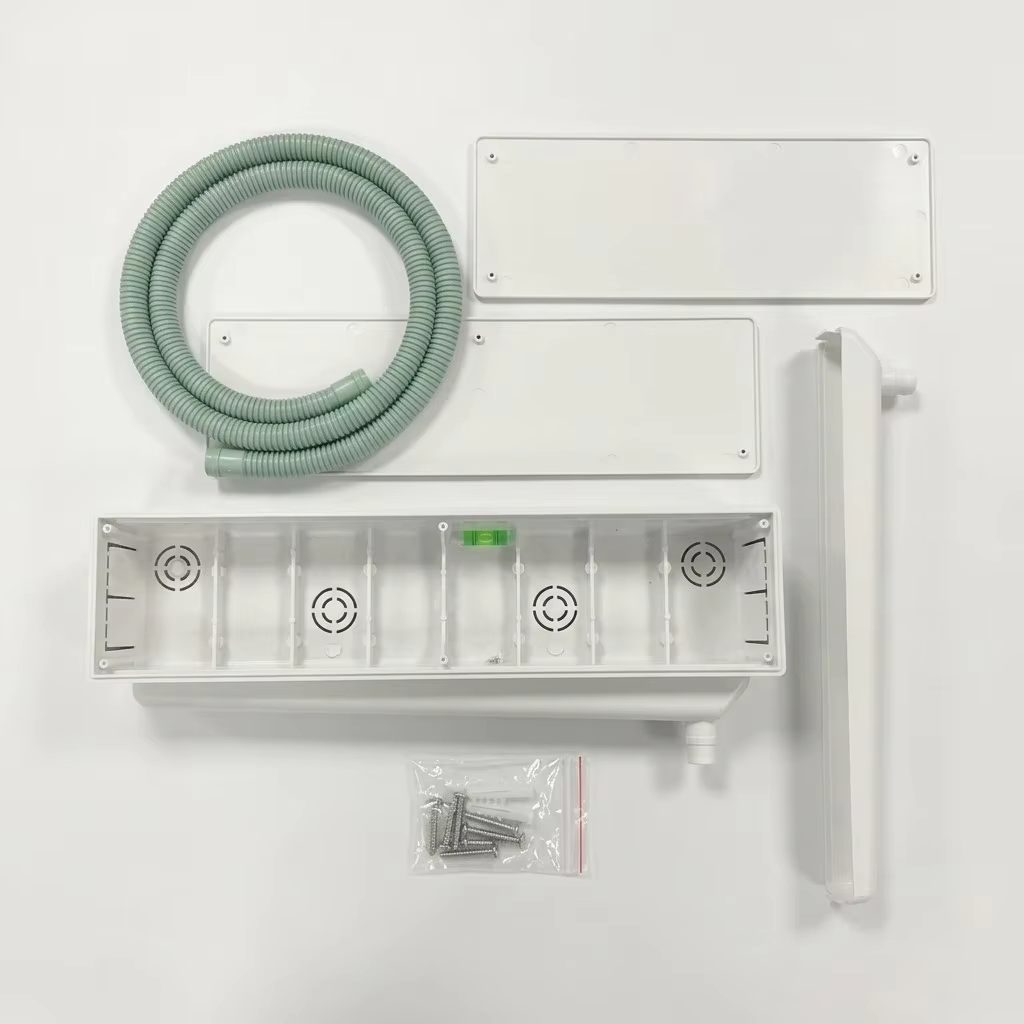
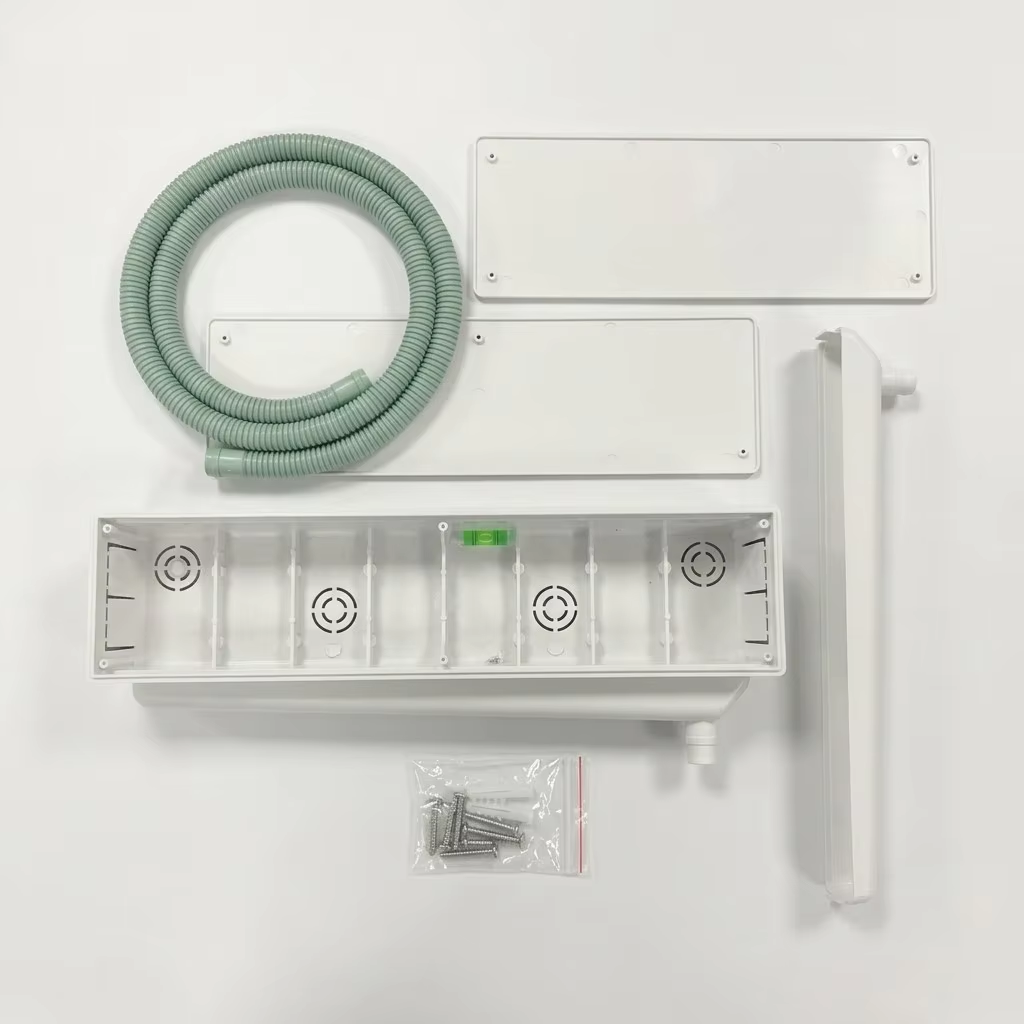
We ship a complete kit because we know installers hate arriving on-site and discovering a missing fitting. Every box contains: the pump unit with integrated reservoir and float switch assembly, a 5-meter flexible corrugated discharge hose with push-fit connectors at both ends, a flat rectangular cover panel, all necessary stainless steel mounting screws and wall plugs, a pre-installed spirit level for alignment, and a printed installation guide with pipe routing diagrams. No separate accessory order. No trip back to the supplier.
Installation in Three Steps
Step one — mount the pump unit on the wall behind or beside the indoor unit using the included bracket and screws, with the built-in spirit level ensuring perfect horizontal alignment. Step two — connect the indoor unit's drain outlet to the pump reservoir inlet using a short piece of drain hose (not included — match to your indoor unit's drain port size, typically 16mm or 20mm). Step three — route the green flexible discharge hose from the pump outlet to the nearest drainage point, securing it every 500mm with pipe clips. Total time for an experienced installer: 15–20 minutes. The cover panel snaps onto the pump housing for a clean, finished appearance.
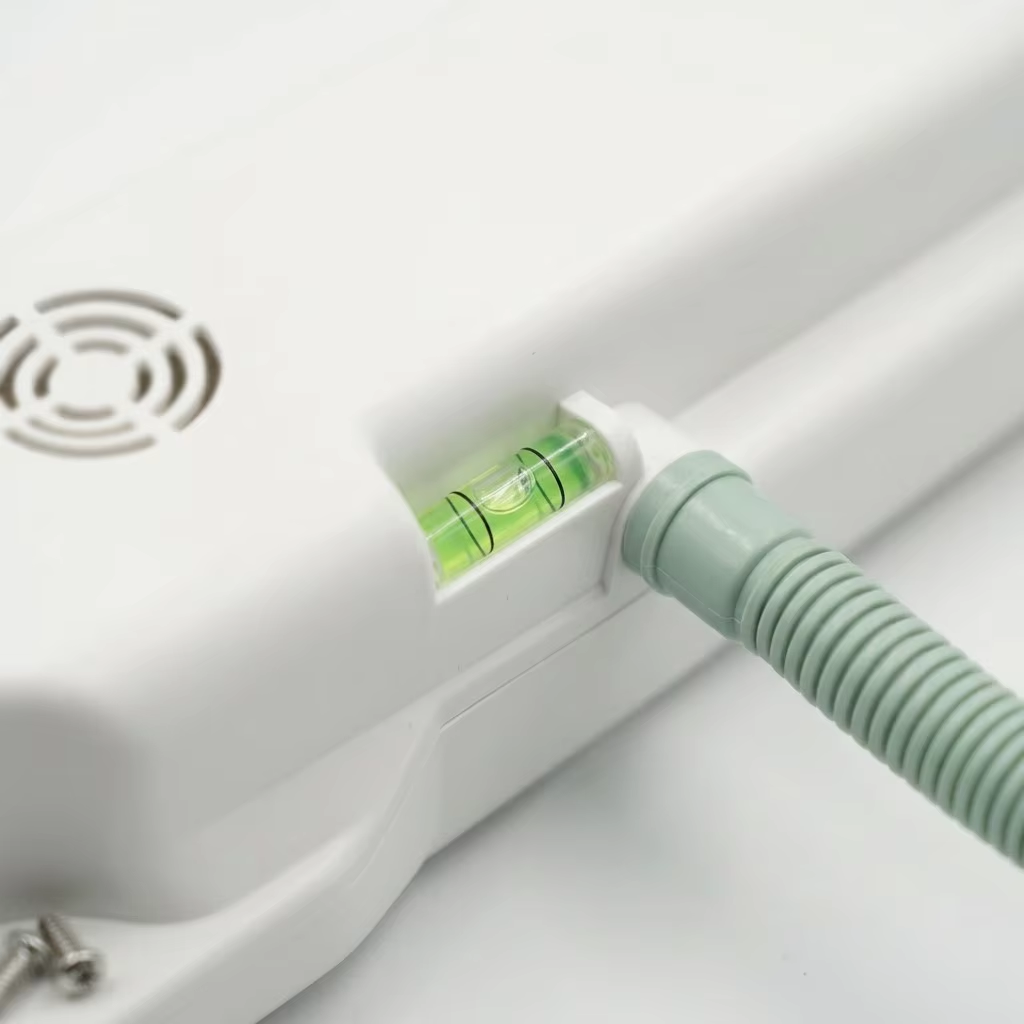
Built-in Spirit Level — Small Detail, Big Difference
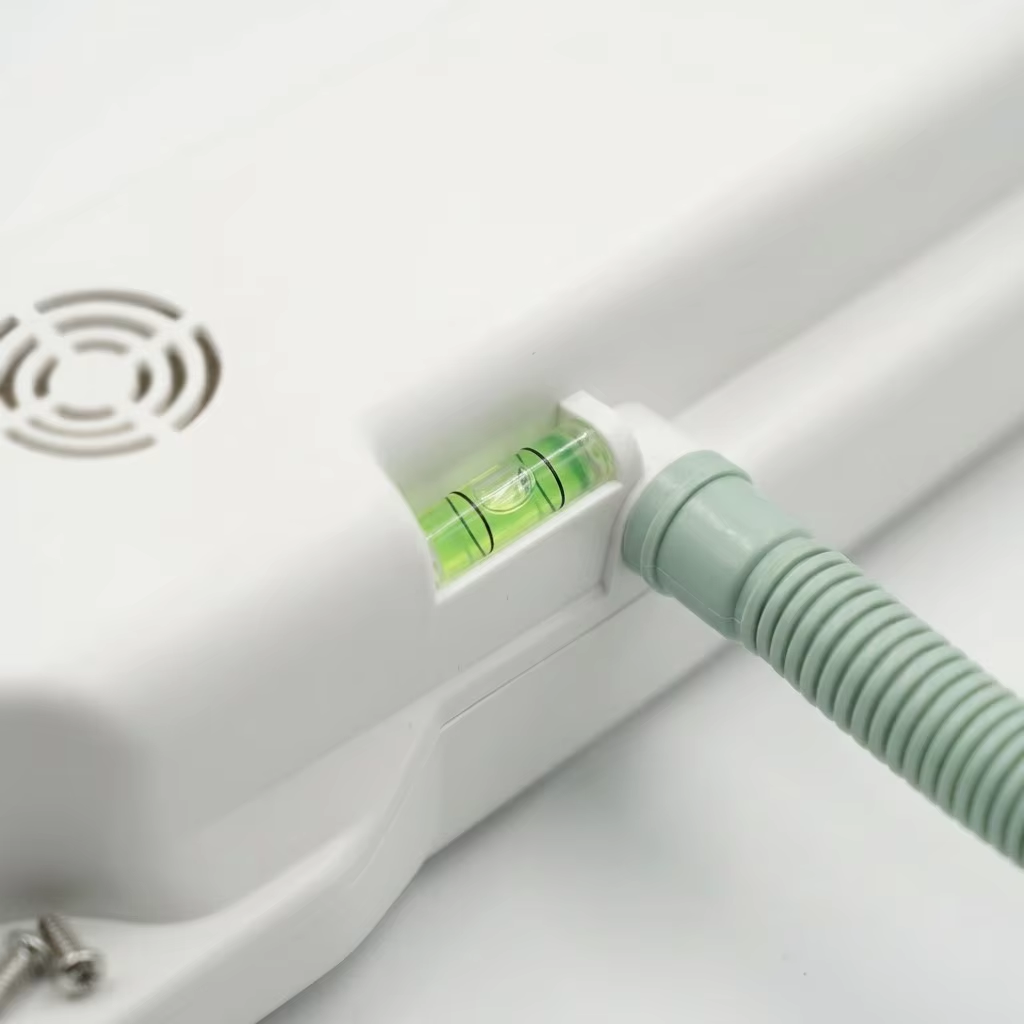
Why does horizontal alignment matter? A tilted pump reservoir means the float switch activates too early or too late — too early and the pump short-cycles and wears out prematurely; too late and the reservoir overflows before the pump engages. The pre-installed green spirit level eliminates guesswork. Mount the bracket, check the bubble, adjust if needed, lock the screws. Two seconds of alignment saves a flooded ceiling and an angry callback six months later.
Product Specifications
MODEL |
MAX FLOW RATE |
MAX LIFT |
MAX HORIZONTAL |
NOISE LEVEL |
VOLTAGE |
POWER |
HOSE SIZE |
RESERVOIR CAPACITY |
NET WEIGHT |
RB-ACD-60 |
6 L/h |
3 m |
15 m |
20 dB(A) |
220–240V / 50Hz |
5W |
ID 6mm, OD 9mm |
250 ml |
0.8 KG |
RB-ACD-120 |
12 L/h |
4 m |
20 m |
20 dB(A) |
220–240V / 50Hz |
6W |
ID 6mm, OD 9mm |
300 ml |
0.9 KG |
RB-ACD-180 |
18 L/h |
4 m |
25 m |
22 dB(A) |
220–240V / 50Hz |
8W |
ID 8mm, OD 11mm |
400 ml |
1.1 KG |
RB-ACD-120U |
12 L/h |
4 m |
20 m |
20 dB(A) |
110–120V / 60Hz |
6W |
ID 6mm, OD 9mm |
300 ml |
0.9 KG |
FAQ
Q1: When do I need a condensate drain pump vs. gravity drainage?
A: You need a drain pump when the indoor AC unit is installed in a location where condensate cannot flow by gravity to a drain point. Most commonly: (a) the unit is on an interior wall away from an external drainage path, (b) the unit is in a basement or below-grade level, (c) the unit is a ceiling cassette above a finished room with no gravity fall to the nearest drain, (d) the drain pipe run would require cutting through beams or structural elements. If the indoor unit's drain outlet is lower than the nearest drain, you need a pump.
Q2: What does the 4m maximum lift mean in practice?
A: The pump can push condensate water vertically upward by up to 4 meters. For example, if the pump sits at floor level, it can discharge into a drain pipe located up to 4 meters above it — through a false ceiling, over a doorway, or up to a sink drain connection. The horizontal discharge distance is up to 20 meters (for RB-ACD-120). The 4m lift and 20m horizontal run are maximum values — the actual performance decreases slightly as horizontal distance increases, so plan conservatively. A common rule of thumb: every 10 meters of horizontal run is equivalent to approximately 1 meter of vertical lift in terms of pump load.
Q3: Is the pump noisy? Will it disturb sleep in a bedroom?
A: At 20 dB(A), the pump is effectively silent in a residential setting. For reference: a whisper is ~30 dB(A), rustling leaves ~20 dB(A), and a typical refrigerator hum ~40 dB(A). The pump activates intermittently — only when the reservoir fills — so it does not run continuously. In a bedroom installation, the brief activation is barely perceptible and far quieter than the air conditioner's own fan and compressor cycle.
Q4: What happens if the pump fails or the discharge hose gets blocked?
A: Three layers of protection prevent overflow: (1) The primary float switch stops the pump when water level is low, preventing dry running. (2) A secondary safety float at a higher reservoir level cuts all power if the primary switch fails or the pump cannot discharge — this prevents the reservoir from overflowing and damaging the ceiling or wall. (3) A thermal overload protector shuts down the motor if it overheats (from a blocked hose, for example) and auto-resets after cooling. In the unlikely event of a complete failure, the indoor unit's own drain pan has a limited overflow capacity, but the safety float trigger should be treated as a service call signal.
Q5: Can the discharge hose be cut to length?
A: Yes. The included 5m flexible hose can be cut to the exact length needed using a utility knife or hose cutter. Cut square, deburr the edge, and reattach the push-fit connector. For runs longer than 5m, extension hoses are available separately. Keep the hose run as straight as possible with minimal bends — every 90° bend reduces pump efficiency by approximately 5–10%. Use gentle curves rather than sharp elbows.
Q6: Does the pump need regular maintenance?
A: Minimal maintenance is required. We recommend inspecting and cleaning the reservoir once per year during the AC's annual service. To clean: remove the cover panel, lift out the pump unit, flush the reservoir with clean water, check that the float moves freely, wipe the interior with a mild disinfectant to prevent algae or biofilm buildup, and reassemble. The impeller and motor are sealed and do not require lubrication. If the discharge hose shows signs of algae or blockage, flush it with a diluted bleach solution (1:10) followed by clean water.
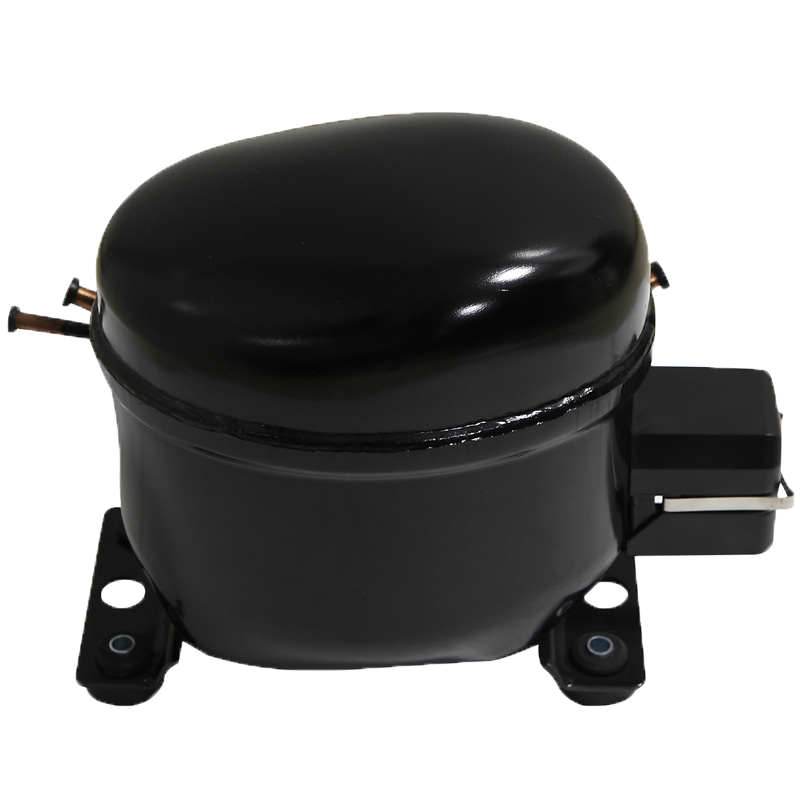
Heavy-Duty Reciprocating Compressor for Commercial Refrigeration Systems
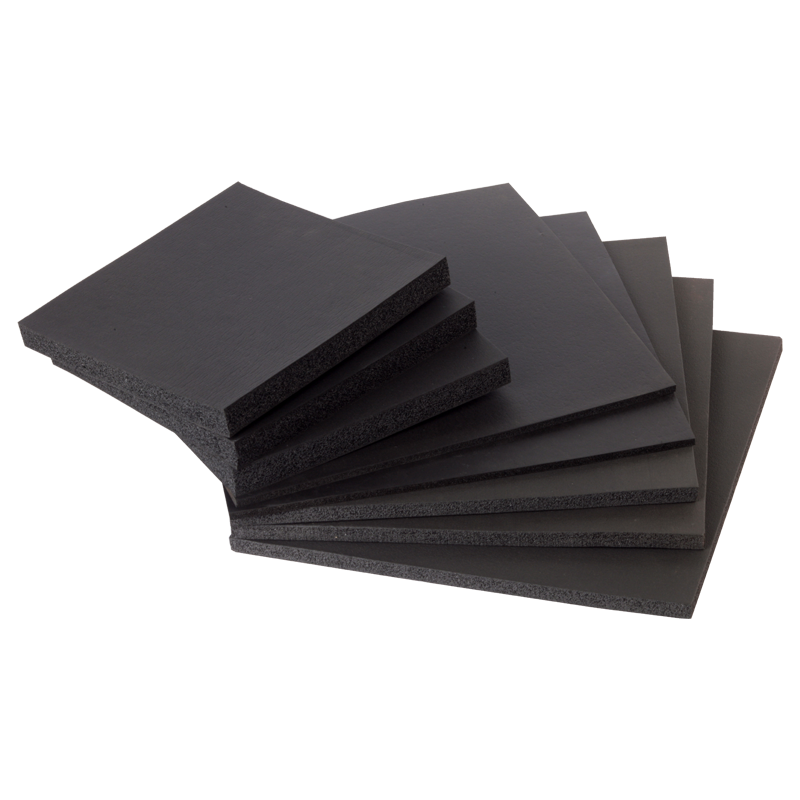
Thermal Insulation Foam Sheet for Refrigerator & Cooling Equipment
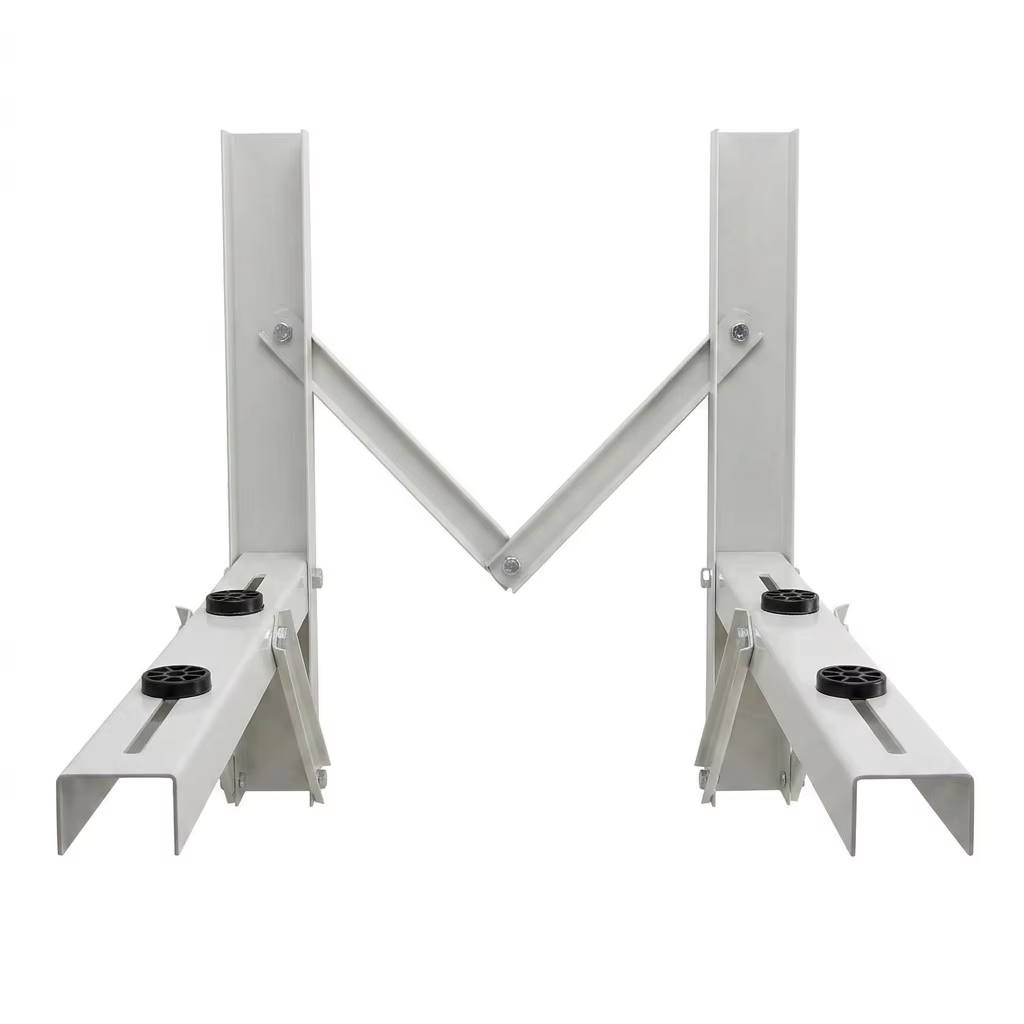
Heavy-Duty AC Mounting Bracket | 200KG Load Capacity | Anti-Rust & Anti-Vibration
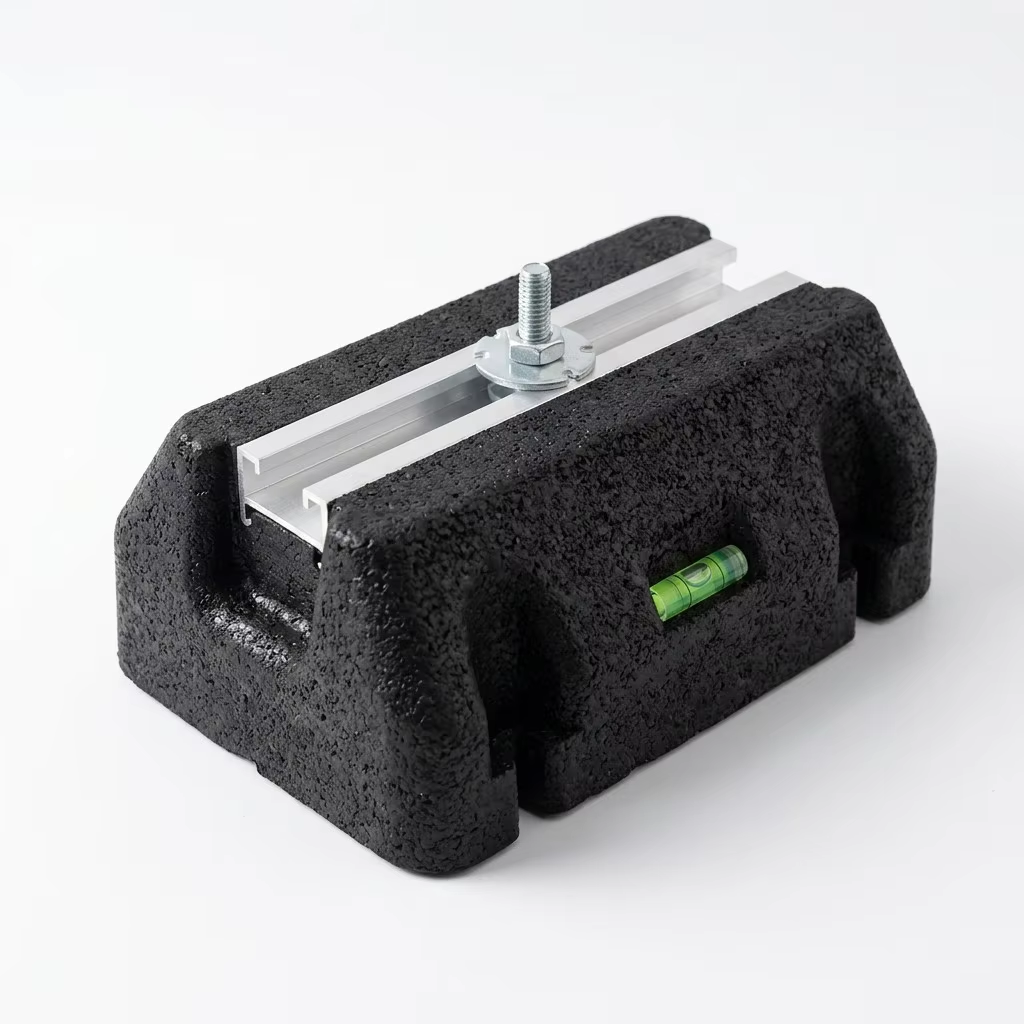
AC Condenser Rooftop Support Base | Anti-Vibration Recycled Rubber | Aluminum C-Channel Rail | Built-in Bubble Level
 ONLINE

 EN
EN