

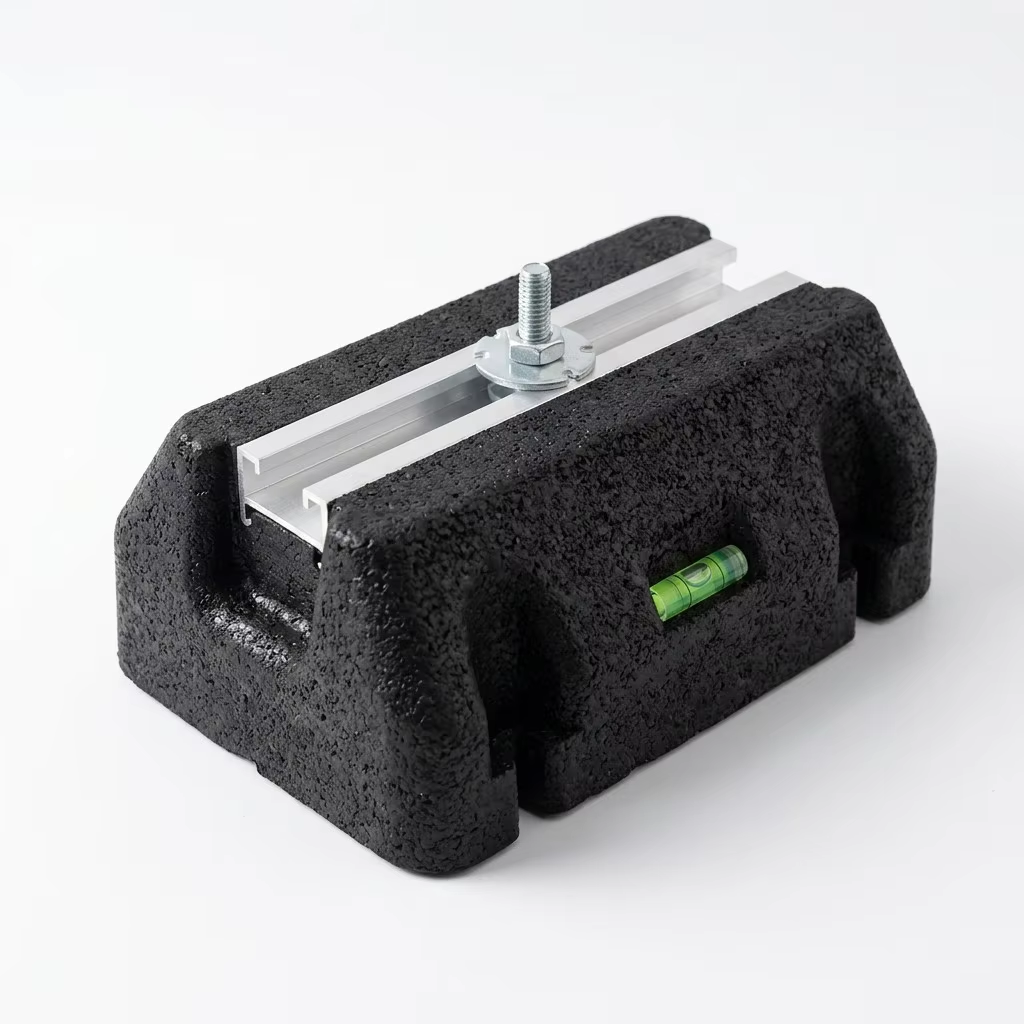
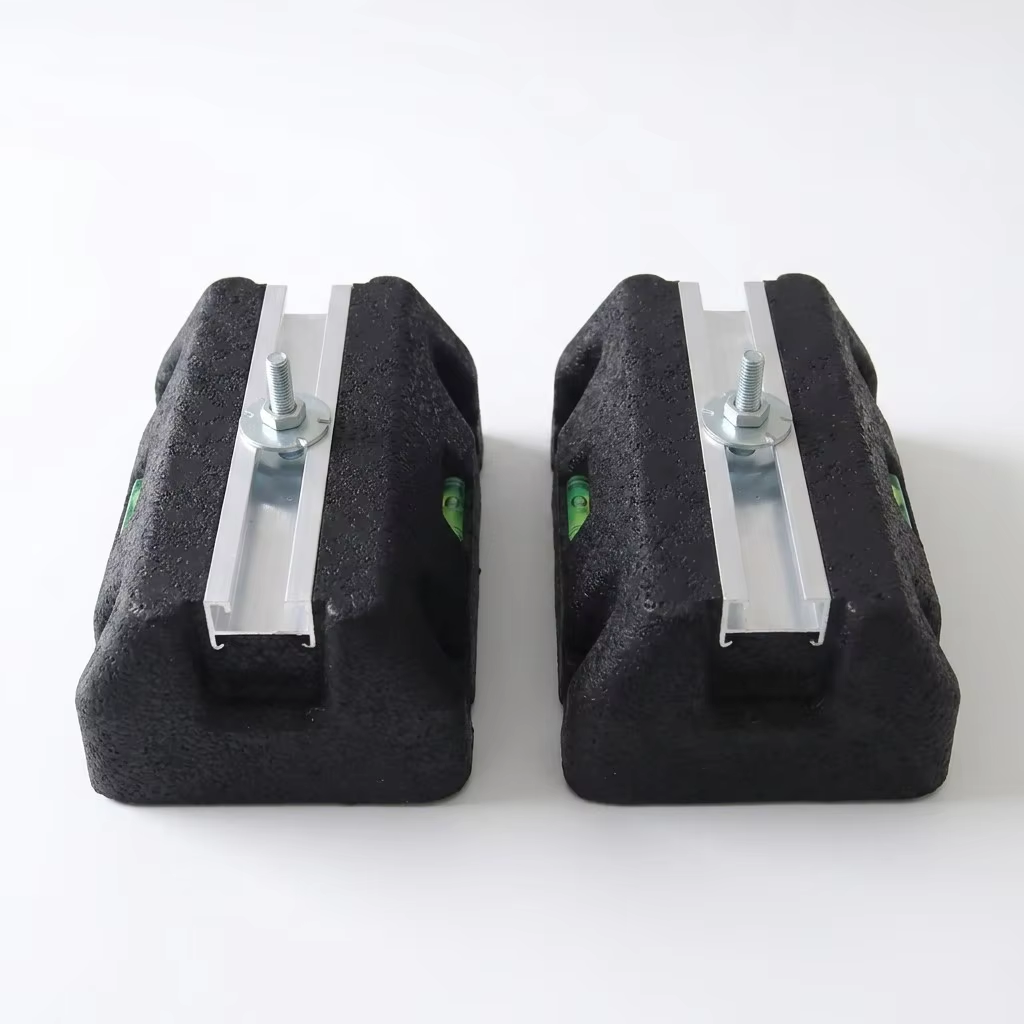
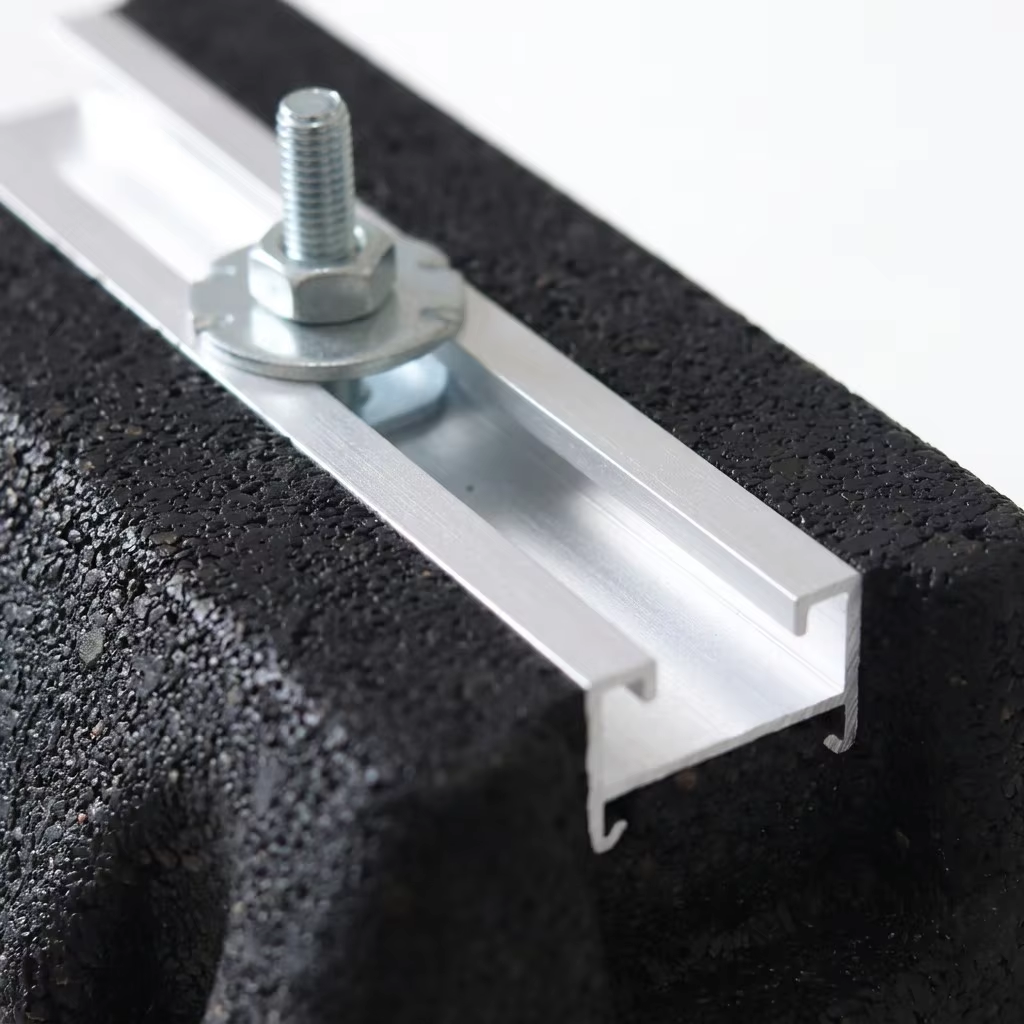
Rugged molded rubber mounting block engineered for flat-roof and ground-level split AC outdoor unit installations — absorbs compressor vibration, elevates the unit for drainage, protects the roof membrane, and includes an integrated bubble level for dead-level setup in seconds.
Product brief description
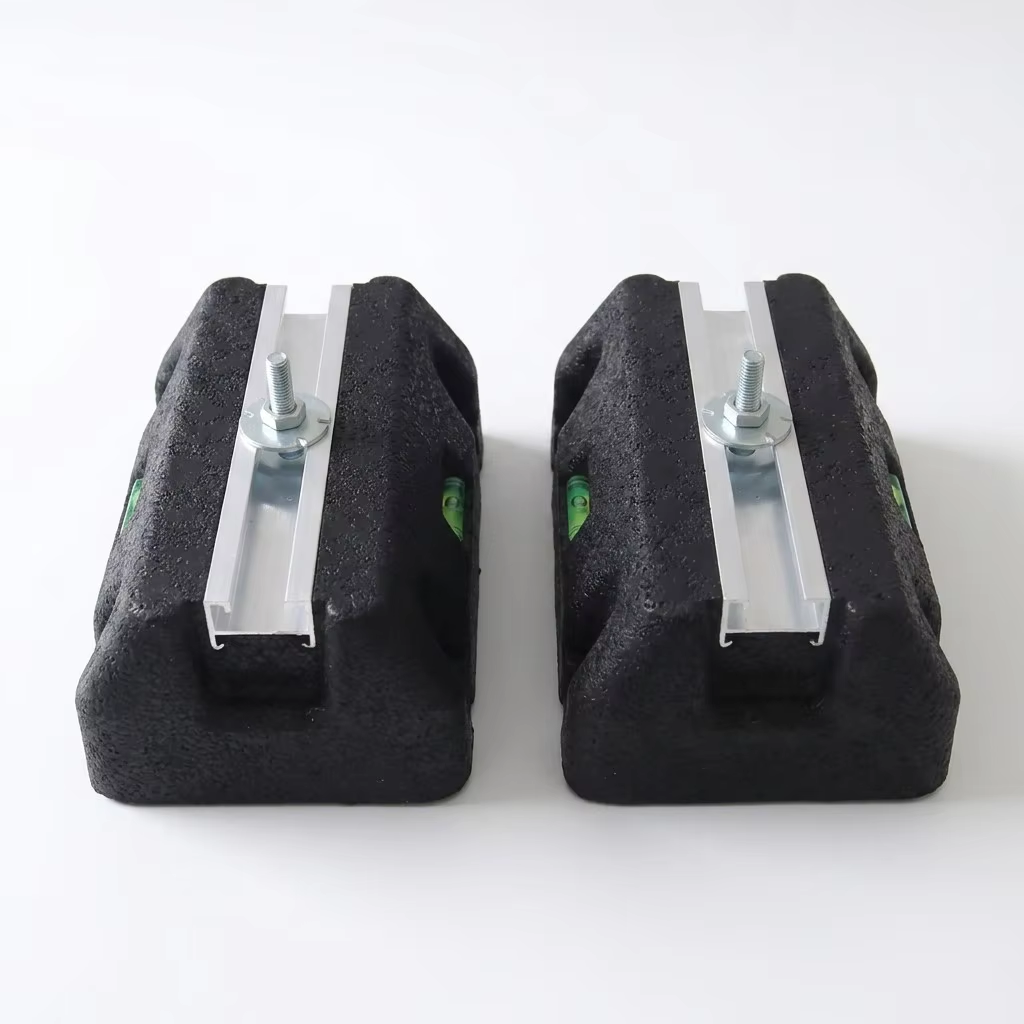
This rooftop condenser support base solves four problems at once. It elevates the outdoor unit off the roof surface for airflow and drainage. It absorbs compressor vibration so the hum doesn't travel through the building structure. It protects the roof membrane from direct metal contact that can cause punctures and leaks over time. And its built-in bubble level eliminates the guesswork — mount the unit, check the bubble, and walk away confident it's perfectly level. The body is compression-molded from recycled rubber with a coarse pebbled texture for all-weather grip. The embedded aluminum C-channel rail accepts standard M8/M10 bolts, letting you slide and position the fixing hardware anywhere along the block's length. Two blocks support a single outdoor unit — simple, indestructible, and roof-safe.
Product detailed description
Why a Rubber Base Beats a Metal Stand on a Flat Roof
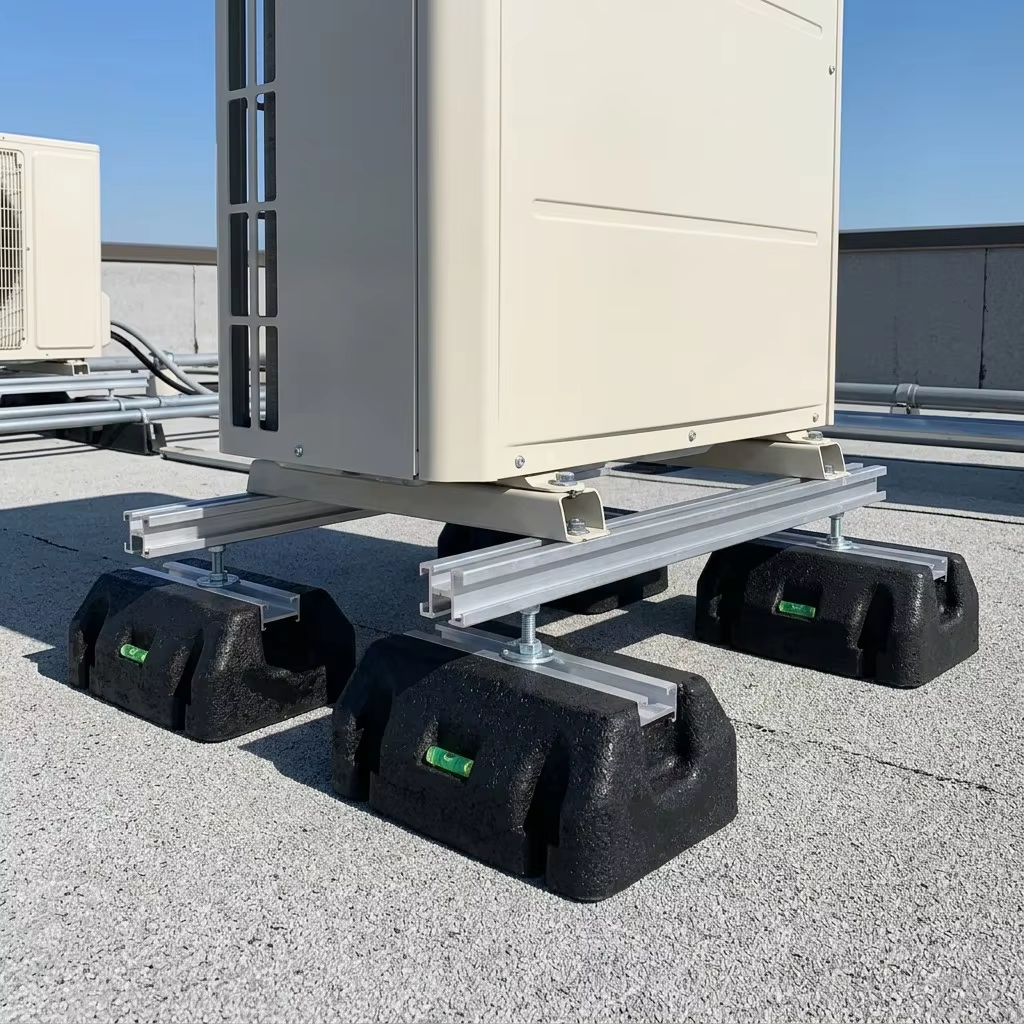
Metal stands on flat roofs create three problems: they transmit vibration directly into the building, their sharp feet can puncture waterproofing membranes, and they trap water underneath, accelerating corrosion of both the stand and the roof deck. A solid rubber block solves all three. The heavy molded rubber body — weighing 6KG per block — stays put without anchoring. The coarse pebbled surface grips the roof surface even when wet. The unit sits elevated on the aluminum rail, with full airflow underneath for drainage and heat dissipation. No rust. No punctures. No vibration hum echoing through the top-floor ceiling.
The C-Channel Rail — Infinite Adjustment, Zero Drilling
The embedded aluminum C-channel runs the full length of the rubber block. Slide an M8 or M10 square-head bolt into the channel from either end, position it to match your condenser's mounting foot spacing, drop on the washer and nut, and tighten. The inward-facing channel lips lock the bolt head against rotation, so you can tighten the nut from above with a single wrench. Need to reposition? Loosen, slide, retighten. No drilling new holes in a steel stand. No brackets that only fit one unit footprint. One base block works with virtually any residential condenser from 1HP to 5HP.
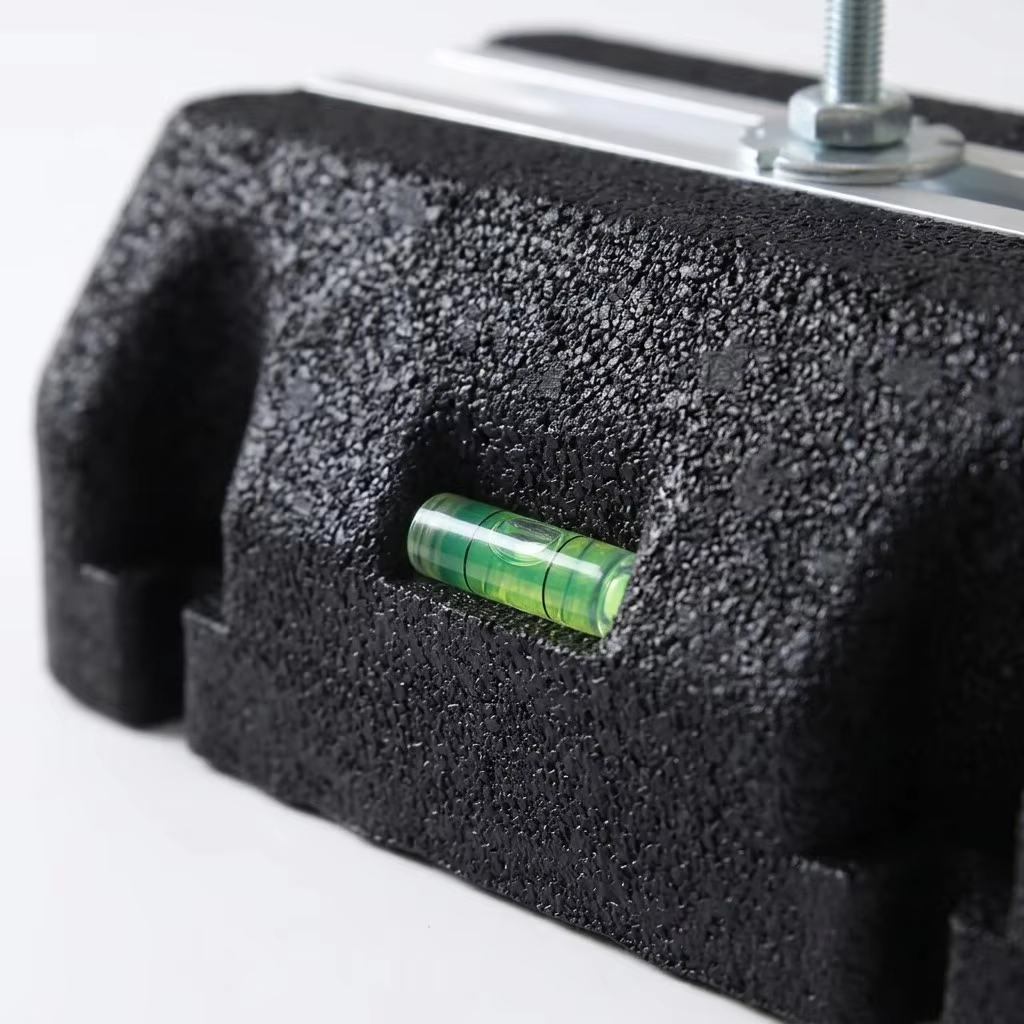
The Bubble Level Built Right In
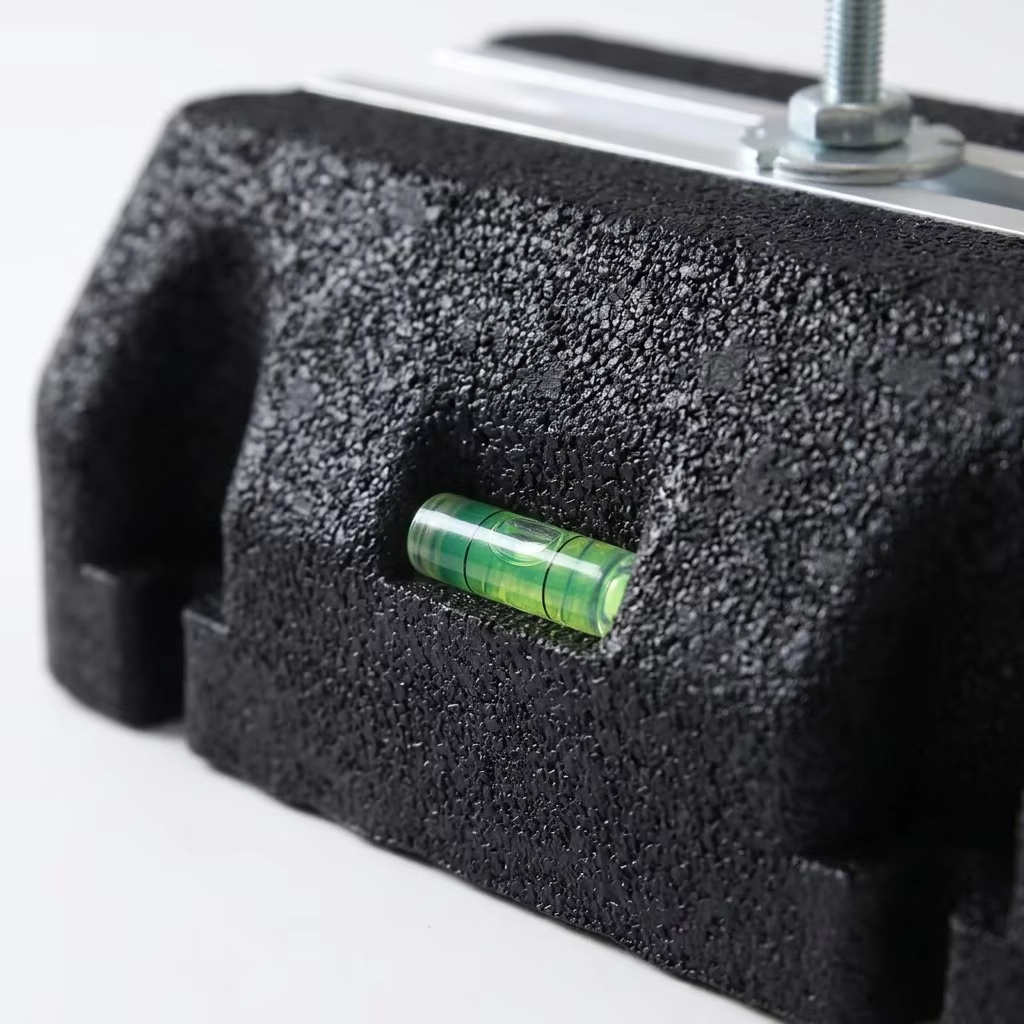
Every installer carries a spirit level — until it's left in the van three floors down. The bright green bubble level embedded in the side of every block solves this permanently. As you position the unit, glance at the bubble. Adjust the shim under the low side if the roof has a slight slope (most flat roofs do — for drainage). The bubble tells you instantly when the unit is true. Two seconds of checking saves a compressor that runs with uneven oil distribution and fails years early.
Recycled Rubber — Tough, Green, and Forever
The body of each support block is compression-molded from recycled rubber — the same material used in commercial gym flooring and industrial machinery pads. It has a density of approximately 1,000 kg/m³, giving it enough mass to sit firmly in place without mechanical anchoring in most wind conditions. The rubber is UV-stabilized, ozone-resistant, and naturally waterproof. It does not absorb water, does not support mold or algae growth, and does not become brittle in sub-zero temperatures. At end of life — typically 15+ years — the block is fully recyclable back into the same manufacturing stream.
One Pair, One Unit, Done
Two blocks support one outdoor condenser — positioned under the left and right mounting feet. No cross-bracing, no assembly, no tools required except a wrench for the mounting bolts. Set the blocks in position on the roof, slide the bolts to match the condenser footprint, lift the unit onto the blocks, level it using the built-in bubble, and tighten. Total installation time from unboxing to done: under 10 minutes. For larger commercial VRF units, use three or four blocks in parallel — the modular design scales with the load.
Weatherproof to the Core
We test these blocks in extreme conditions because that's where they're used. From Middle Eastern rooftop temperatures exceeding 70°C surface heat to Scandinavian winters at -30°C, the rubber compound stays dimensionally stable. It does not soften and creep under load in summer. It does not crack or shatter in winter. The aluminum C-channel is anodized for corrosion resistance and bonded into the rubber during the molding process — it will not delaminate or pull out under load. The bubble level vial is acrylic, UV-stabilized, and permanently sealed.
Product Specifications
MODEL |
DIMENSIONS (L×W×H) |
MAX LOAD (per pair) |
RAIL LENGTH |
RAIL WIDTH |
NET WEIGHT |
PACK QTY |
RB-RSB-S |
400 × 90 × 80 mm |
200 KG |
380 mm |
30 mm |
4.0 KG |
2 PCS / box |
RB-RSB-M |
500 × 100 × 90 mm |
300 KG |
480 mm |
30 mm |
6.0 KG |
2 PCS / box |
RB-RSB-L |
600 × 110 × 100 mm |
400 KG |
580 mm |
35 mm |
8.5 KG |
2 PCS / box |
RB-RSB-XL |
800 × 120 × 110 mm |
600 KG |
780 mm |
40 mm |
12.0 KG |
2 PCS / box |
Q1: Why use rubber support blocks instead of a metal stand?
A: Rubber blocks provide three advantages over metal stands on flat roofs: (1) vibration isolation — the rubber absorbs compressor hum before it enters the building structure, eliminating low-frequency noise in top-floor rooms; (2) roof membrane protection — the smooth rubber bottom won't puncture waterproofing, whereas metal feet can cut through a membrane over time from thermal expansion and contraction; (3) no corrosion — the blocks don't rust and don't trap standing water underneath. Metal stands have their place for wall-mounted installations; on flat roofs, rubber blocks are the better engineering choice.
Q2: Do the blocks need to be bolted to the roof?
A: In most cases, no. Each block weighs 4–12KG and has a high-friction rubber bottom surface. Combined with the 30–60KG weight of a typical outdoor condenser unit, the assembly has enough mass and grip to stay in place under normal wind conditions without roof penetration. For hurricane-prone regions, high-rise rooftops with extreme wind exposure, or local building code requirements, the blocks can be secured with adhesive or optional mechanical anchors (not included). Check your local wind-load code for rooftop equipment securing requirements.
Q3: How do the mounting bolts work with the aluminum rail?
A: The C-channel rail accepts standard M8 or M10 square-head bolts (also called strut channel bolts or T-bolts). Slide the bolt head into the channel from either open end. The channel's inward-facing lips trap the square bolt head, preventing it from rotating. Position the bolt anywhere along the full rail length to match your condenser's foot spacing. Drop on a flat washer and nut, tighten from above. The bolt slides freely for adjustment before final tightening. These bolts are a universal hardware store item — you do not need to buy proprietary fasteners from us.
Q4: Can the blocks be used on surfaces other than flat roofs?
A: Yes. They work on any flat, load-bearing surface: concrete pads, balcony floors, terrace slabs, raised platforms, mezzanine floors, and ground-level installations. The only requirement is that the surface is flat enough for the condenser to sit level (or be shimmed level — see Q5). The blocks are not suitable for sloped roofs, unstable ground, or surfaces that cannot support the combined weight of the blocks plus the condenser unit.
Q5: My flat roof has a slight slope for drainage. Will the unit still be level?
A: Most flat roofs have a 1–2% slope for water drainage. The built-in bubble level will immediately show if the unit is tilted. To compensate, place a thin rubber shim or roofing-compatible spacer under the low-side block to bring it level. The rubber-on-rubber contact maintains vibration isolation. For slopes exceeding 3%, contact a structural engineer to confirm the installation method is appropriate for your roof pitch and local wind conditions.
Q6: Will the rubber block stain or mark the roof surface?
A: No. The rubber compound is formulated to be non-marking and non-staining. It does not leach oils, plasticizers, or carbon black onto roofing materials. It is compatible with EPDM, TPO, PVC, modified bitumen, and built-up roof membranes. We recommend placing a sacrificial roofing slip sheet or protection mat between the block and the membrane for installations where the roof warranty requires it — but the block itself will not cause staining or chemical degradation.
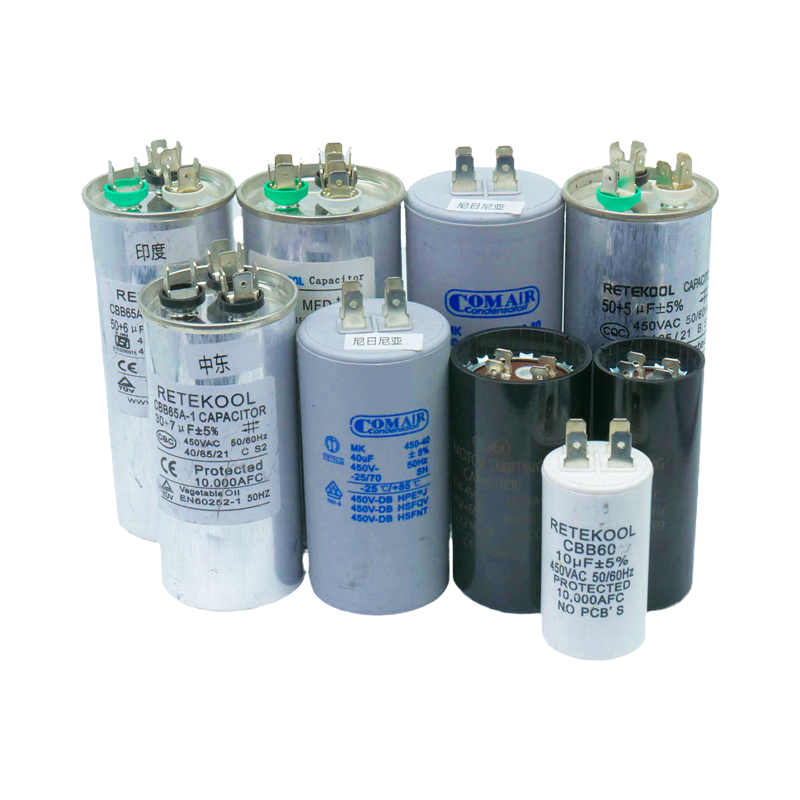
CBB65 Refrigeration Capacitor 450V AC 50/60Hz Waterproof Motor Run Capacitor for Refrigerator Freezer Air Conditioner Compressor
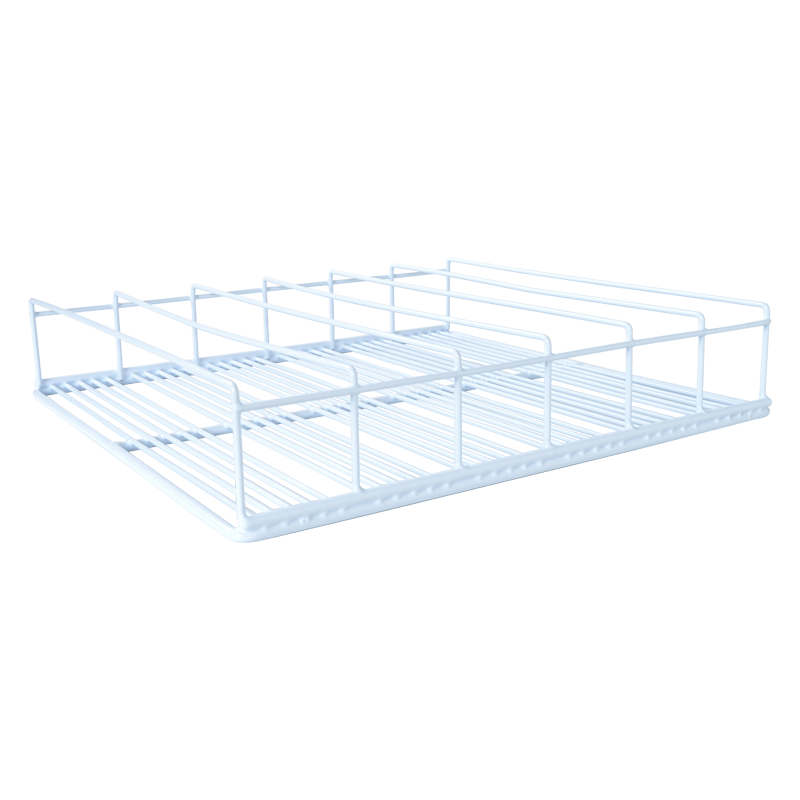
Commercial Manual Stainless Steel Refrigerator Freezer Plastic Coated Wire Mesh Shelf and Durable Basket
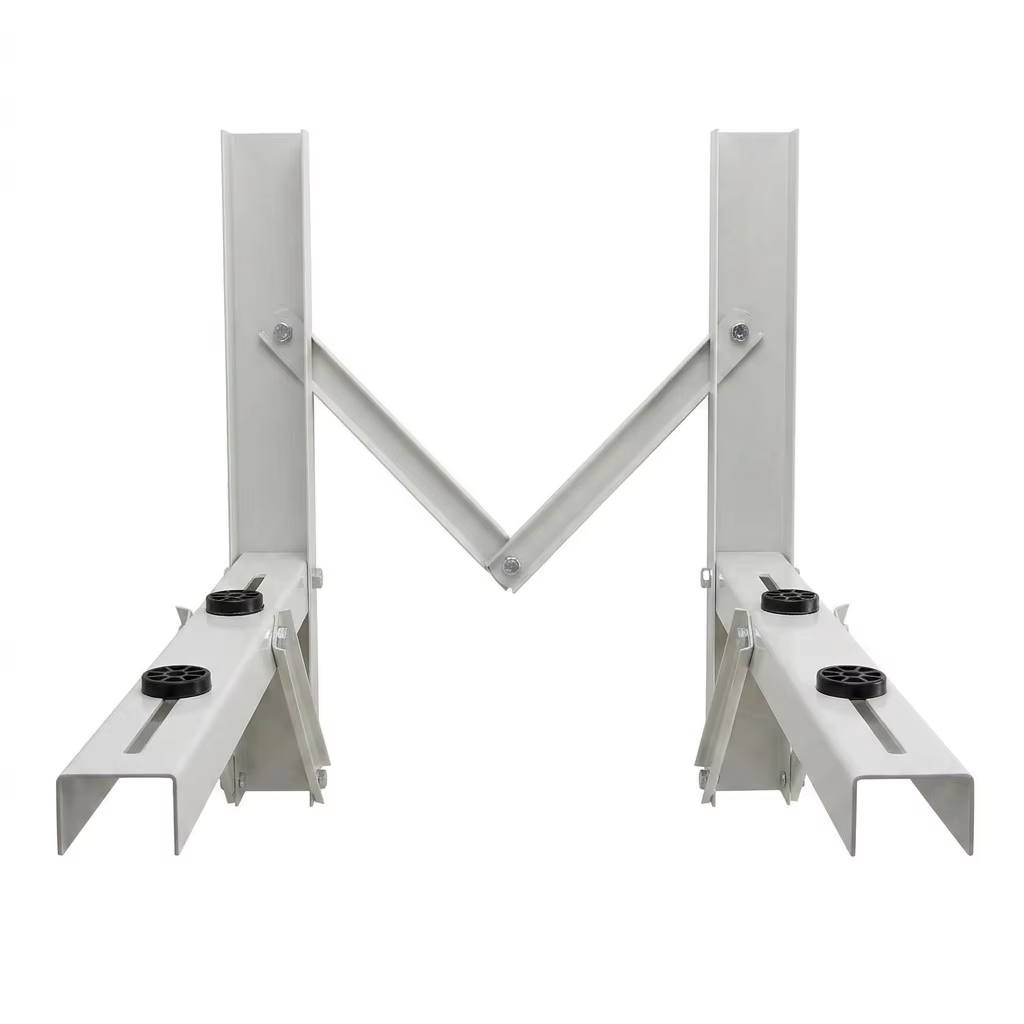
Heavy-Duty AC Mounting Bracket | 200KG Load Capacity | Anti-Rust & Anti-Vibration
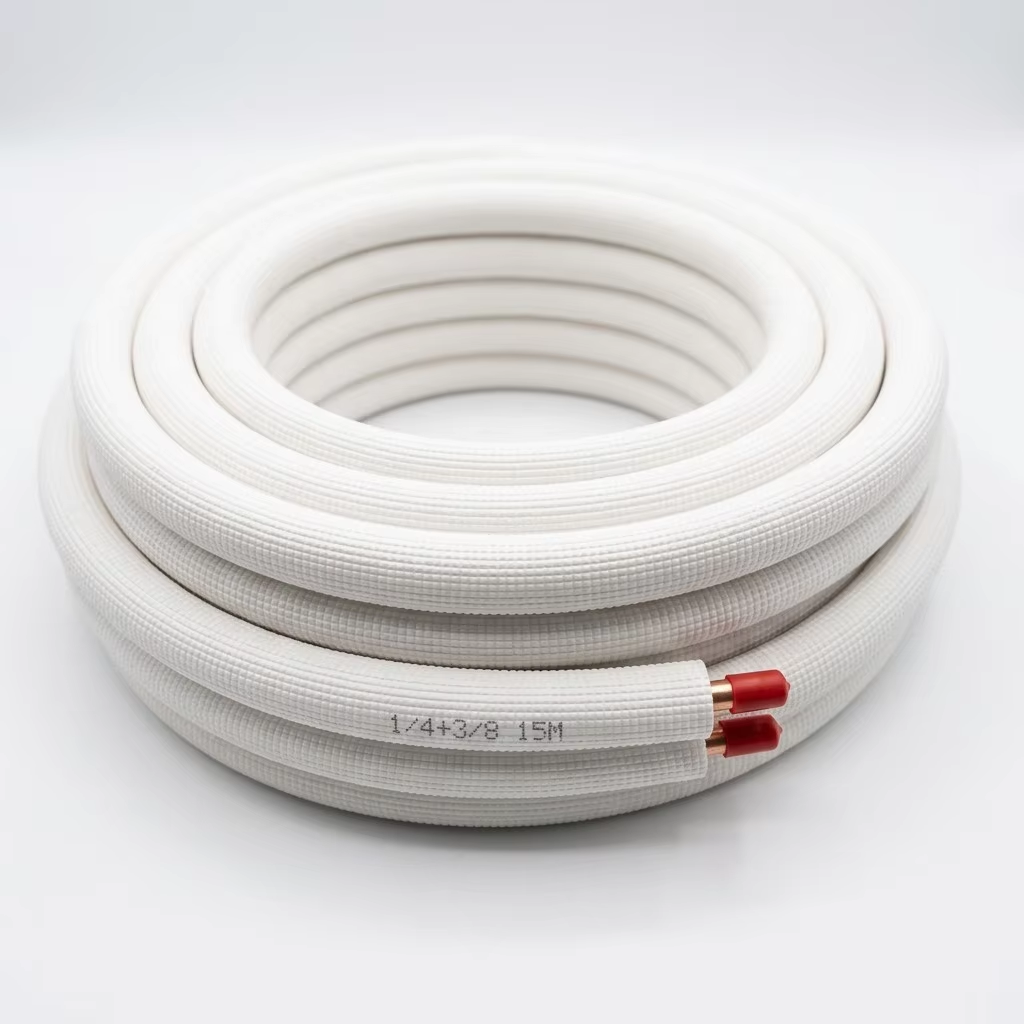
AC Insulated Copper Tube Pair Coil | 99.9% Pure Copper | Pre-Insulated Split AC Connecting Pipe
 ONLINE

 EN
EN