Product brief description
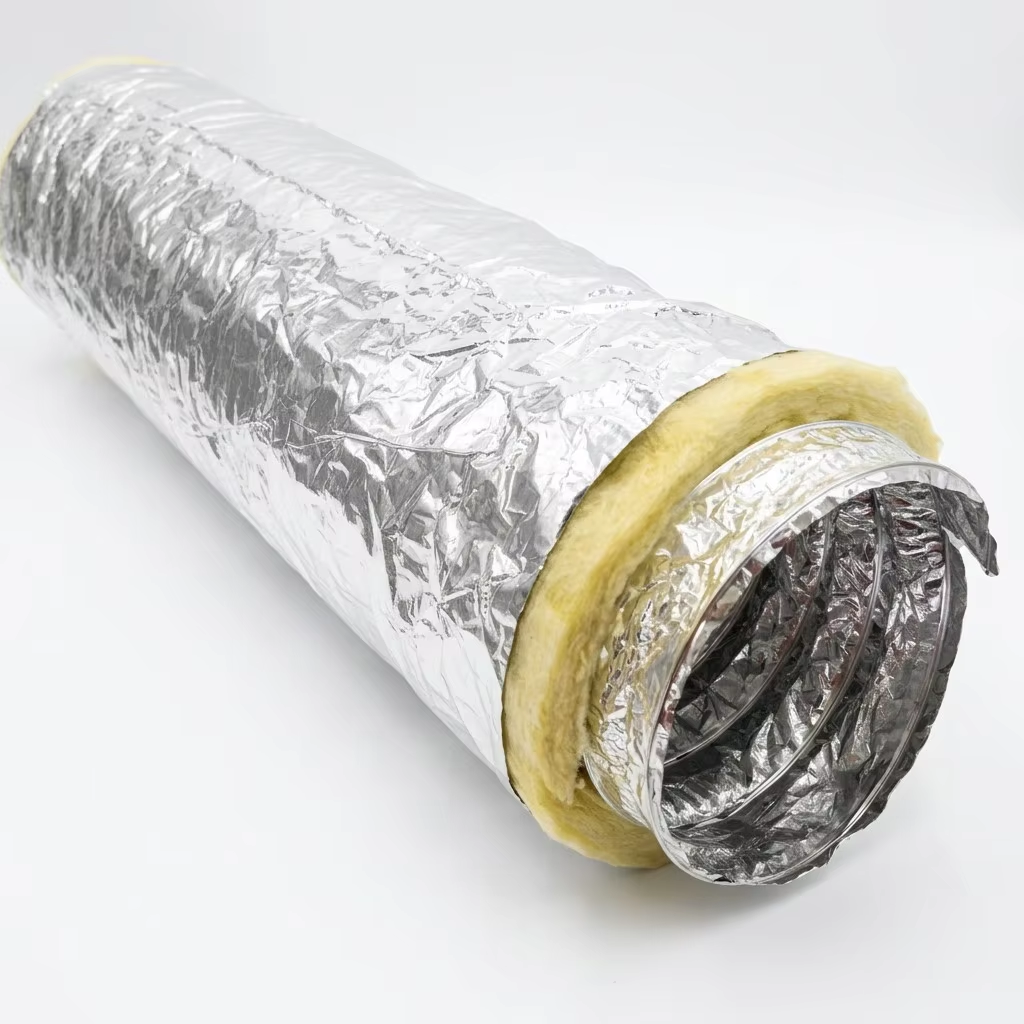
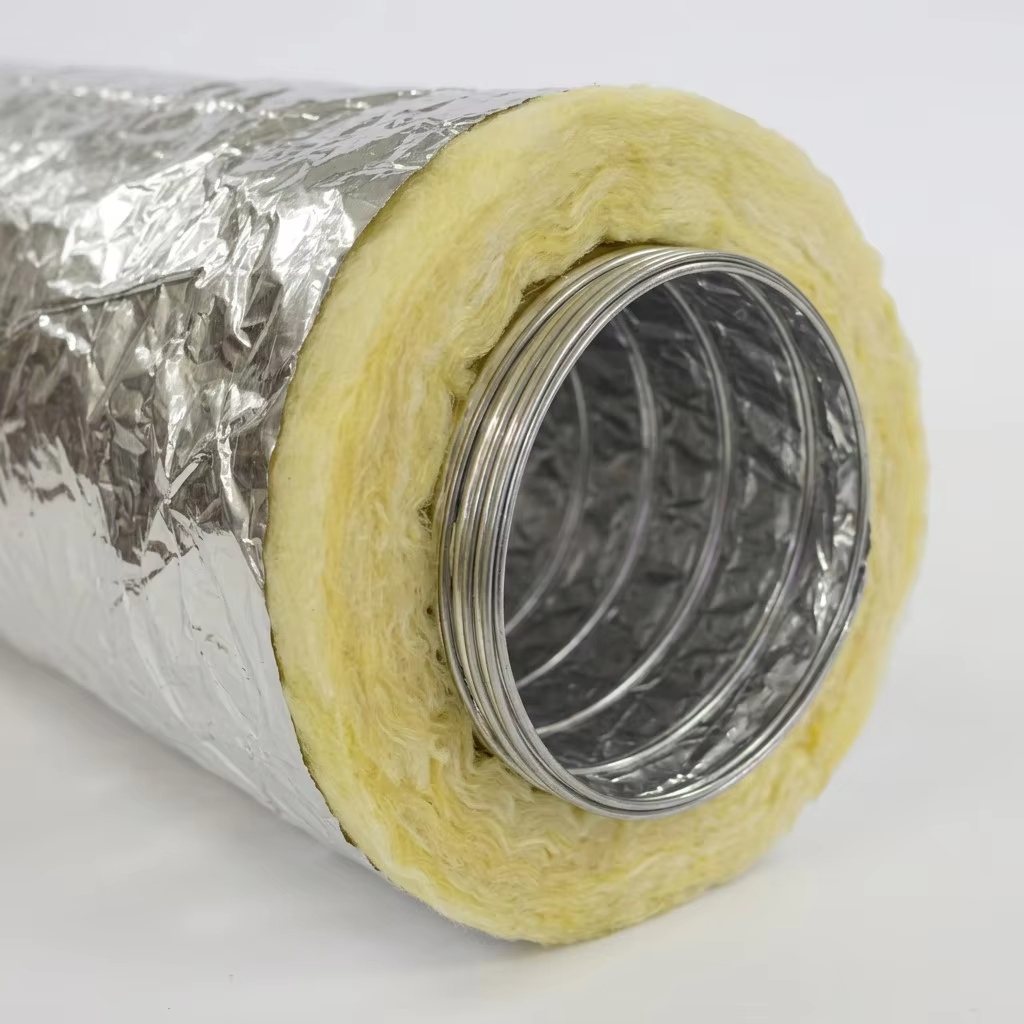
Flexible ducting is the circulatory system of any forced-air HVAC installation — it carries conditioned air from the air handler to every room, and returns stale air back for reconditioning. Our triple-layer insulated flex duct outperforms single-layer alternatives on every metric: the outer aluminum foil jacket acts as a vapor barrier that prevents condensation and reflects radiant heat, the middle fiberglass insulation layer (25mm thick, 16kg/m³ density) reduces thermal loss by up to 70% compared to uninsulated duct and absorbs fan and airflow noise, and the inner steel-wire-helix-supported aluminum core maintains a smooth, full-round bore that minimizes air resistance and resists collapse under negative pressure up to 2,000 Pa. Whether you're running a residential split-duct system, a commercial fresh-air ventilation network, or an industrial exhaust line, this duct delivers the air where it needs to go — at the right temperature, with the right pressure, and without the noise.
Product detailed description
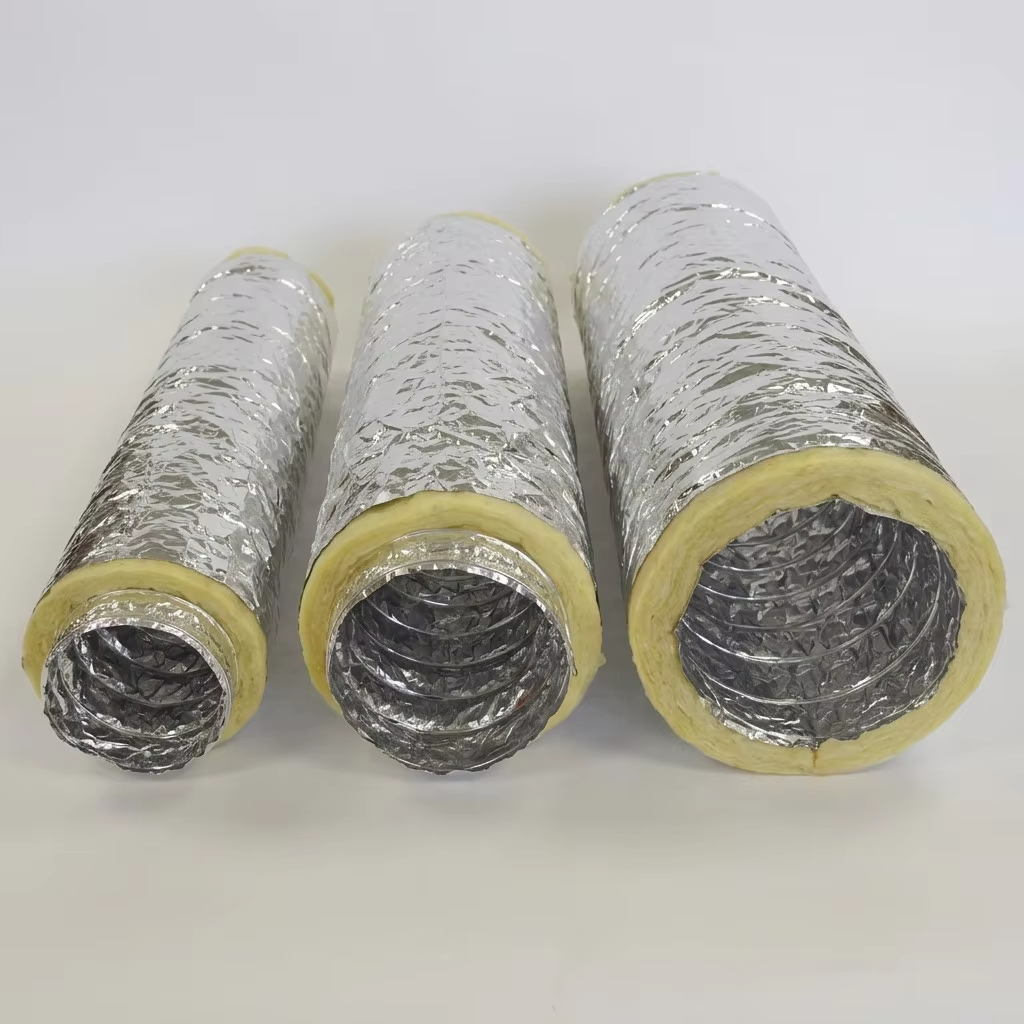
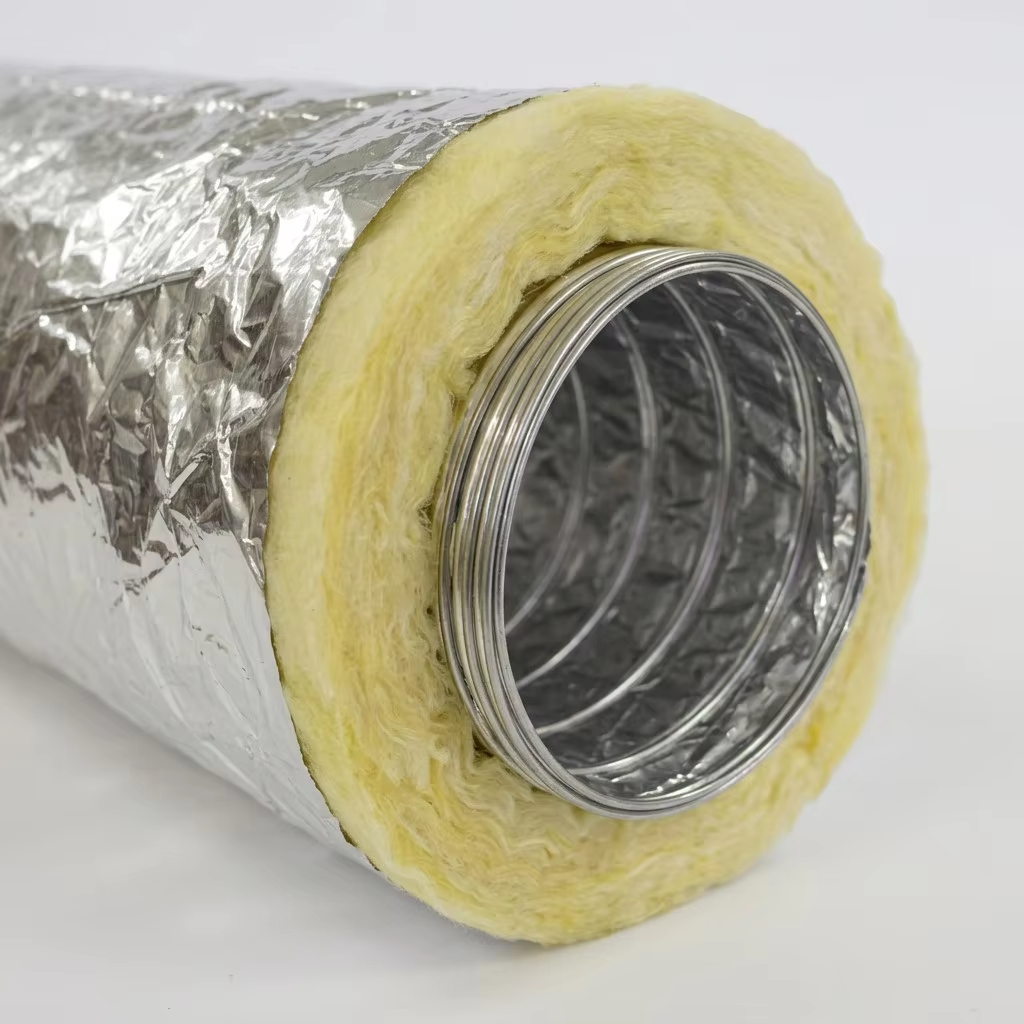
Three Layers, Three Functions, One Duct
A single-layer flexible duct does exactly one thing — it carries air, poorly. Without insulation, the air inside cools down or heats up as it travels through unconditioned attic or ceiling spaces, wasting energy before it even reaches the room. Without a vapor barrier, humid ambient air condenses on the cold duct surface in cooling mode, dripping water onto ceiling tiles and insulation. Without a strong helix core, the duct collapses under negative pressure on the return side, choking airflow and straining the blower motor. Our triple-layer design addresses all three. The inner core is a smooth-bore aluminum-polyester laminate spirally wound around a spring-steel wire helix — flexible enough to route through tight ceiling spaces, rigid enough to hold its shape. The middle layer is 25mm of high-density fiberglass insulation (16kg/m³) that decouples the air temperature inside the duct from the ambient temperature outside. The outer jacket is a reinforced aluminum foil that reflects 95% of radiant heat and acts as a continuous vapor barrier, preventing moisture ingress and condensation. Three layers, one product, no compromises.
The Insulation Density Difference
Not all fiberglass insulation is the same. Cheap flex ducts use low-density insulation (10–12kg/m³) that compresses when the duct bends, creating thin spots where thermal bridging occurs. Our 16kg/m³ insulation density resists compression even at tight bend radii, maintaining consistent thermal performance around every curve. The practical difference: a low-density duct in a hot attic loses 15–20% of the cooling energy before the air reaches the register. Our duct keeps thermal loss under 5% on a 5-meter run. Over a 15-year HVAC system lifespan, that difference in insulation density pays for the duct several times over in reduced electricity consumption.
The Vapor Barrier That Actually Works
Condensation on a cold duct surface in a humid ceiling space is not a cosmetic problem — it's a mold, ceiling-stain, and structural-damage problem. The outer aluminum foil jacket serves as a Class 1 vapor barrier with a permeance rating below 0.02 perm — effectively impermeable to water vapor. When installed with the longitudinal seam sealed using aluminum foil tape (not included), the jacket creates a continuous moisture-proof envelope around the entire duct run. In cooling mode, with 10°C air inside the duct and 35°C / 80% RH attic air outside, the vapor barrier prevents moisture from ever reaching the cold inner core where it would condense.
The Steel Wire Helix — Shape Under Pressure
The spring-steel wire helix is the duct's skeleton. On the supply side, internal positive pressure pushes the duct wall outward — most flex ducts handle this fine. On the return side, the blower creates negative pressure that tries to collapse the duct inward, reducing the effective cross-sectional area and increasing air velocity and noise. Our helix is engineered to maintain full-round bore at negative pressures up to 2,000 Pa — well above the negative pressure of even high-static commercial air handlers. The wire is corrosion-resistant spring steel that won't rust in humid ceiling environments and won't permanently deform after being compressed for shipping. When you pull the duct out of the compressed roll and extend it, the helix springs back to its full round shape.
Compressed, Shipped, Extended, Installed
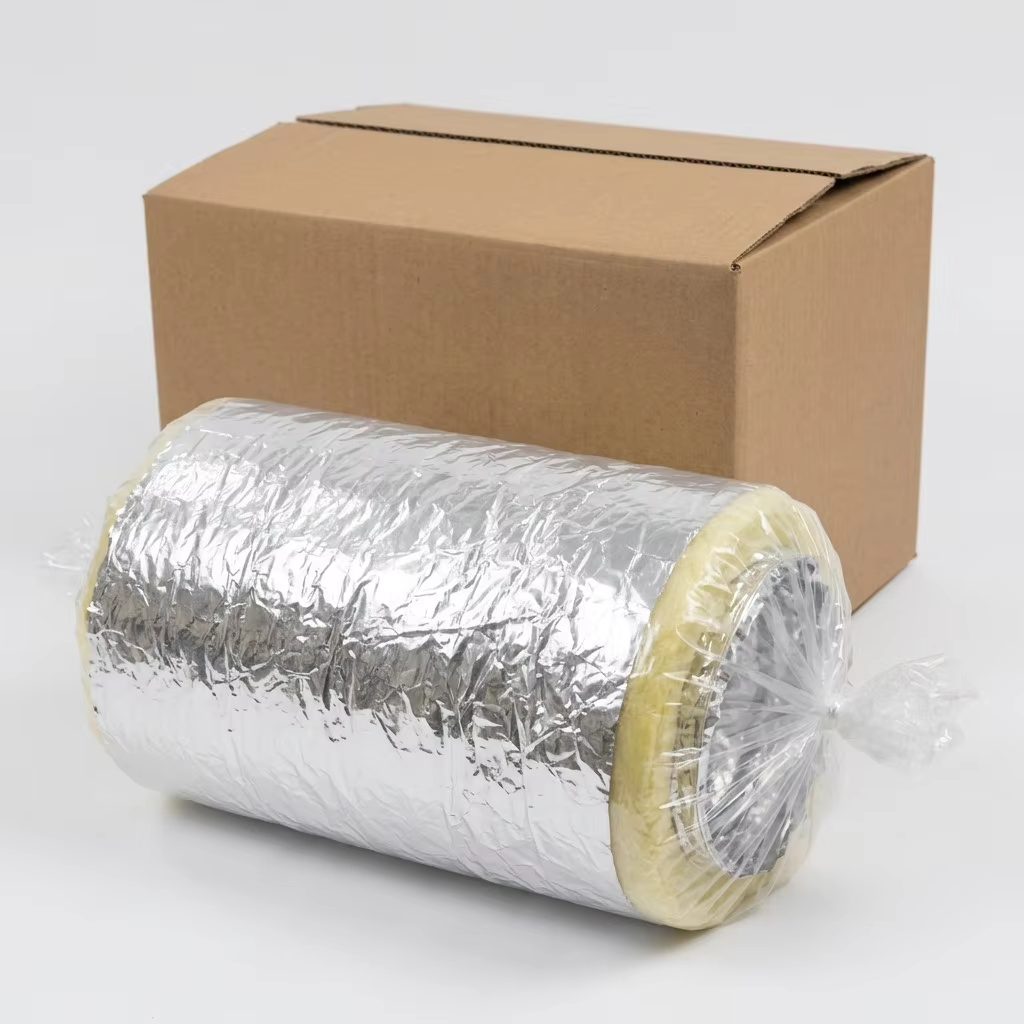
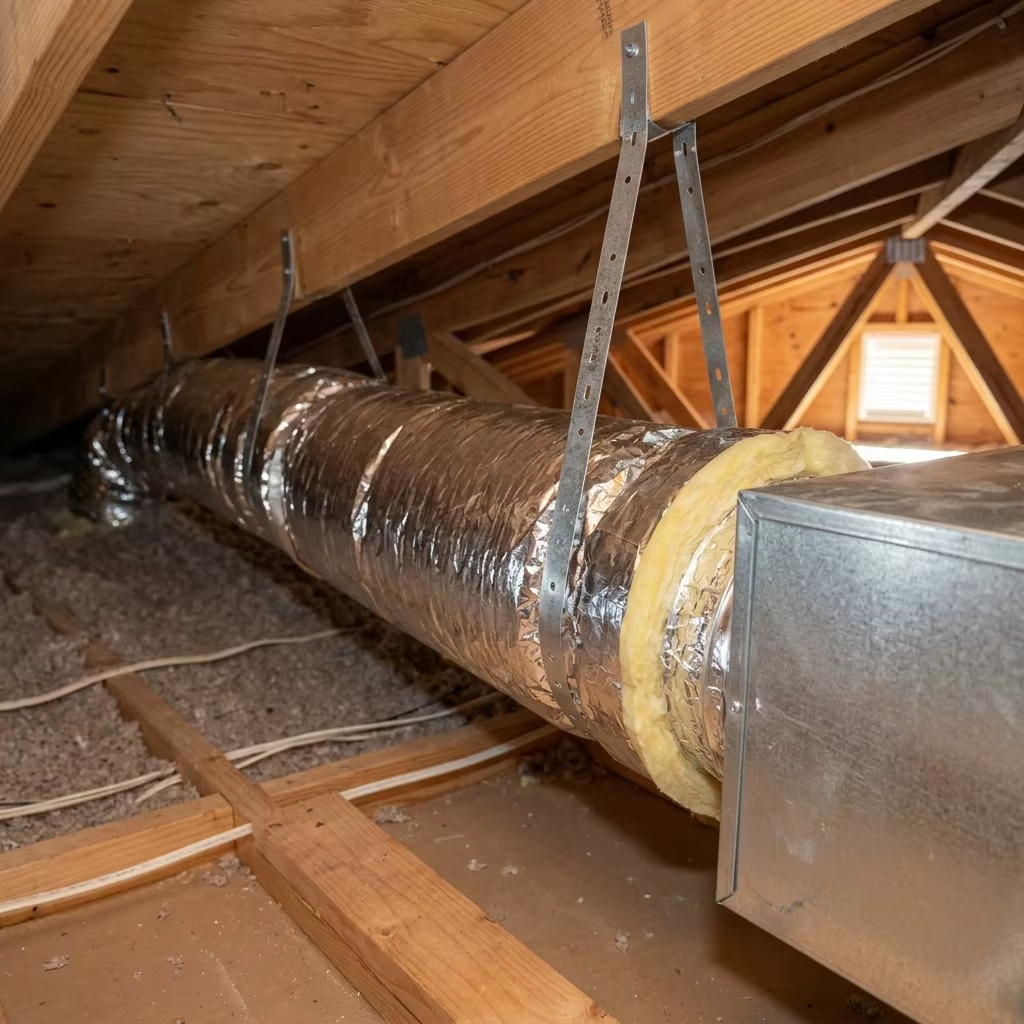
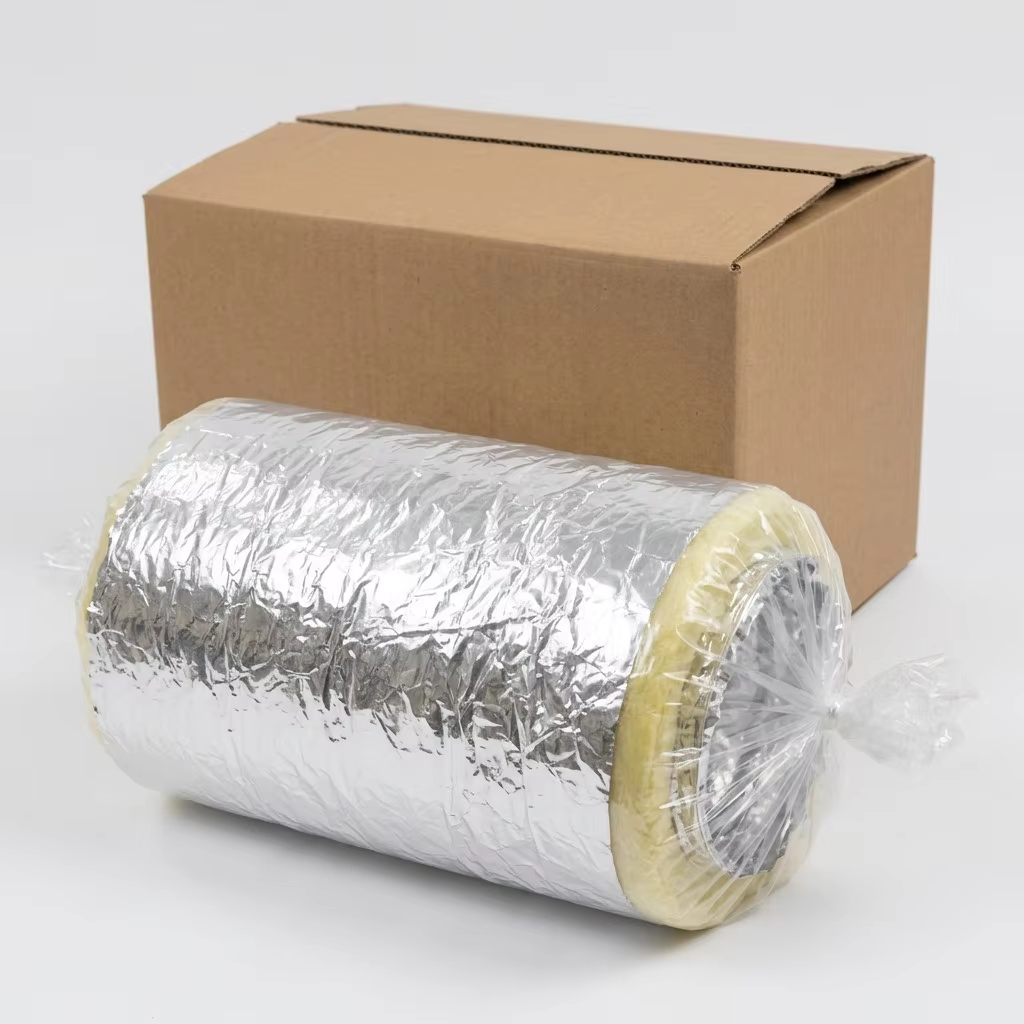
Our 10-meter ducts ship in compressed rolls approximately 1/7th of their extended length — a 10m duct compresses to roughly 1.4m. This is not a manufacturing shortcut; it's deliberate logistics engineering. A standard 40ft container holds 2,500+ compressed rolls vs. 350 extended-length bundles. The freight cost per meter drops by 85%, and the installer can carry three rolls up a ladder instead of wrestling one rigid 3m section. On-site, simply pull the duct to its full extended length — the steel helix springs open, the insulation expands to its design thickness, and the duct is ready to connect. Do NOT stretch the duct beyond its rated extended length; this compresses the insulation, reduces the R-value, and increases air resistance. The duct should be installed with minimal sag (≤25mm per meter of span) and supported every 1.5 meters with duct strapping.
Product Specifications
ODEL |
DIAMETER (ID) |
INSULATION |
EXTENDED LENGTH |
COMPRESSED LENGTH |
MAX AIR VELOCITY |
MAX WORKING PRESSURE |
MAX NEGATIVE PRESSURE |
TEMP RANGE |
ROLL WEIGHT |
RB-AFD-100 |
4" (102mm) |
25mm / 16kg/m³ |
10m |
~1.4m |
25 m/s |
+3,000 Pa |
-2,000 Pa |
-30°C to +150°C |
3.5 KG |
RB-AFD-150 |
6" (152mm) |
25mm / 16kg/m³ |
10m |
~1.4m |
25 m/s |
+3,000 Pa |
-2,000 Pa |
-30°C to +150°C |
4.5 KG |
RB-AFD-200 |
8" (203mm) |
25mm / 16kg/m³ |
10m |
~1.5m |
22 m/s |
+2,500 Pa |
-2,000 Pa |
-30°C to +150°C |
5.8 KG |
RB-AFD-250 |
10" (254mm) |
25mm / 16kg/m³ |
10m |
~1.6m |
20 m/s |
+2,000 Pa |
-1,800 Pa |
-30°C to +150°C |
7.2 KG |
RB-AFD-300 |
12" (305mm) |
25mm / 16kg/m³ |
10m |
~1.7m |
18 m/s |
+1,800 Pa |
-1,500 Pa |
-30°C to +150°C |
8.5 KG |
RB-AFD-350 |
14" (356mm) |
25mm / 16kg/m³ |
10m |
~1.8m |
16 m/s |
+1,500 Pa |
-1,500 Pa |
-30°C to +150°C |
9.8 KG |
RB-AFD-400 |
16" (406mm) |
25mm / 16kg/m³ |
10m |
~1.9m |
|
|
|
|
|
FAQ
Q1: What is the difference between insulated and non-insulated flexible duct?
A: Non-insulated flex duct is a single-layer aluminum or plastic tube — it carries air but provides zero thermal protection. In cooling mode, the cold air inside the duct cools the duct wall, and warm humid ambient air condenses on the outside, dripping water. The air also warms up as it travels, wasting energy. Insulated flex duct adds a fiberglass insulation layer and an aluminum foil vapor barrier — it prevents condensation, reduces thermal loss by up to 70%, and absorbs fan/airflow noise. For any duct run through an unconditioned space (attic, ceiling void, crawlspace, external wall), insulated duct is mandatory. Non-insulated duct is suitable only for short runs inside conditioned spaces.
Q2: Which diameter do I need for my system?
A: Duct diameter is determined by the airflow (CFM or m³/h) required for each room, which depends on the room size and the air conditioner's capacity.
Q3: How do I install the flex duct correctly?
A: Key installation rules: (1) Extend the duct to its full rated length — do not leave it compressed, as this restricts airflow and compresses the insulation.
(2) Support the duct every 1.5 meters with duct strapping or hanger bands — do not let it sag more than 25mm per meter of span.
(3) Make bends as gentle as possible — the minimum bend radius is 1× the duct diameter (e.g., 8" duct = 8" minimum bend radius). Tighter bends kink the inner core and increase air resistance.
(4) Seal all joints with aluminum foil tape — every connection to a take-off collar, plenum box, or grille box must be taped to prevent air leakage. Do not use duct tape (the grey fabric tape) — it dries out and fails within 2–3 years. Use UL-listed aluminum foil tape.
(5) Seal the longitudinal seam of the outer jacket with foil tape to create a continuous vapor barrier.
(6) Keep the duct run as straight and short as possible — every meter of unnecessary duct length, and every unnecessary bend, adds static pressure that the fan must overcome.
Q4: Can the duct be cut to length?
A: Yes. Cut the duct with a sharp utility knife or shears. To cut: compress the duct section you want to cut, cut through all three layers (jacket, insulation, core), and cut the steel wire helix with wire cutters. Remove approximately 50mm of insulation from the cut end and fold the outer jacket back. Slide the inner core over the connection collar, secure with a duct clamp and foil tape, pull the insulation forward over the connection, and pull the outer jacket over the insulation and tape it to seal the vapor barrier. Always deburr the cut wire ends — they are sharp.
Q5: What happens if condensation forms inside the insulation?
A: Condensation inside the insulation layer indicates a vapor barrier breach — moisture-laden air has penetrated the outer foil jacket and reached the cold inner core. Over time, wet fiberglass insulation loses its thermal resistance, promotes mold growth, and adds weight that can cause the duct to sag and separate from its connections. Prevention: seal every joint, seam, and puncture in the outer jacket with aluminum foil tape during installation. If existing duct shows signs of internal moisture (soggy insulation, mold odor, ceiling stains below the duct run), replace the affected section — wet insulation cannot be dried back to its original thermal performance.
Q6: Is the duct suitable for bathroom and kitchen exhaust?
A: The duct is suitable for general exhaust ventilation within its temperature rating (-30°C to +150°C). For bathroom exhaust: yes — the vapor barrier prevents moisture from condensing inside the duct in cold ceiling spaces. For kitchen range hood exhaust: use with caution — kitchen exhaust carries grease aerosol that deposits on the duct inner wall over time, creating a fire hazard. Many building codes require smooth rigid metal duct for kitchen range hoods for this reason. For commercial kitchen exhaust, use purpose-built grease-rated duct. Our duct is NOT fire-rated for grease duct applications.


 ONLINE

 EN
EN