Product brief description
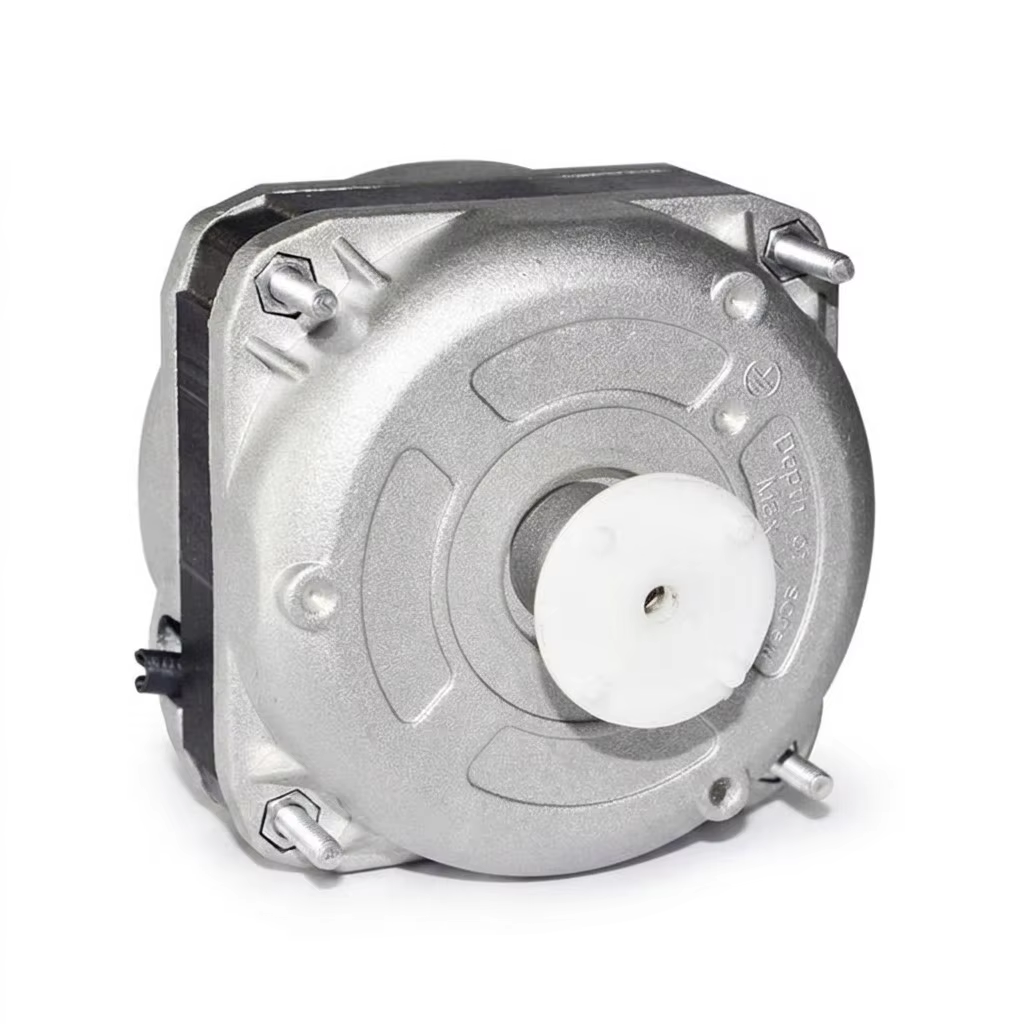
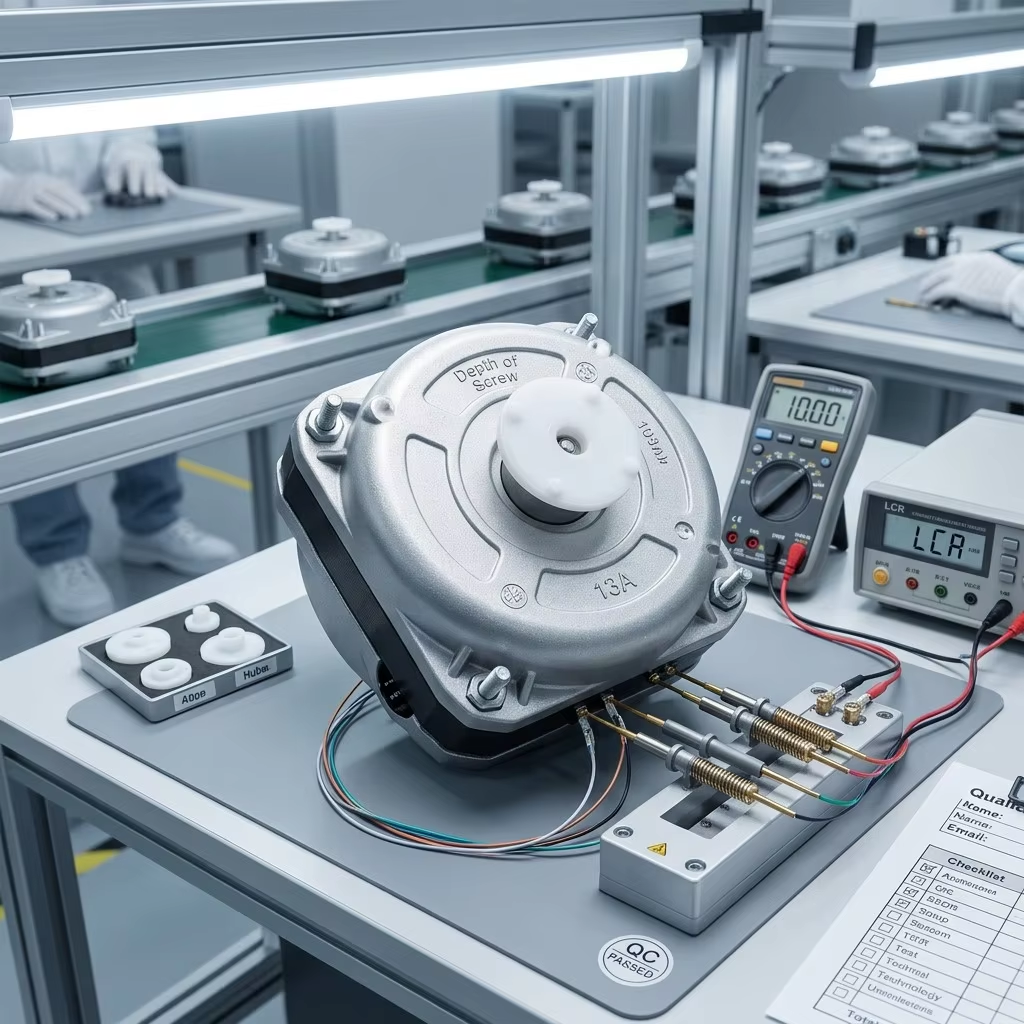
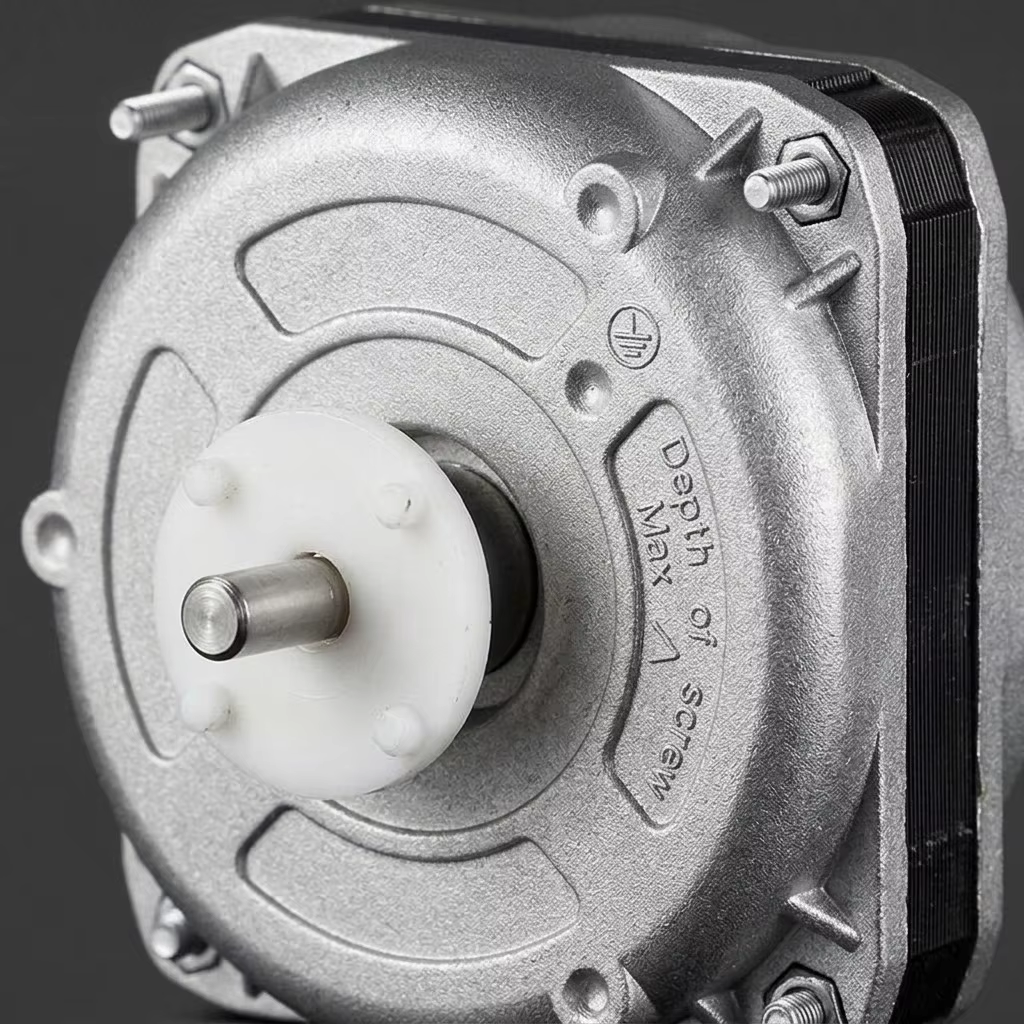
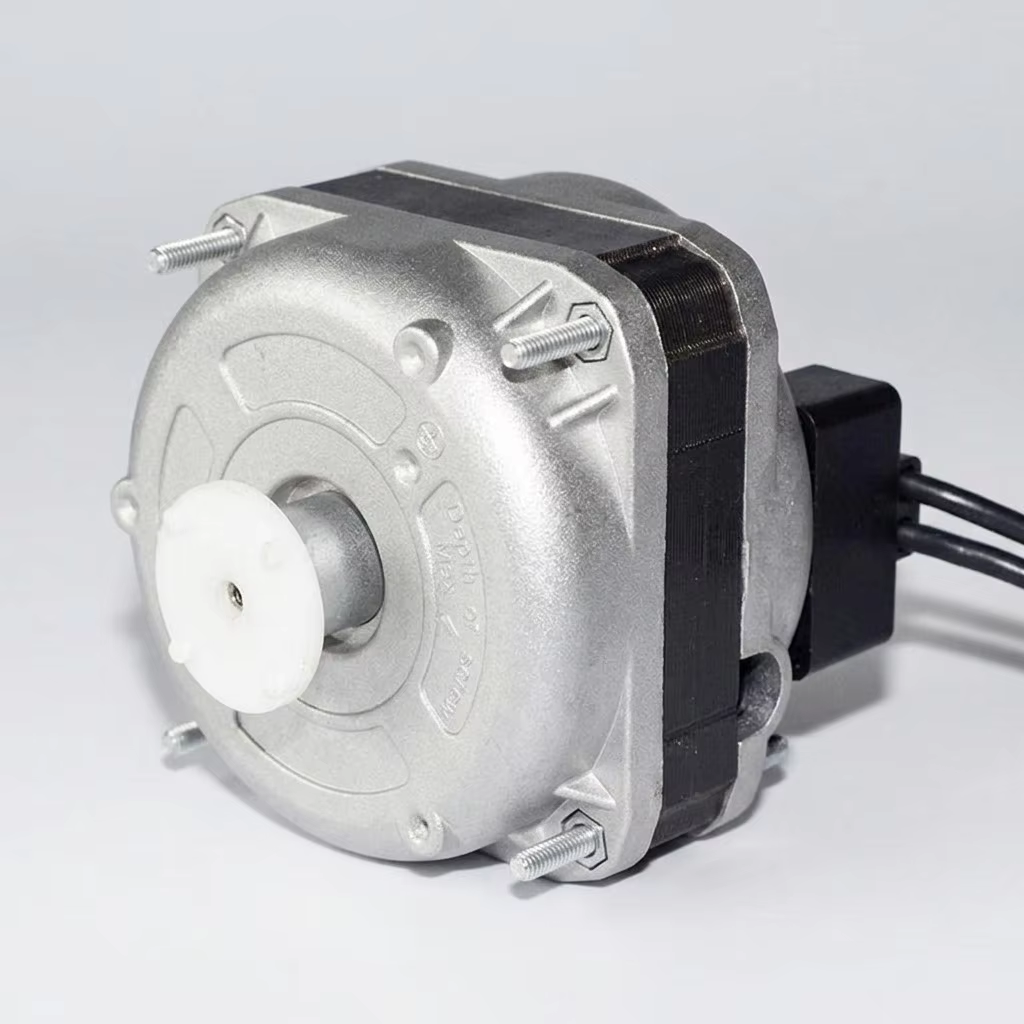
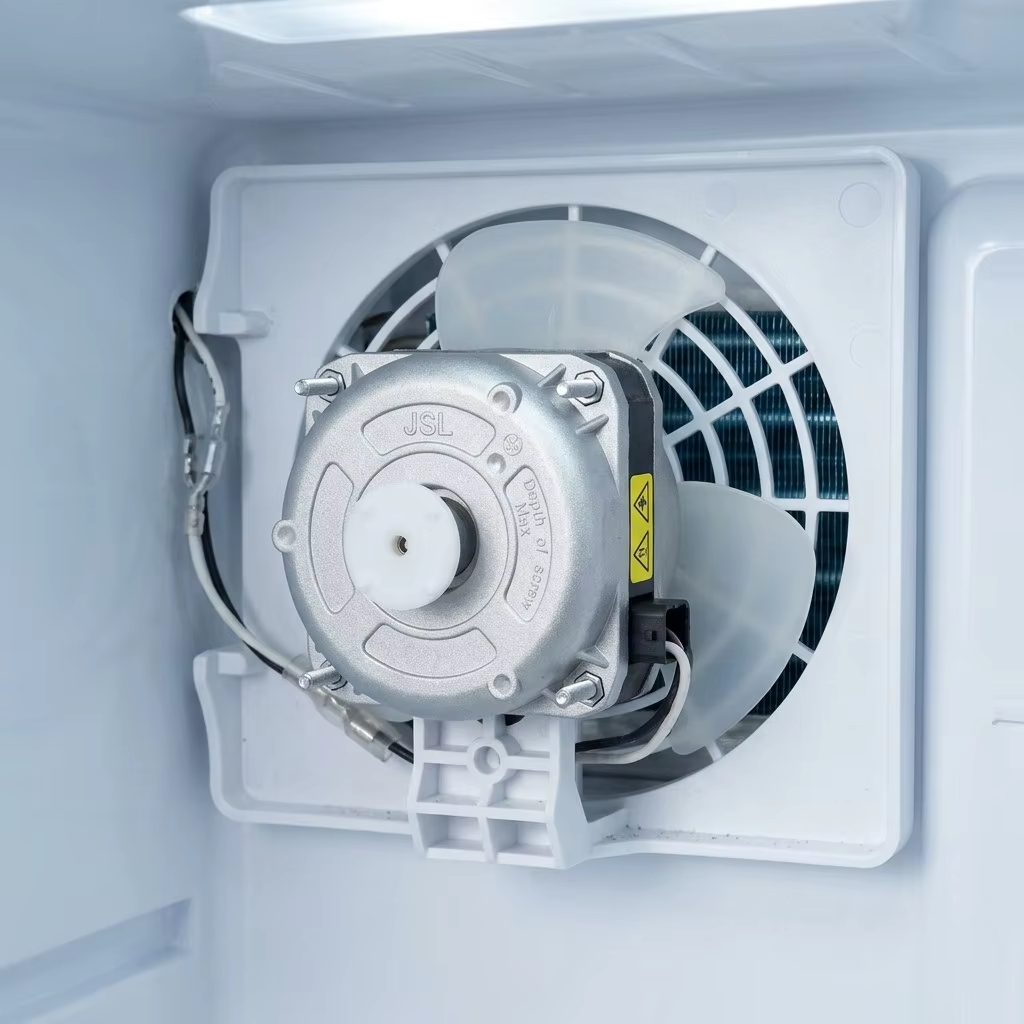
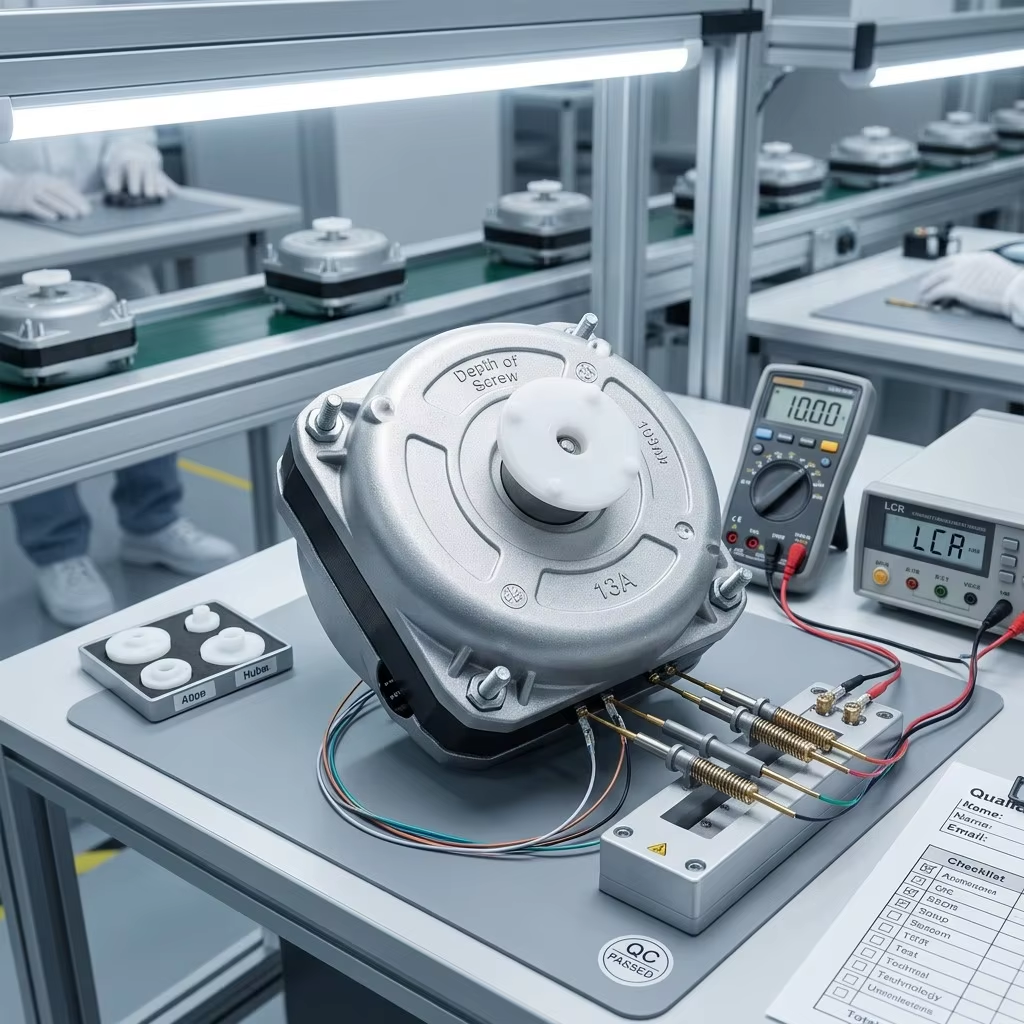
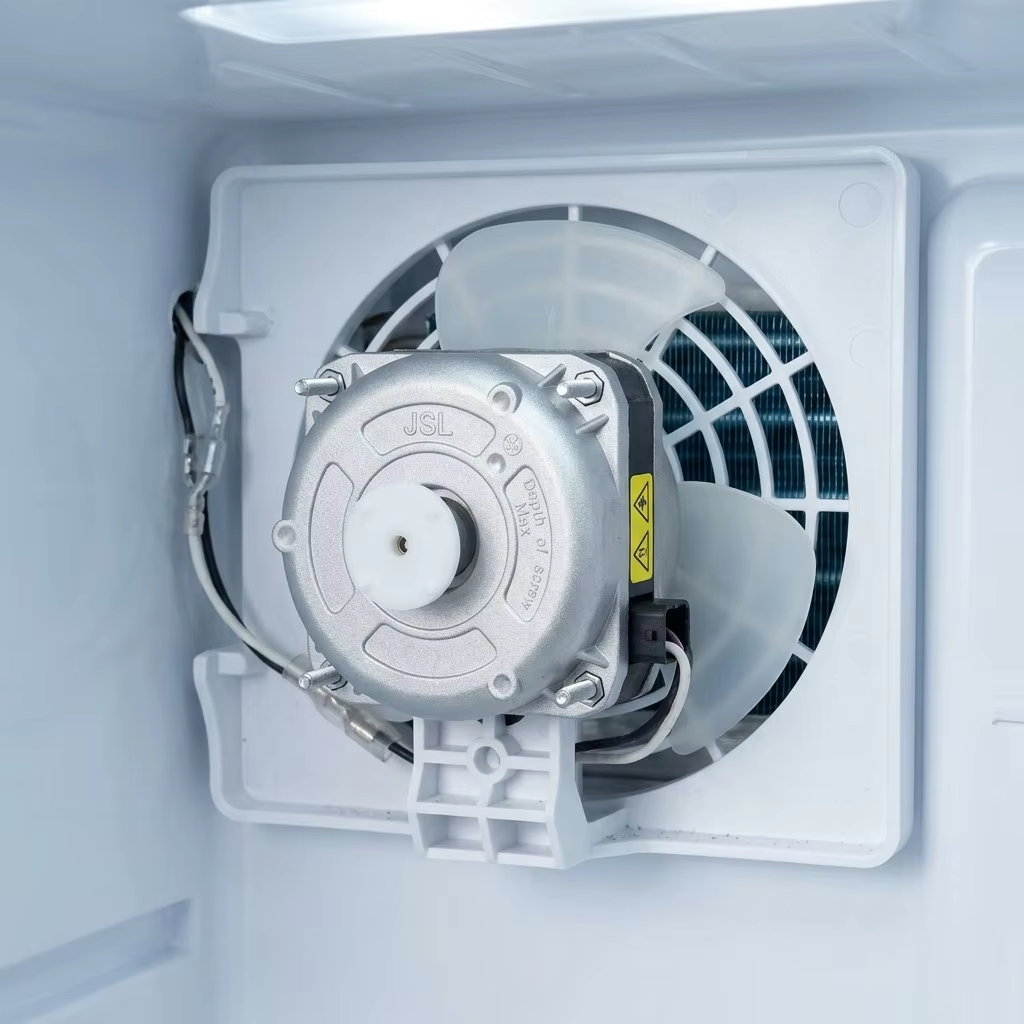
The PoleShade SP-Series is a single-phase shaded-pole induction motor purpose-built for continuous-duty fan drive applications in refrigeration and household appliances. Encased in a rigid die-cast aluminum alloy housing with a textured silver-grey finish, the motor sandwiches a precision-stacked silicon steel lamination core between two robust housing halves for maximum structural integrity and heat dissipation. The shaded-pole design — the simplest and most reliable single-phase AC motor topology — requires no capacitors, no centrifugal starting switches, and no brushes, delivering maintenance-free operation for the entire service life of the appliance. With a standardized square-frame mounting pattern, a white plastic drive hub with three coupling nubs, and single-wire electrical termination, the SP-Series is the direct-fit replacement motor for refrigerator evaporator fans, microwave turntable and cooling fans, air purifier blowers, bathroom exhaust fans, and countless other fractional-horsepower applications.
Product detailed description
The Shaded-Pole Principle: Elegance Through Simplicity
The shaded-pole motor is the most elegantly simple self-starting single-phase AC motor design ever conceived. Its operating principle requires only three components: a laminated stator core, a single copper winding (the main coil), and one or more short-circuited copper shading rings embedded in a portion of each stator pole face.
When AC current flows through the main winding, it produces an alternating magnetic flux in the stator core. The shading ring — a single turn of heavy-gauge copper — delays the flux buildup in the pole section it encircles through Lenz's law: the current induced in the shorted ring creates an opposing magnetic field that phase-shifts the flux in that region. This phase shift between the shaded and unshaded portions of each pole creates a weak rotating magnetic field — sufficient to produce starting torque and establish a defined direction of rotation.
The brilliance of this design lies in what it eliminates. There are no capacitors to age and fail. No centrifugal switches to arc, weld, or stick. No brushes to wear into dust. No commutator to develop dead spots. The motor has exactly one moving part: the rotor assembly. This radical simplicity translates directly into extraordinary reliability — shaded-pole motors routinely outlast the appliances they power.
Mechanical Construction
The SP-Series housing is produced by high-pressure die casting of aluminum alloy — not stamped steel or injection-molded plastic. This material choice is deliberate and performance-driven:
Thermal management. Aluminum's thermal conductivity (approximately 205 W/m·K) is orders of magnitude higher than plastic (< 1 W/m·K) and significantly better than stamped steel (~50 W/m·K). The die-cast housing acts as a heat sink, conducting winding heat away from the stator core and dissipating it to the surrounding air. This passive cooling is essential in refrigerator evaporator fan applications where the motor operates in a confined, poorly ventilated compartment at sub-ambient temperatures with condensing humidity.
Structural rigidity. The two housing halves clamp the stator lamination stack under controlled compression, ensuring that the laminations remain tightly packed throughout the motor's service life. Loose laminations vibrate at line frequency (50/60 Hz), producing an audible buzz known as magnetostrictive hum. The SP-Series die-cast clamping design eliminates lamination vibration at its source.
Corrosion resistance. The aluminum alloy housing naturally resists the condensing-moisture environment of refrigeration applications. The textured silver-grey finish is not paint — it is a controlled surface treatment applied during the casting process, eliminating the risk of paint peeling or flaking into the appliance interior.
Stator and Rotor Design
The stator core is fabricated from high-grade silicon steel laminations (0.5mm thickness, grade 50W470 or equivalent), individually stamped, oxide-coated for inter-laminar insulation, and stacked to the design stack height. The oxide coating prevents eddy current circulation between adjacent laminations — without this insulation, inter-laminar eddy currents would generate heat and reduce motor efficiency by 15–25%.
The shading rings are fabricated from pure electrolytic copper, press-fitted into precision-machined notches in the stator pole faces. The ring cross-section and placement are engineered to optimize the phase-shift angle for maximum starting torque without excessive copper loss during running operation.
The rotor is a squirrel-cage design with a die-cast aluminum conductor cage on a steel shaft. The rotor bars and end rings are cast as a single monolithic aluminum structure, eliminating the risk of bar-to-end-ring joint failures that plague fabricated rotors. The rotor is dynamically balanced to minimize vibration and bearing wear.
Bearing System
The SP-Series employs oil-impregnated sintered bronze sleeve bearings — the optimal bearing choice for shaded-pole motor duty. Unlike ball bearings, which require periodic relubrication and are prone to brinelling (raceway denting) from vibration during shipment, sintered bronze bearings are self-lubricating for life. The porous bronze matrix holds lubricating oil in microscopic reservoirs; as the shaft rotates, capillary action and thermal expansion draw oil to the bearing surface, maintaining a hydrodynamic film that prevents metal-to-metal contact.
A felt oil reservoir surrounding each bearing provides additional lubricant capacity, extending the relubrication interval beyond the expected service life of the appliance. The shaft is precision-ground to a surface finish of Ra ≤ 0.4 μm for optimal bearing compatibility.
Drive Hub and Coupling
The white plastic drive hub press-fitted to the output shaft features three equally spaced raised cylindrical nubs on its face. This three-nub pattern is the industry-standard coupling interface for refrigerator evaporator fan blades and many small appliance fan impellers. The mating fan blade hub has corresponding recesses that engage the nubs, transmitting torque through positive mechanical engagement rather than friction alone. This eliminates the possibility of fan blade slippage — a critical safety consideration in refrigeration where airflow failure can lead to evaporator coil icing and compressor damage.
The hub material is glass-fiber-reinforced polypropylene (GFPP), selected for dimensional stability across the motor's operating temperature range and resistance to the refrigerants, cleaning agents, and food acids encountered in appliance interiors.
Electrical Characteristics
Shaded-pole motors are inherently constant-speed devices — their running speed is determined by the AC mains frequency and the number of stator poles, not by load or voltage (within limits). A 2-pole motor on 50Hz mains runs at approximately 2800–2900 RPM (synchronous speed 3000 RPM minus slip), while the same motor on 60Hz runs at approximately 3400–3500 RPM. A 4-pole motor runs at half these speeds. The SP-Series is available in both 2-pole and 4-pole configurations to match application speed requirements.
Speed cannot be varied electronically — shaded-pole motors are not compatible with VFDs or triac speed controllers. For applications requiring variable speed, consider our SilentDrive BLDC motor series.
The motor draws its rated current at its design load point. Significantly underloading the motor (e.g., operating without a fan blade) causes it to run near synchronous speed with reduced current draw. Overloading causes increased slip, higher current draw, and eventual stalling. The SP-Series includes a thermal fuse embedded in the main winding as standard — if winding temperature exceeds the safe threshold (typically 130–150°C), the fuse opens permanently, disconnecting the motor to prevent fire risk.
Product Specifications
Parameter |
Specification |
Product Series |
PoleShade SP-Series |
Motor Type |
Single-Phase Shaded-Pole Induction Motor |
Housing Material |
Die-Cast Aluminum Alloy (Silver-Grey Textured Finish) |
Stator Core |
Silicon Steel Laminations, 0.5mm, Oxide-Coated |
Shading Ring |
Pure Electrolytic Copper, Press-Fitted |
Rotor Type |
Die-Cast Aluminum Squirrel Cage |
Pole Configurations |
2-Pole or 4-Pole |
Voltage Options |
110–120V / 60Hz or 220–240V / 50Hz |
Power Range |
4W – 34W (application-dependent) |
Speed (2-Pole, 50Hz) |
~2,800 RPM |
Speed (2-Pole, 60Hz) |
~3,400 RPM |
Speed (4-Pole, 50Hz) |
~1,400 RPM |
Speed (4-Pole, 60Hz) |
~1,650 RPM |
Rotation Direction |
CW or CCW (determined by shading ring placement) |
Bearing Type |
Oil-Impregnated Sintered Bronze Sleeve |
Drive Hub |
White GFPP, 3-Nub Coupling Pattern |
Shaft Material |
Precision-Ground Carbon Steel (Ra ≤ 0.4 μm) |
Thermal Protection |
Embedded Thermal Fuse (Standard) |
Insulation Class |
Class B (130°C) or Class F (155°C) |
Ingress Protection |
IP20 (Standard) / IP44 (Sealed Variant) |
Mounting |
4× Corner Studs or Bolts (Square Pattern) |
Noise Level |
≤ 40 dB(A) at 1 meter |
Operating Temperature |
-30°C to +60°C |
Certifications |
CE, RoHS, UL (available per specification) |
Net Weight |
~0.8–1.5 kg (model-dependent) |
Warranty |
2 Years |
FAQ
Q1: How do I identify the correct replacement motor for my appliance?
Look for the model number printed on the original motor's housing or label. If not visible, measure: (1) the mounting hole pattern (center-to-center distance between corner studs), (2) the shaft diameter and length, (3) the hub coupling pattern (3 nubs is standard for the SP-Series), and (4) the motor's voltage and frequency from the appliance rating plate. Send us these details or a photo of the original motor, and we will match the correct SP-Series model.
Q2: Can this motor run on both 50Hz and 60Hz power?
A specific SP-Series motor is wound for either 50Hz or 60Hz operation — not both. Running a 50Hz motor on 60Hz will cause it to run approximately 20% faster with reduced torque. Running a 60Hz motor on 50Hz will cause it to run approximately 17% slower with increased current draw and potential overheating. Always order the correct frequency variant for your region: 50Hz for Europe, Asia, Africa, Australia; 60Hz for North America, parts of Japan, and parts of South America.
Q3: Why does my original shaded-pole motor hum but not start?
The most common cause is a seized bearing due to dried-out lubricant, especially in refrigerator evaporator fan motors that operate in cold, condensing environments for years. Other causes include a broken shading ring (visible as a cracked or missing copper loop on the stator pole face), a shorted winding turn, or a mechanical obstruction preventing rotor rotation. While bearing replacement is possible, the labor cost typically exceeds the replacement motor cost — the SP-Series is priced to make replacement more economical than repair.
Q4: Can I reverse the rotation direction?
The rotation direction of a shaded-pole motor is determined by the physical placement of the shading rings on the stator poles — it is a permanent characteristic of the motor's construction and cannot be changed after manufacture. If you need the opposite rotation direction, you must order the CW or CCW variant accordingly. When ordering, please confirm the required rotation direction by observing the original motor from the shaft end.
Q5: Why choose a shaded-pole motor over a BLDC motor?
Shaded-pole motors have two decisive advantages: simplicity and cost. They require no electronic drive circuitry, no control board, and no DC power supply — just connect to AC mains and the motor runs. For applications where constant-speed operation is acceptable and lowest bill-of-materials cost is the priority, shaded-pole motors remain the optimal choice. For variable-speed, high-efficiency, or ultra-quiet applications, we recommend our SilentDrive BLDC motor series. The two technologies are complementary, not competitive — many appliances use a shaded-pole motor for the evaporator fan and a BLDC motor for the compressor or main blower.
Q6: What is the expected service life of this motor?
The SP-Series is designed for a service life of 30,000–50,000 continuous operating hours under rated load and normal ambient conditions. The primary life-limiting factor is bearing lubricant depletion, which occurs gradually over years of operation. In refrigerator evaporator fan duty (typically 16–18 hours/day at 0–10°C), this translates to approximately 5–8 years of service — matching or exceeding the design life of most consumer refrigeration appliances.


 ONLINE

 EN
EN