Product brief description
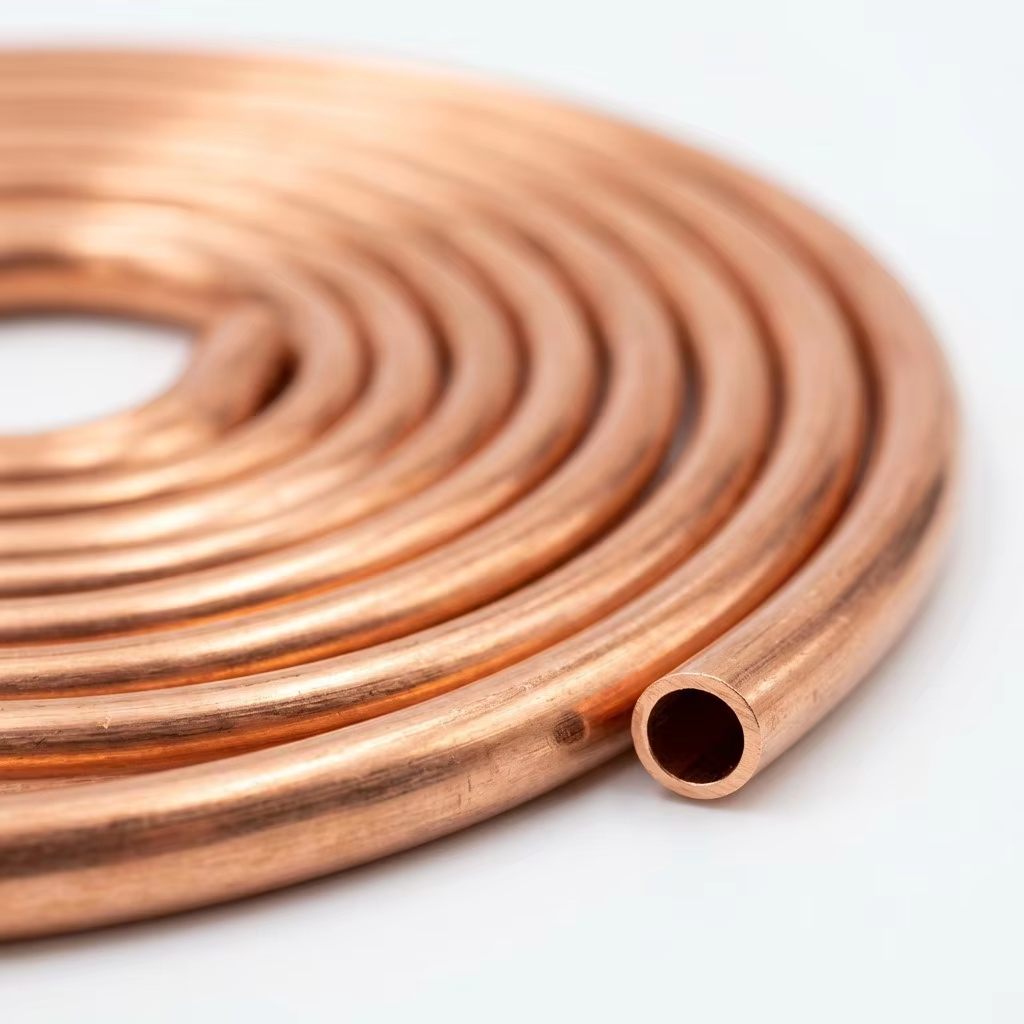
Premium seamless copper tube specially designed for refrigeration and HVAC pipeline systems. Featuring high purity, outstanding thermal conductivity, strong pressure resistance and excellent anti-corrosion performance. Smooth inner surface reduces refrigerant flow resistance and avoids pipeline blockage. Widely used for refrigerant circulation, heat exchange and pipeline connection, ideal for air conditioners, freezers, cold storage and refrigeration equipment OEM projects.
Product detailed description
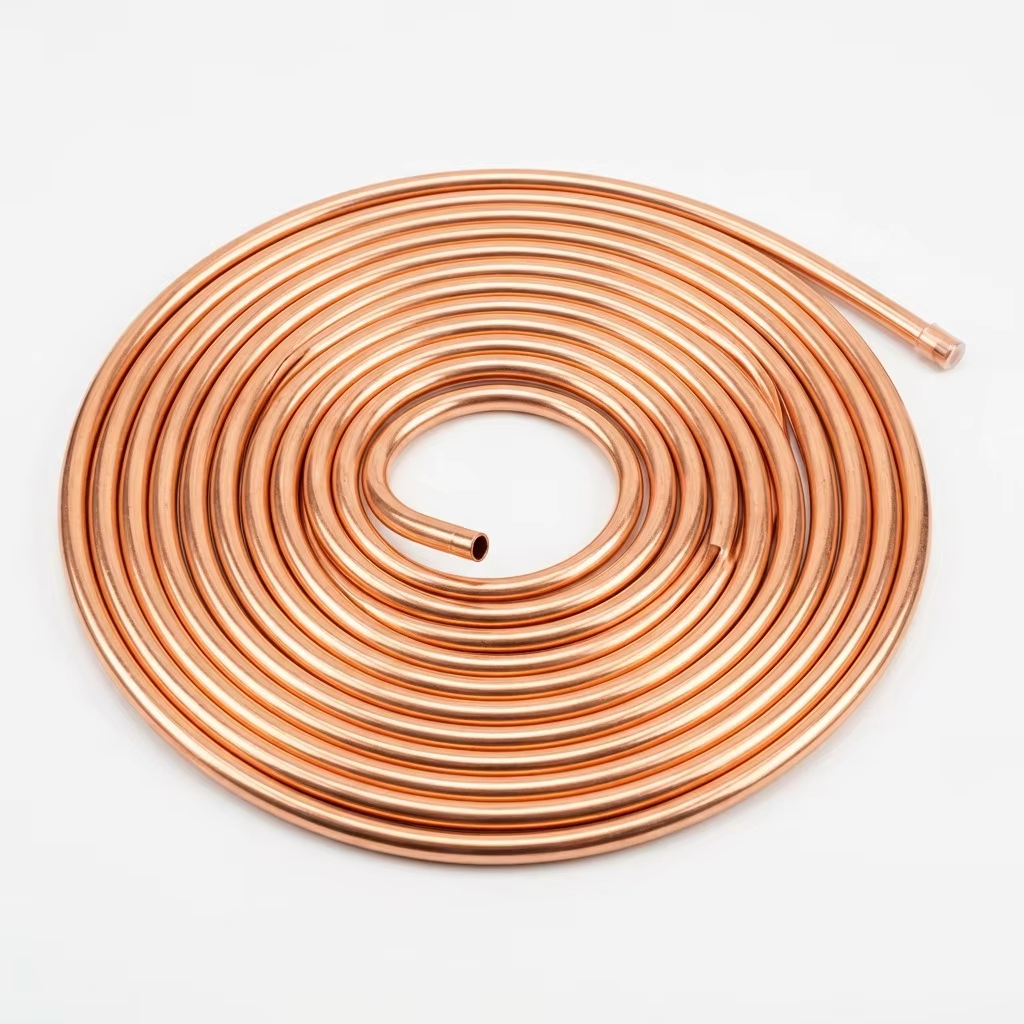
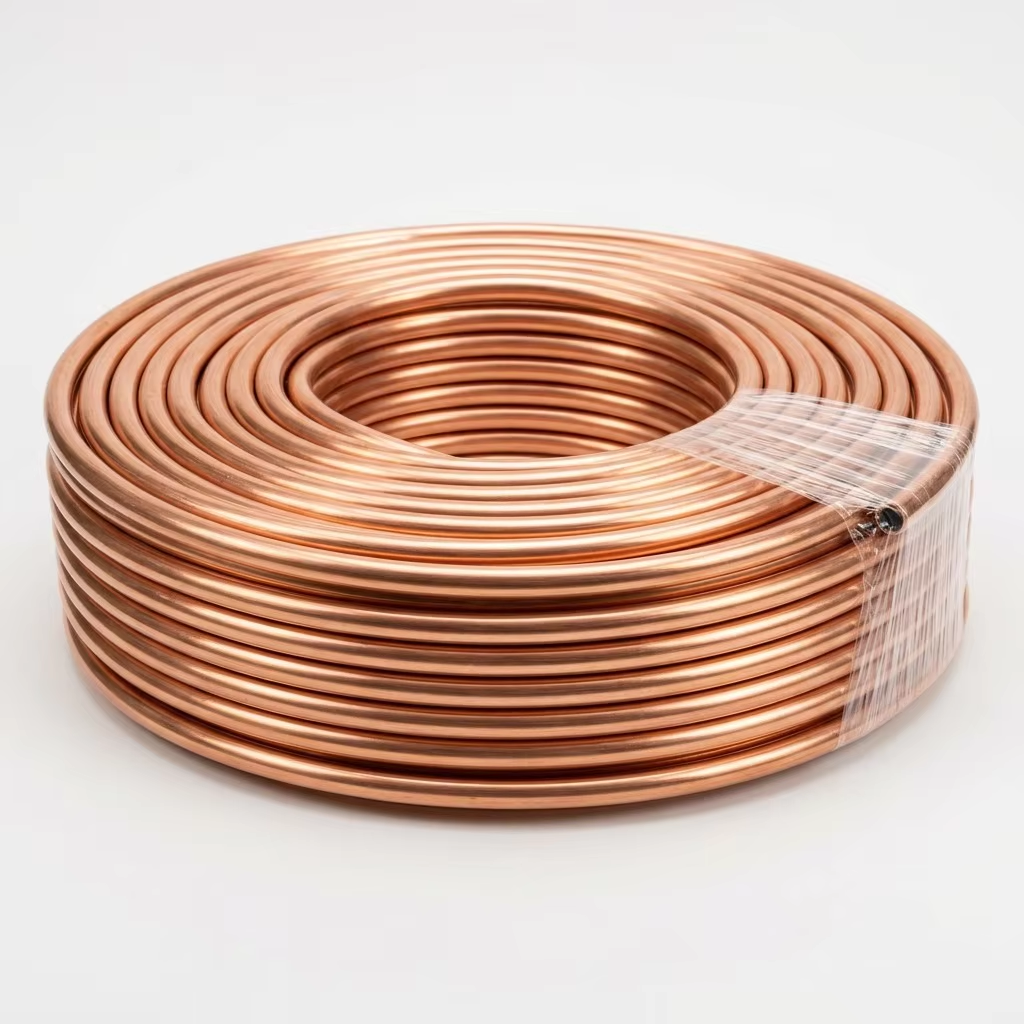
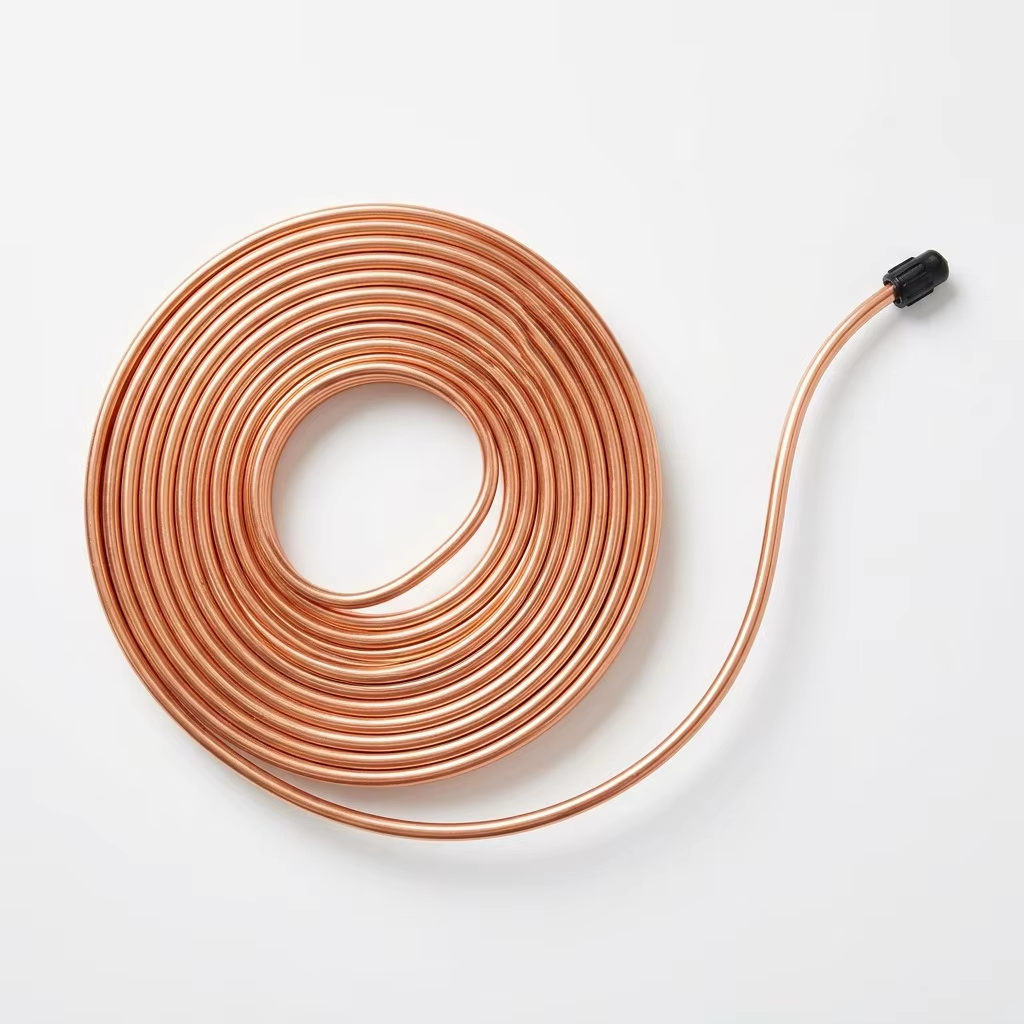
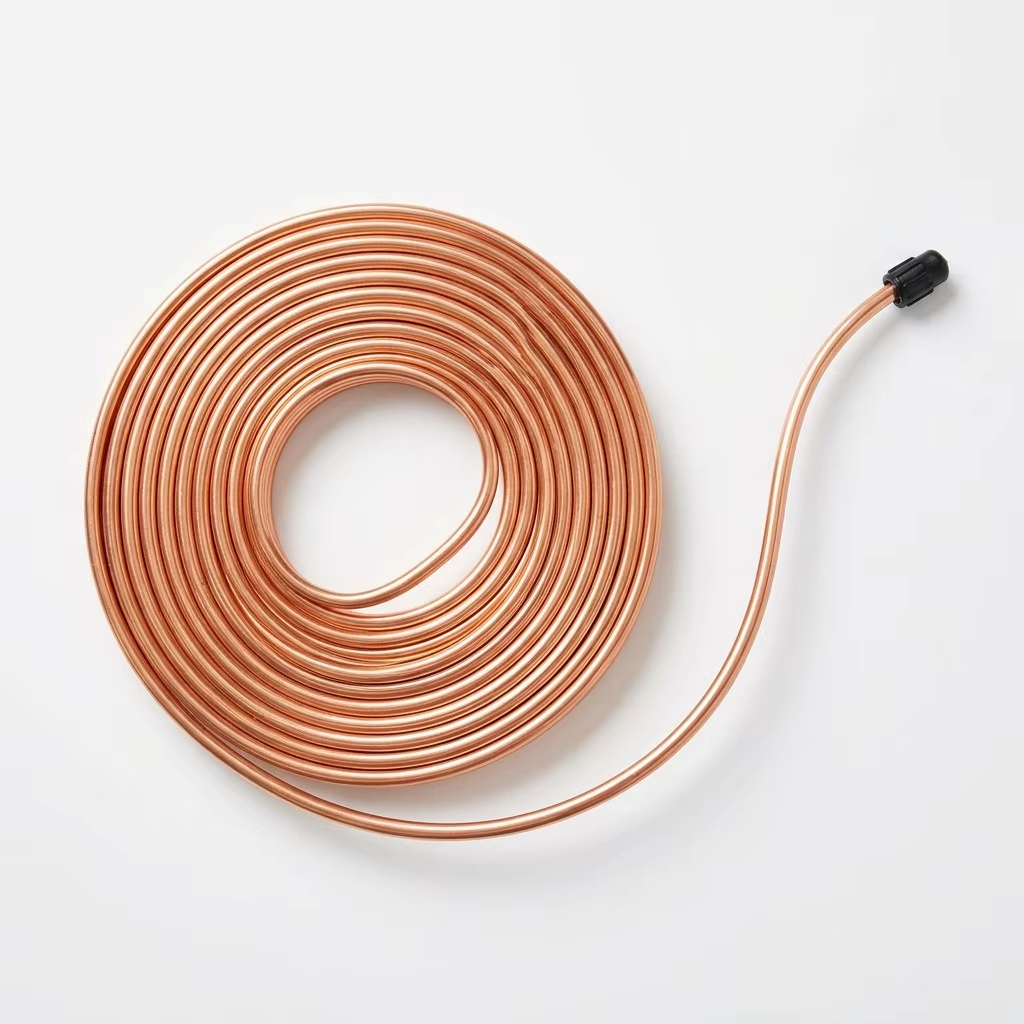
This is the copper tube that connects the indoor and outdoor units — the refrigerant's path between the evaporator and condenser. Manufactured from 99.9% pure electrolytic copper cathode (C12200 / Cu-DHP), the tube is pierced and cold-drawn into seamless precision tubing under ASTM B280 tolerances. Every coil is degreased to remove drawing lubricants (residual oil tested below 20 mg/m²), dehydrated in a drying oven, purged with dry nitrogen, and sealed with plastic end caps and PE film wrap. It arrives on-site clean, dry, and ready to work — no flushing, no contamination risk, no callbacks. Sold in standard 15m and 30m pancake coils, available in all diameters for 1HP through 10HP split, VRF, and commercial refrigeration systems.
Key highlights
99.9% pure C12200 phosphorus-deoxidized seamless copper — ASTM B280 compliant
Degreased & dehydrated: residual oil <20 mg/m², moisture-free interior
Nitrogen-purged & end-capped — clean and sealed until installation
Pancake coil format: compact, easy to handle, uncoils without kinking
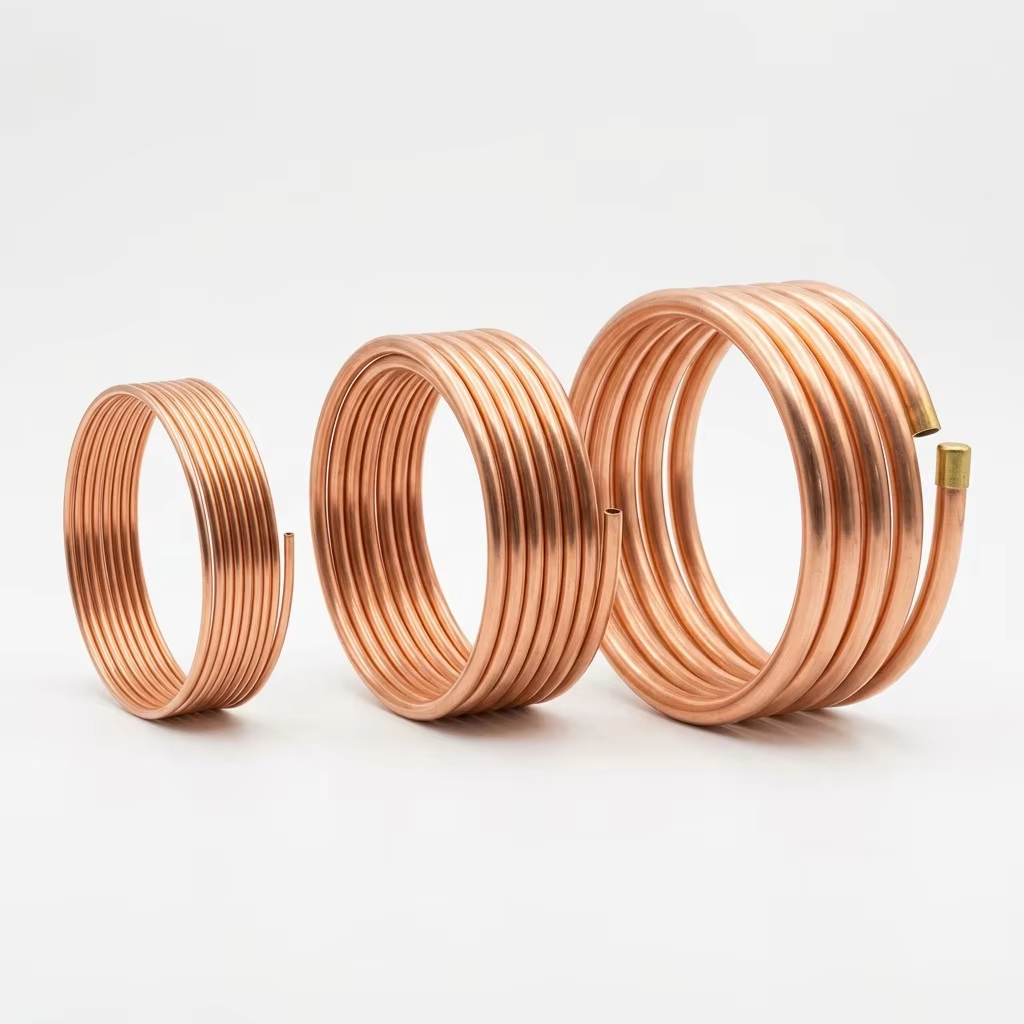
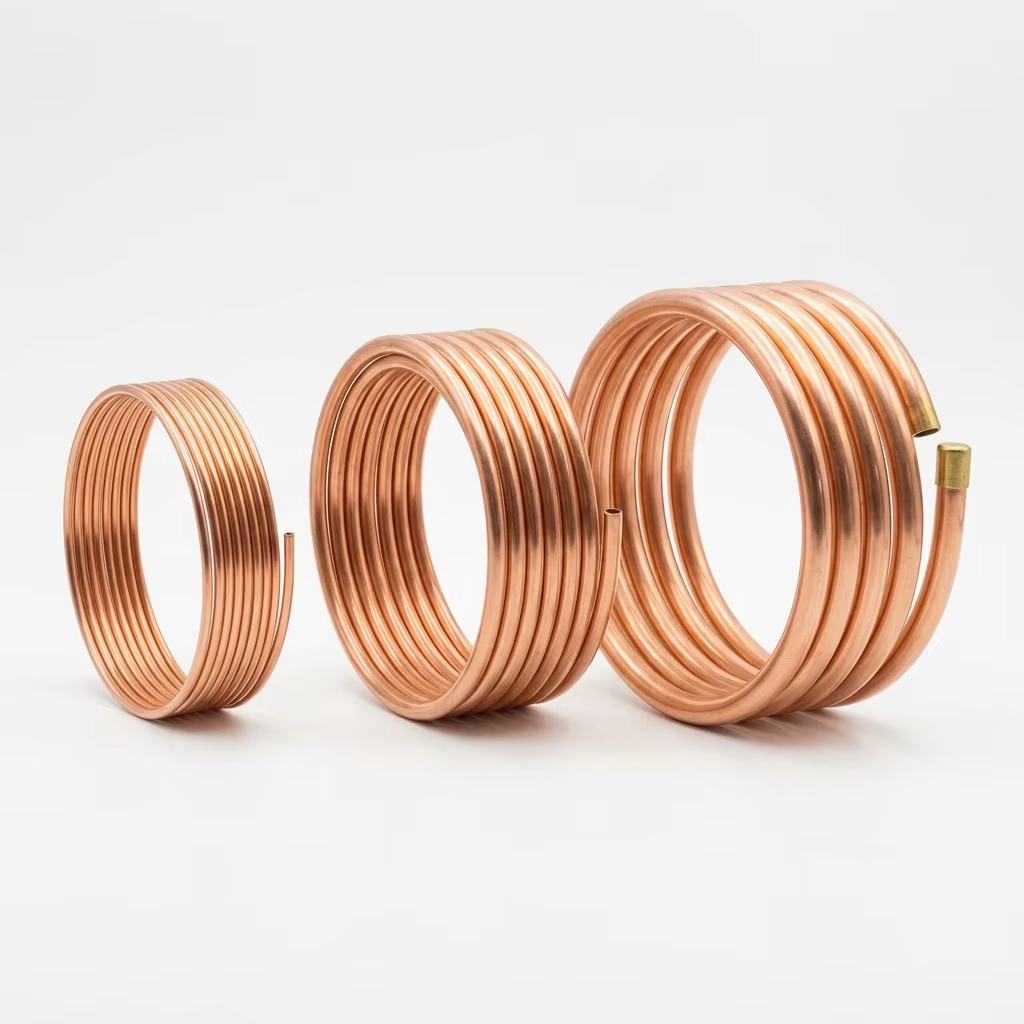
All standard diameters: 1/4" to 7/8" — covers 1HP through 10HP
MTC available per EN 10204 3.1 with every shipment
Detailed Description
Not All Copper Tube Is Refrigeration Grade
Plumbing copper tube and refrigeration copper tube look similar in a photo but are not the same product. Refrigeration-grade tube is held to tighter dimensional tolerances (ASTM B280 vs. ASTM B88 for plumbing), undergoes a different cleaning and dehydration process, and is rated for the higher pressures and lower temperatures of a refrigerant circuit. Using plumbing tube in an AC system introduces moisture, residual oil, and oxide scale into the circuit — all of which degrade compressor oil, clog capillary tubes, and reduce system efficiency. Our tube is purpose-made for refrigeration. It says so in the material certificate that ships with every coil.
The Pancake Coil Advantage
Pancake coils store and transport flat — one coil per carton, stacked on a pallet, taking minimal warehouse space. On-site, the coil unwinds from the inside out without twisting, so the installer can pull the exact length needed without wrestling a heavy reel or fighting spring-back from a straight-length bundle. The flat coil geometry also means the tube emerges with a gentle natural curve rather than a memory of being wound around a drum — it bends and routes more cooperatively inside trunking and through wall penetrations.
What "Degreased and Dehydrated" Actually Means
During manufacturing, the tube drawing process uses oil-based lubricants that leave a residue inside the bore. If not removed, this oil mixes with refrigerant and ester oil in the compressor, forming acids and sludge that attack bearings, clog strainers, and reduce heat transfer. Degreasing flushes the tube interior with a solvent or alkaline cleaning agent under pressure until the residual oil level drops below 20 mg/m² — the international benchmark for refrigeration tube cleanliness. Dehydration follows in a hot-air drying tunnel that drives off all surface moisture. Finally, the tube is purged with dry nitrogen and both ends are capped with airtight plastic plugs. The tube interior stays laboratory-clean from our factory floor to your installation site.
C12200 — The Right Copper for Refrigerant Lines
The copper alloy matters. C12200 (also designated Cu-DHP in EN standards, or DHP copper) contains a small, controlled addition of phosphorus (0.015–0.040%) that acts as a deoxidizer during the melting and casting process. The phosphorus reacts with any residual oxygen in the molten copper, preventing the formation of cuprous oxide inclusions that would weaken the tube wall and create pinhole leak paths over time. The result is a tube with uniform wall thickness, consistent grain structure, and excellent brazing characteristics — the filler metal wets and flows evenly around the joint for a leak-proof braze every time.
Ready for Flaring, Bending, and Brazing
An installer handles copper tube in three ways: they flare it for mechanical connections at the service valve, bend it to route around obstacles, and braze it for permanent joints. Our tube is annealed to a soft temper (O60, also called "soft copper" or "annealed copper") — soft enough to flare without cracking, ductile enough to bend with a hand bender without collapsing the wall, and with enough structural integrity to hold a braze joint under pressure for decades. The pancake coil form means the tube arrives pre-annealed and stays soft — no work-hardening from being straightened out of a rigid bundle.
Product Specifications
Model |
OD |
Wall Thickness |
Coil Length |
Weight Per Coil |
Working Pressure |
Burst Pressure |
Suitable For |
RB-CT-1407 |
1/4‘’(6.35mm) |
0.7mm |
15m |
1.65KG |
6.5MPa |
26.0MPa |
Liquid line,1HP-5HP |
RB-CT-1407L |
1/4‘’(6.35mm) |
0.7mm |
30m |
3.30KG |
6.5MPa |
26.0MPa |
Liquid line,bulk |
RB-CT-3808 |
3/8‘’(9.52mm) |
0.8mm |
15m |
2.90KG |
5.0MPa |
20.0MPa |
Suction line,1HP-2HP |
RB-CT-3808L |
3/8‘’(9.52mm) |
0.8mm |
30m |
5.80KG |
5.0MPa |
20.0MPa |
Suction line,bulk |
RB-CT-1208 |
1/2‘’(12.7mm) |
0.8mm |
15m |
3.95KG |
3.7MPa |
14.8MPa |
Suction line,1.5HP-3HP |
RB-CT-1208L |
1/2‘’(12.7mm) |
0.8mm |
30m |
7.90KG |
3.7MPa |
14.8MPa |
Suction line,bulk |
RB-CT-5809 |
5/8‘’(15.88mm) |
0.9mm |
15m |
5.60KG |
3.3MPa |
13.2MPa |
Suction line,3HP-5HP |
RB-CT-5809L |
5/8‘’(15.88mm) |
0.9mm |
30m |
11.20KG |
3.3MPa |
13.2MPa |
Suction line,bulk |
RB-CT-3410 |
3/4‘’(19.05mm) |
1mm |
15m |
7.55KG |
3.1MPa |
12.4MPa |
Suction/V RF,5HP-8HP |
FAQ
Q1: What does "pancake coil" mean and how do I uncoil it?
A: A pancake coil is a flat, circular coil wound so the tube pays out from the inside. To uncoil: place the coil flat on the ground, locate the inner end (marked with a tag or visible inside the center of the coil), and pull the tube upward and outward. It will uncoil naturally from the center without twisting. Do NOT uncoil by rolling the coil along the ground — this introduces a twist into the tube that makes it harder to route and more prone to kinking. Do NOT cut the ties before finding the inner end, or the coil will spring open uncontrollably.
Q2: Why is the copper tube annealed (soft) rather than hard-drawn?
A: Soft annealed copper (O60 temper) can be flared, bent, and manipulated with hand tools without cracking or collapsing the tube wall. Hard-drawn tube is rigid and cannot be flared or hand-bent without annealing it first, which requires a torch and skill to do correctly on-site. For field installations where the installer flares the ends for mechanical connections and bends the tube to route around obstacles, soft annealed tube is the standard choice. Hard-drawn tube is primarily used for straight, exposed pipe runs in commercial refrigeration machine rooms and is not suitable for split AC field installations.
Q3: How do I flare the tube correctly?
A: Steps for a reliable 45° SAE flare: (1) Cut the tube square using a tube cutter, not a hacksaw.
(2) Deburr the inside and outside of the cut edge.
(3) Slide the flare nut onto the tube with the threads facing the cut end.
(4) Clamp the tube in the flare tool block with the tube end projecting by the thickness of the flare die shoulder (check your flare tool manual for the exact projection).
(5) Apply a thin film of refrigerant oil to the flare cone.
(6) Tighten the flare yoke until the die bottoms out against the block — do not over-tighten.
(7) Inspect: the flare should be concentric, free of cracks, and with a uniform contact face. Common mistakes: insufficient tube projection (small flare that leaks), excessive tube projection (oversized flare that cracks), no deburring (burr creates an uneven seating surface).
Q4: How should I braze copper-to-copper and copper-to-brass joints?
A: For copper-to-copper joints: use a phosphorus-copper brazing rod (BCuP series, e.g., BCuP-2 or BCuP-3) — no flux required, as phosphorus acts as a self-fluxing agent on copper. Heat the tube evenly with an oxy-acetylene torch (neutral flame) until the copper glows a dull red (approximately 700–800°C), then touch the rod to the joint — the heat of the tube, not the flame, should melt the filler. For copper-to-brass joints (e.g., tube to service valve): use a silver-alloy brazing rod (minimum 15% Ag) with a suitable flux, as phosphorus-containing rods can form brittle phosphide compounds at the brass interface. ALWAYS purge the inside of the tube with dry nitrogen at a low flow rate (1–3 L/min) during brazing to prevent copper oxide scale from forming on the inside wall. No nitrogen purge = black flaky oxide inside the tube = contamination of the entire refrigerant circuit.
Q5: How do I store unused copper tube coils on-site?
A: Keep the factory end caps in place on both tube ends until the moment of installation. Store coils indoors or under cover, off the ground, in their original cartons. If a coil is partially used, re-cap the open end immediately with the original cap or with tape — do not leave the tube open to ambient air, especially in humid climates. Moisture that enters the tube will condense and cause internal corrosion or introduce liquid water into the refrigerant circuit. A tube left open overnight in a tropical climate may already contain enough moisture to cause problems after evacuation.



 ONLINE

 EN
EN