Product brief description
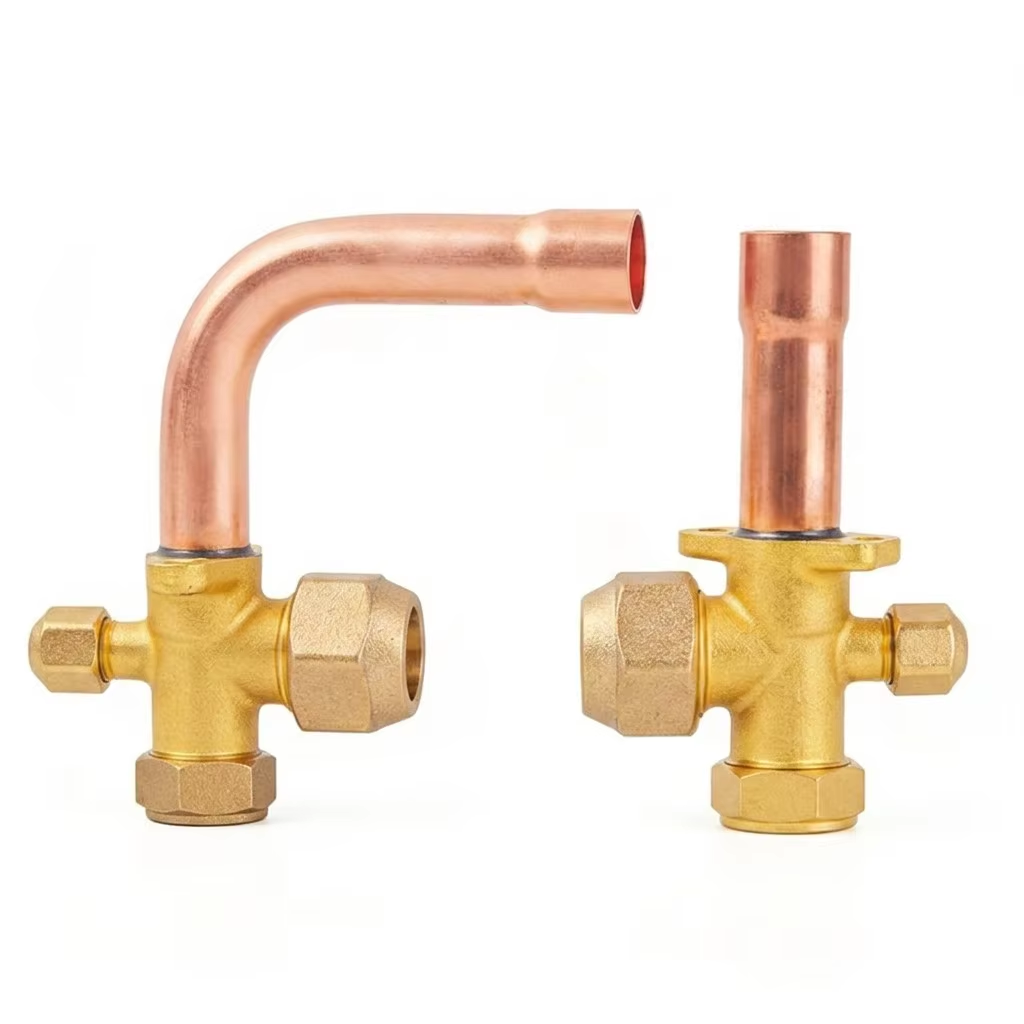
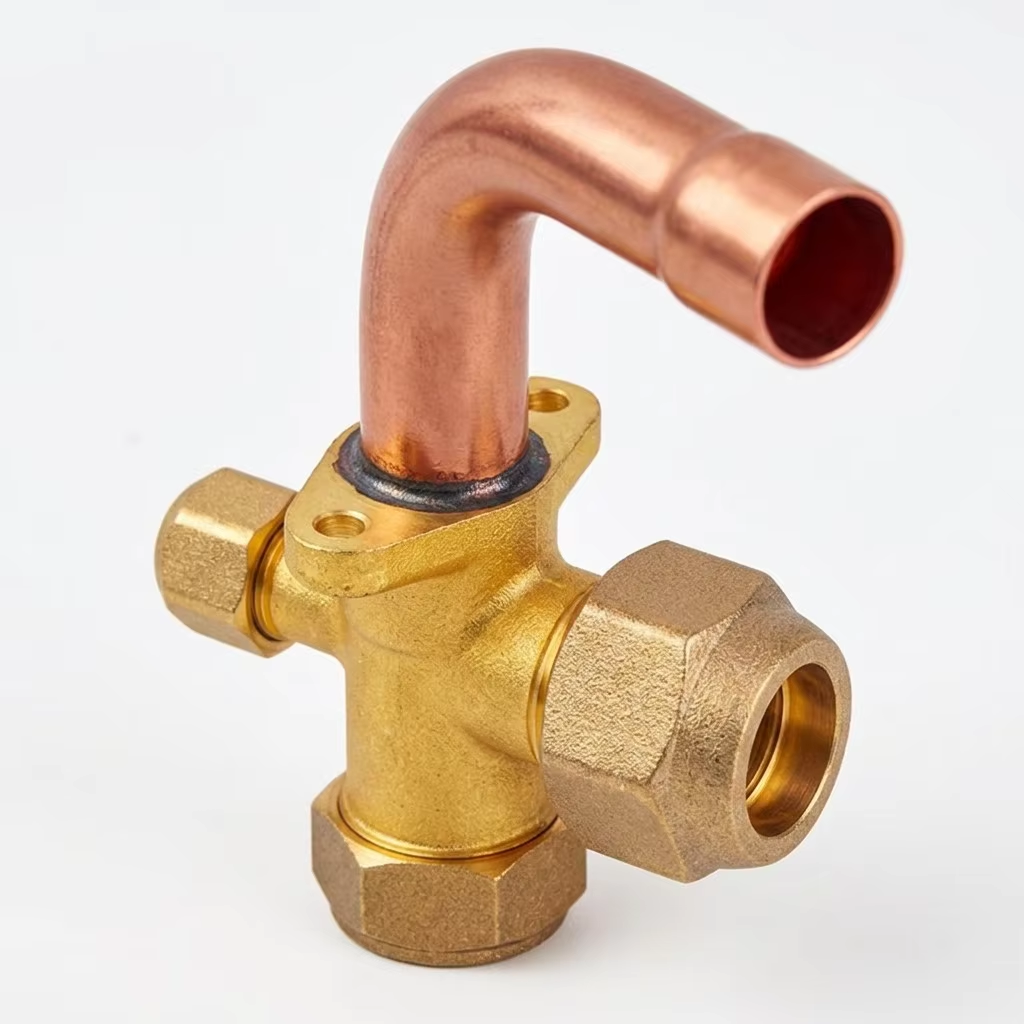
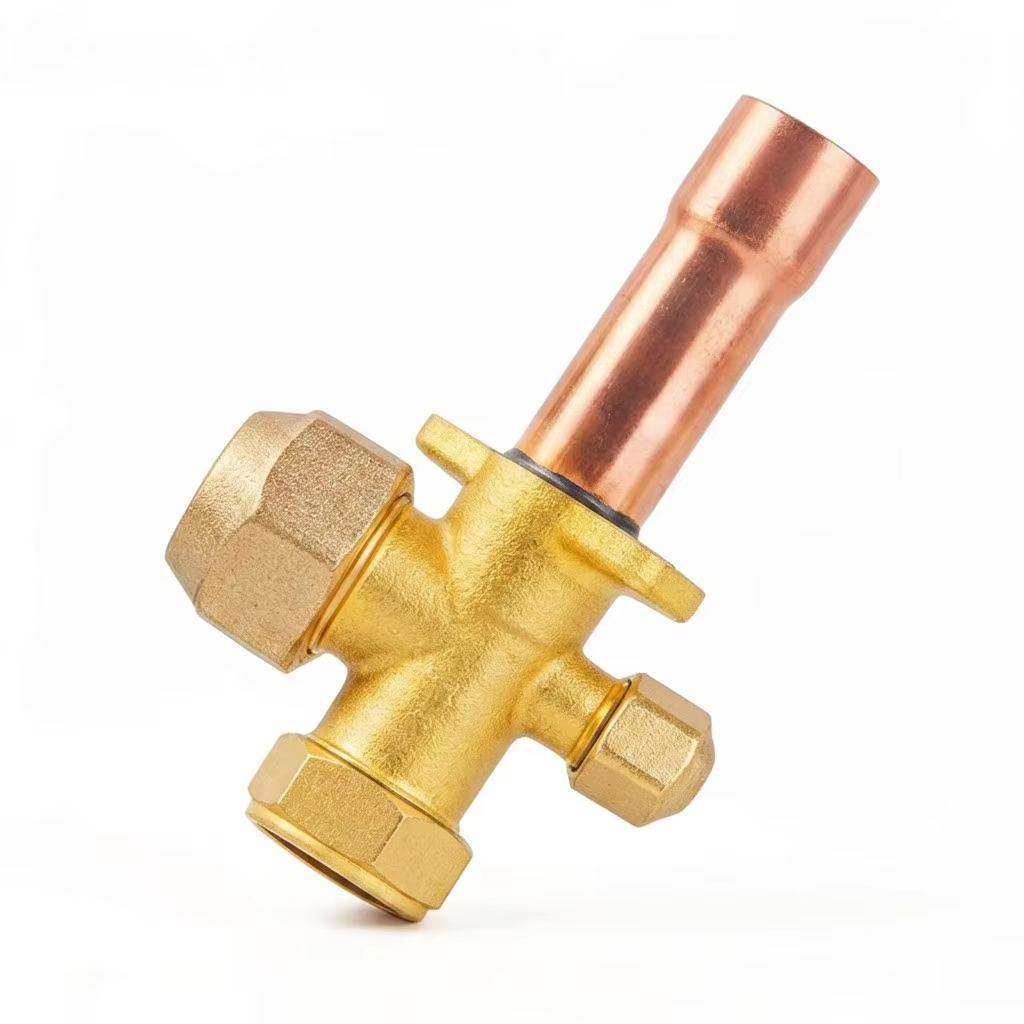
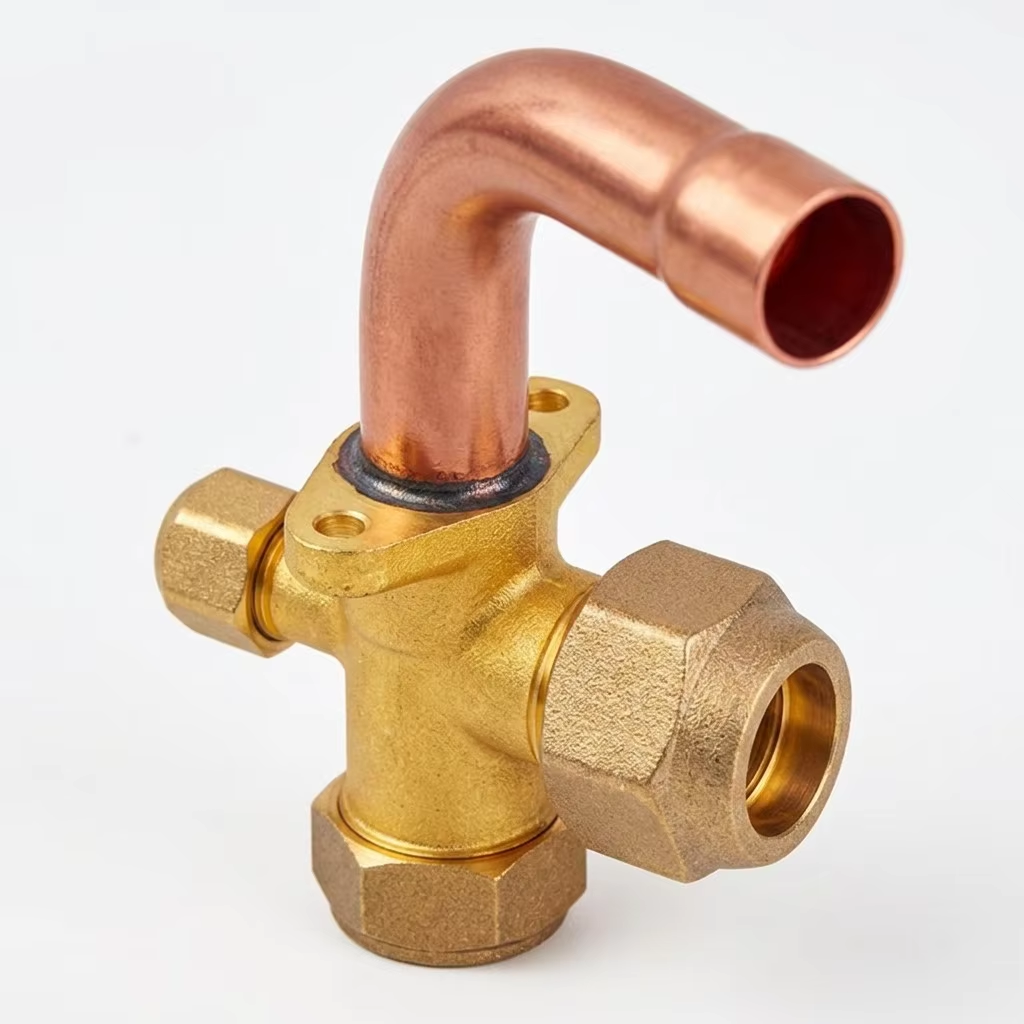
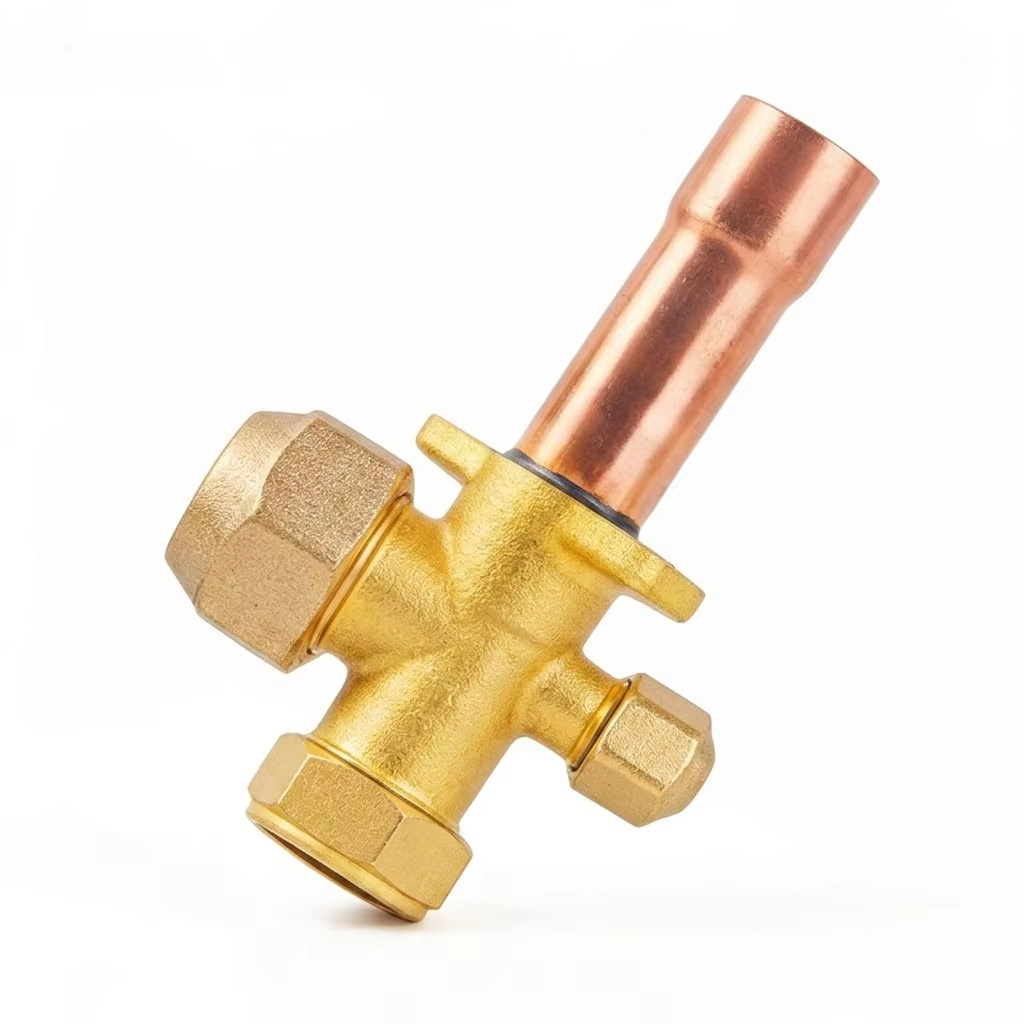
Every split air conditioner outdoor unit has two service valves — the suction valve (large bore, low-pressure gas return) and the liquid valve (small bore, high-pressure liquid feed). This matched pair is manufactured from forged brass for the valve body and high-purity copper for the stub tubes, with precision-machined flare connections that seal reliably against refrigerant leaks. The suction valve features a 90-degree bent copper tube for compact routing inside the outdoor unit chassis, while the liquid valve uses a straight stub tube. Both valves include a brass mounting flange, hexagonal flare nut, and a service port cap. Compatible with R22, R410A, R32, and R290 refrigerants — one pair covers the vast majority of 1HP through 5HP residential and light commercial split systems.
Product detailed description
The Pair That Holds the System Together
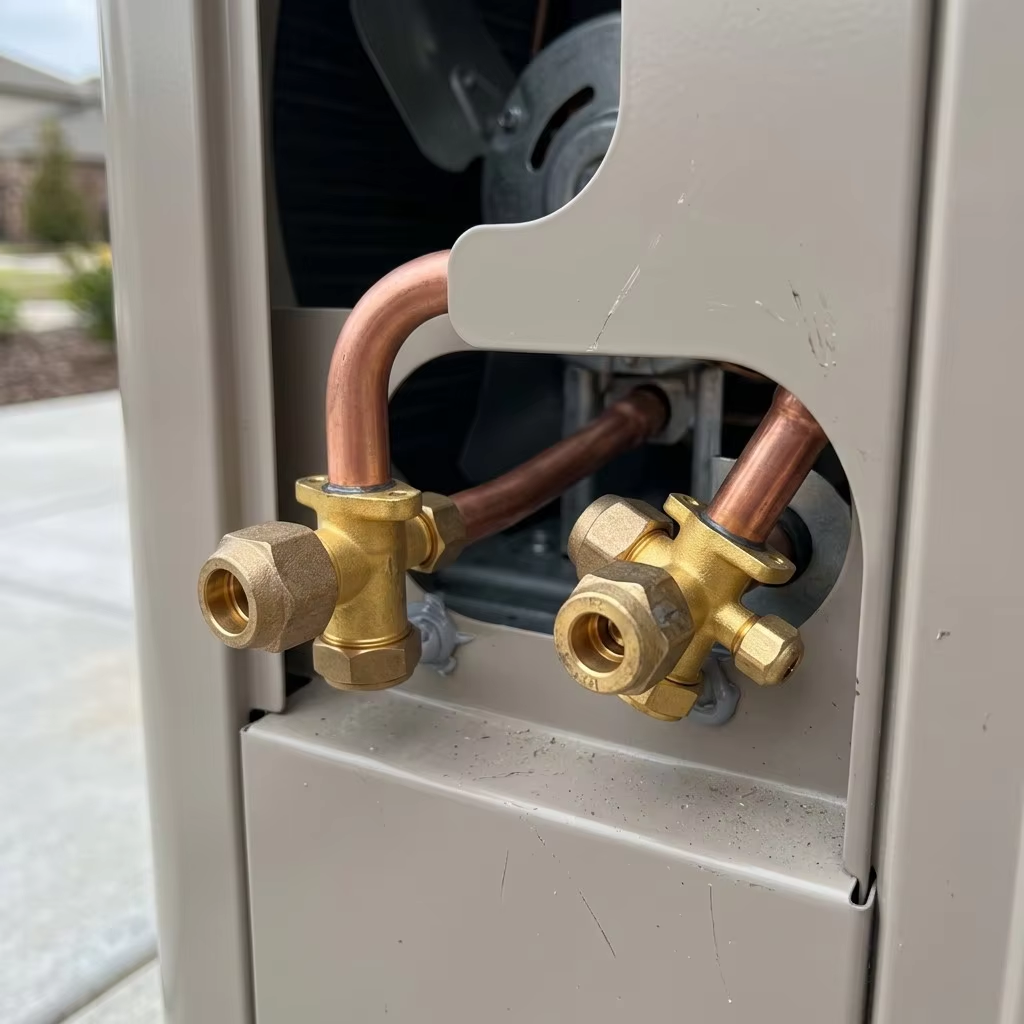
The two service valves on the back of every outdoor unit are the interface between the factory-sealed condenser and the field-installed line set. They serve three functions: isolating the condenser during storage and shipping, connecting the copper line set during installation, and providing a service port for vacuum evacuation, pressure testing, and refrigerant charging. A cheaply made valve pair is a future leak waiting to happen — and a refrigerant leak on a high-pressure R410A system running at 3.5 MPa is not a minor inconvenience, it's a system failure. Our valves are forged, not cast. Forged brass has a denser grain structure, fewer micro-voids, and far better pressure-holding capability than sand-cast alternatives. Every pair ships nitrogen-pressure-tested at 4.5 MPa — 30% above the maximum operating pressure of R410A — so the end-of-line leak that ruins an installation never starts with our valve.
Forged vs. Cast Brass — The Difference Is Inside the Metal
Sand-cast brass is cheap and fast to produce, but it carries an inherent risk: microscopic gas porosity from the casting process creates pathways that can open into leaks under sustained pressure and thermal cycling. Forged brass starts as a solid billet that is heated and pressed into shape under hundreds of tons of force. The grain structure aligns and compacts. There are no voids. The threaded ports machine cleanly with a consistent surface finish that seals properly against flare faces. This is the same process used for commercial refrigeration valves that hold pressure for decades — we apply it to residential AC service valves because the physics of a refrigerant leak doesn't care whether the system costs 500or500or50,000.
Copper Stub Tubes — Swaged, Not Butt-Welded
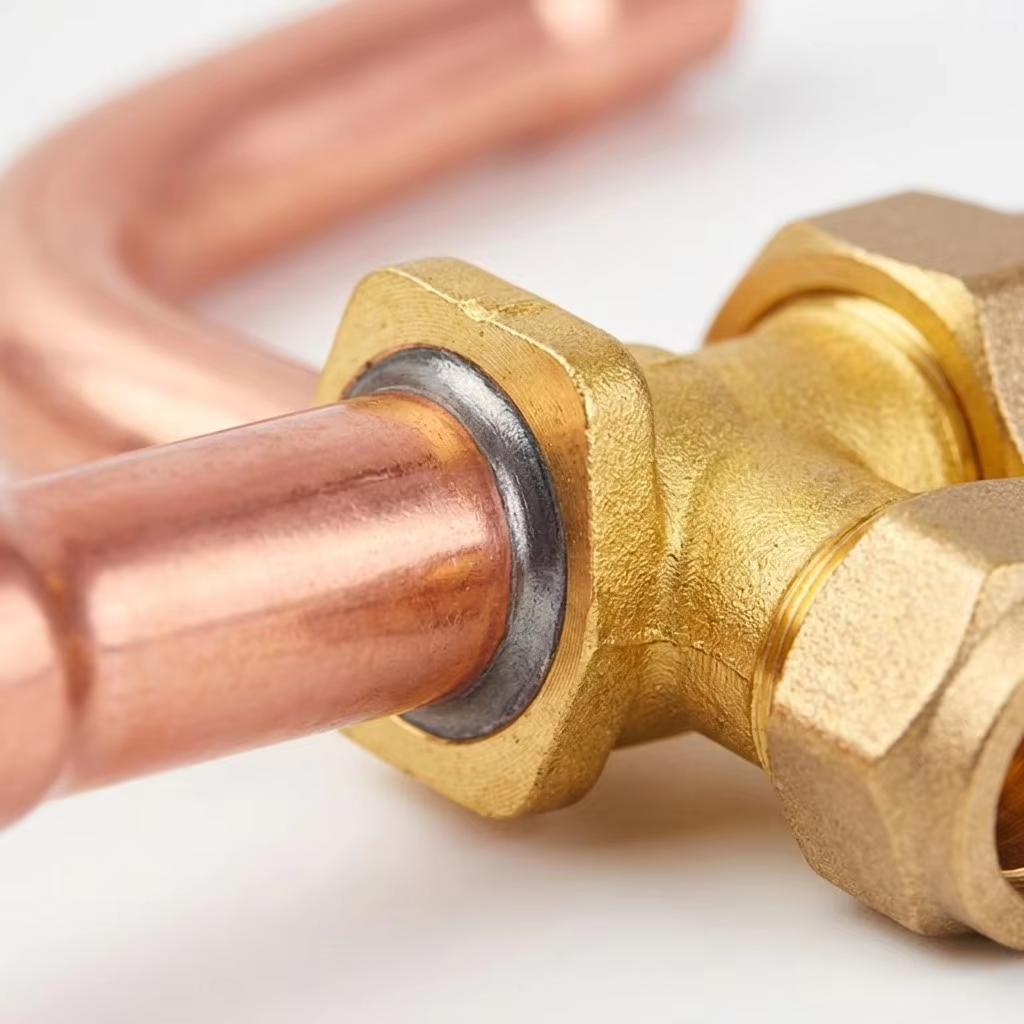
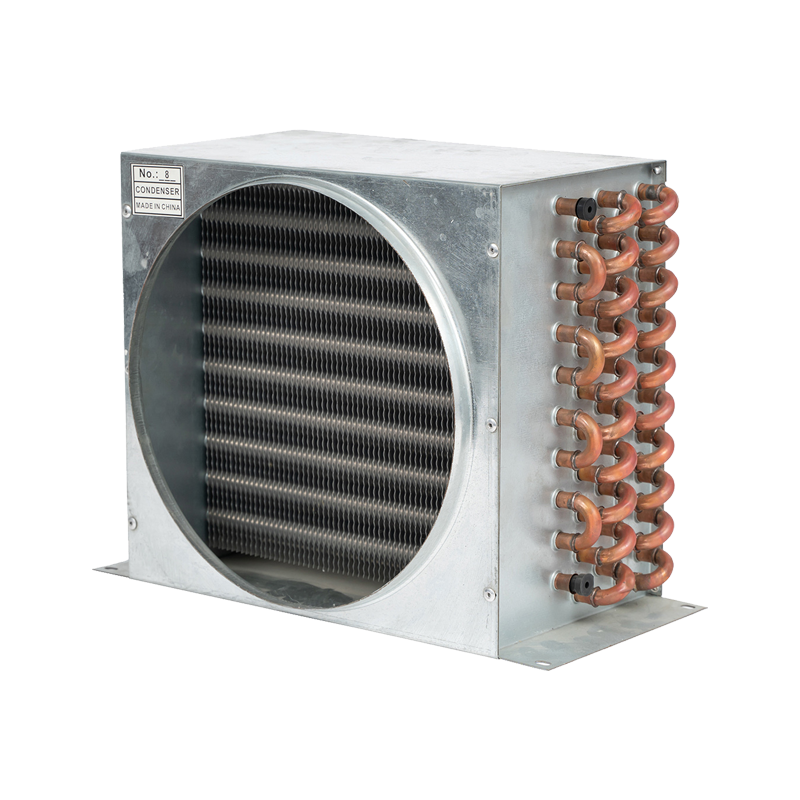
The copper tube that extends from the valve body into the outdoor unit is not an afterthought. We use C12200 phosphorus-deoxidized copper — the same specification used for the refrigerant line set itself — brazed into the brass body with a high-silver-content filler rod (minimum 15% silver). The brazed joint is stronger than either parent metal. The tube end that connects to the condenser coil is swaged (expanded) to a larger diameter, providing a socket for the coil tubing to insert into before brazing on the production line. This socket joint is mechanically stronger and easier to braze correctly than a butt-weld — a detail that reduces manufacturing defects on the assembly line and extends the service life of the finished unit.
90° Bend on the Suction Side — Why It Matters
The suction line carries low-pressure refrigerant gas back to the compressor. It's the larger of the two tubes (typically 3/8", 1/2", or 5/8" OD), and it needs to route from the valve face into the condenser coil with a tight turn. Our suction valve arrives with the copper tube pre-bent at a clean 90° angle using a mandrel bender — no flattening at the bend, no restriction in the internal diameter, no turbulence in the gas flow. An installer or factory line worker removes the valve from the box and it's ready to braze — no on-site bending, no risk of kinking the tube, no inconsistent bend radius between units.
Flare Connections That Actually Seal
The field-side connection uses a 45° SAE flare — the universal standard for split AC line sets. The flare face on the valve body is machined to a surface finish of Ra 1.6µm or better. When the installer mates the flared copper line set against this face and tightens the brass flare nut to the correct torque, the two surfaces cold-weld at the microscopic level — no gasket, no O-ring, no sealant. The seal is metal-to-metal and will hold for the life of the system. The hexagonal brass flare nut is included and pre-threaded onto the valve body — the installer removes it, slides it onto the line set, flares the tube, and tightens. The service port includes a schrader valve core and a protective brass cap with an internal O-ring seal for a secondary barrier against leakage.
Product Specifications
Model |
Valve Type |
Tube OD |
Tube Shape |
Flare Size |
Service Port |
Max Pressure |
Net Weight |
RB-ACSV-38B |
Suction(gas) |
3/8‘’(9.52mm) |
90°bent |
3/8‘’ |
1/4‘’SAE |
4.5MPa |
0.28KG |
RB-ACSV-38S |
Liquid |
1/4‘’(6.35mm) |
Straight |
1/4‘’ |
1/4‘’SAE |
4.5MPa |
0.18KG |
RB-ACSV-12B |
Suction(gas) |
1/2‘’(12.7mm) |
90°bent |
1/2‘’ |
1/4‘’SAE |
4.5MPa |
0.35KG |
RB-ACSV-12S |
Liquid |
1/4‘’(6.35mm) |
Straight |
1/4‘’ |
1/4‘’SAE |
4.5MPa |
0.20KG |
RB-ACSV-58B |
Suction(gas) |
5/8‘’(15.88mm) |
90°bent |
5/8‘’ |
1/4‘’SAE |
4.5MPa |
0.42KG |
RB-ACSV-58S |
Liquid |
3/8‘’(9.52mm) |
Straight |
3/8‘’ |
1/4‘’SAE |
4.5MPa |
0.25KG |
FAQ
Q1: What is the difference between the suction valve and the liquid valve?
A: The suction valve (also called the gas valve or low-pressure valve) is the larger of the two, connecting the compressor's suction side to the evaporator via the larger-diameter line set tube. It carries low-pressure refrigerant gas. The liquid valve (also called the high-pressure valve) is smaller, connecting the condenser outlet to the evaporator inlet via the smaller-diameter line set tube. It carries high-pressure liquid refrigerant. In a standard split AC pair, the suction tube is always 90° bent for compact routing inside the outdoor unit chassis, and the liquid tube is straight.
Q2: Which pair configuration do I need for my system?
AC Capacity |
Recommended Pair |
Suction Size |
Liquid Size |
1HP–1.5HP |
RB-ACSV-P38 |
3/8" (9.52mm) |
1/4" (6.35mm) |
1.5HP–3HP |
RB-ACSV-P12 |
1/2" (12.7mm) |
1/4" (6.35mm) |
3HP–5HP / VRF |
RB-ACSV-P58 |
5/8" (15.88mm) |
3/8" (9.52mm) |
Always verify the tube diameters against your specific outdoor unit's specifications.
Some manufacturers use non-standard sizes for specific models.
Q3: Are these valves compatible with R32 and R290 refrigerants?
A: Yes. The forged brass body, brazed copper joint, and PTFE-based schrader valve seals are chemically compatible with R32 (difluoromethane) and R290 (propane). Both are classified as A2L (mildly flammable) and A3 (flammable) refrigerants respectively. The valve's pressure rating of 4.5 MPa provides a safety margin above the maximum operating pressures of both refrigerants. For R290 installations, always follow local safety codes regarding charge limits, ventilation, and ignition source clearance.
Q4: Do the valves come with the flare nuts?
A: Yes. Both the suction and liquid valves ship with their brass 45° SAE flare nuts pre-installed on the valve body threads. The installer removes them, slides them onto the line set tube, flares the tube end, and tightens them back onto the valve. The brass service port cap with internal O-ring seal is also pre-installed. Do not discard the caps — they provide a secondary seal against refrigerant leakage through the schrader valve.


 ONLINE

 EN
EN